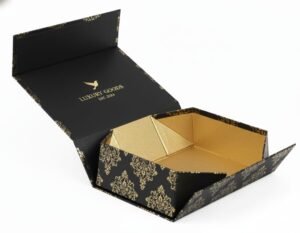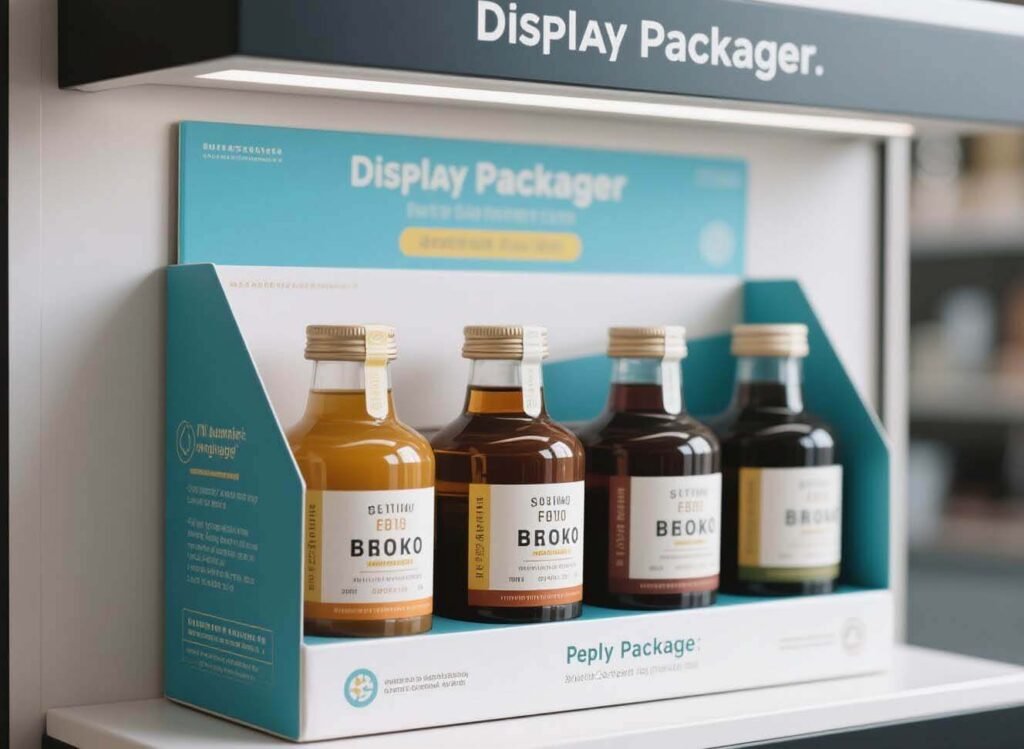
Walk into a supermarket, pharmacy, or boutique and you’ll notice some products don’t just sit on the shelf—they’re lifted, angled, grouped, or nestled in a little stage that invites you to reach out.That “stage” is display packaging. It’s the bridge between packaging and merchandising: a purpose-built, usually branded structure that holds, presents, and promotes products right where shoppers make decisions.
Unlike a shipping carton that protects items in transit, display packaging is designed to sell—to catch the eye, cue the brand story, and make grabbing a product effortless. In retail jargon, you’ll also hear related terms like POP (point-of-purchase) displays, PDQ (Pretty Darn Quick) trays, and SRP (shelf-ready packaging). They all live in the same family: functional structures—often made of cardboard or corrugated board—that combine speed of stocking with high-impact presentation.
Why Retailers (Still) Love Display Packaging
Despite headlines about the “death of retail,” in-store discovery remains powerful—and displays are a big reason why. Many purchasing decisions are made on the spot, especially for impulse items; data cited by retail and display firms regularly place the share of in-store purchase decisions around 70%+, underlining how critical the last few feet are for conversion. That’s exactly where display boxes earn their keep.
Display packaging also solves practical issues for busy store teams. Shelf-ready packaging (SRP)—think perforated trays or tear-away hoods—lets staff open, place, and face up products fast, meeting the industry’s “five easies” (easy to identify, open, shelf, shop, and dispose). That means lower labor time and cleaner presentation without extra fixtures.
Common Forms You’ll See and When to Use Them
Here’s a quick field guide to the most common custom display boxes and formats. Whether you’re planning a seasonal promo or everyday replenishment, you’ll likely pick one of these:
| Display Type | Typical Material | Where It Sits | Best For | Notes |
|---|---|---|---|---|
| Counter Display Box (a.k.a. PDQ tray) | Corrugated/card board | Checkout counters, Service desks | Small / impulse items, trial sizes | Ships pre-packed; set down and you’re selling “pretty darn quick.” |
| Floor Display / Tower | Corrugated (temporary), rigid (semi-permanent) | Aisles, Endcaps, Promo zones | New launches, Bundled offers, High-volume SKUs | “Store within a store” that extends branding off the shelf. |
| Shipper Display | Corrugated | Ships as a carton; converts to display | Club, grocery, convenience | Saves handling time: open, place, sell. |
| Pallet Display (QP/Half/Full) | Corrugated | Floor, Warehouse clubs | Heavy or large packs, seasonal stacks | Quarter-pallet (QP) covers 25% of a pallet footprint. |
| Shelf-Ready Tray (SRP) | Corrugated | Shelf | Fast restock of multiples | Tear-away hood reveals faced product instantly. |
Materials 101: Cardboard vs. Corrugated and Why It Matters
Most retail displays are made from corrugated board—that familiar fluted sandwich—because it balances strength, printability, and cost. “Cardboard” is often used colloquially, but corrugated is the real workhorse for display boxes that must hold weight and survive shipping. The corrugated industry relies on FEFCO standards: a widely used catalog of coded designs that speeds up quoting, die-cutting, and prototyping for boxes and many display components. If you’re discussing specs with a converter, those FEFCO codes will help both sides talk the same language.
For cardboard display boxes placed on counters and holding lighter items, paperboard or single-wall corrugated may be enough. Heavier floor units typically use stronger B/C/E flute combinations, reinforced bases, and sometimes hidden foamcore or plastic hooks depending on the product.
Design Goals That Separate “Fine” from “Fantastic”
Great custom display boxes do three things at once:
- Stop– They interrupt the scan with color, shape, and hierarchy. Bold brand blocks, a clear product hero, and a simple promise (“Whitens in 3 days”) do the heavy lifting.
- Hold– They carry the load safely. Slots, dividers, or angled shelves prevent topples and make restocking intuitive.
- Close– They remove friction. Clear price windows, easy reach, and simple copy (“Take one”) turn attention into action.
Practically, that means:
- Tiered product anglesso shoppers read the pack at a glance.
- Reach distance< 45 cm on counters; hand-clearance of at least 10–15 cm for grab-and-go items.
- Face countthat fits store planograms (more faces ≠ better if it looks cramped).
- Graphicsthat survive distance: big brand mark first, benefit line second, details last.
The result is more “yes” moments in real time—where most buying choices occur.
POP, PDQ, SRP: What’s the Difference?
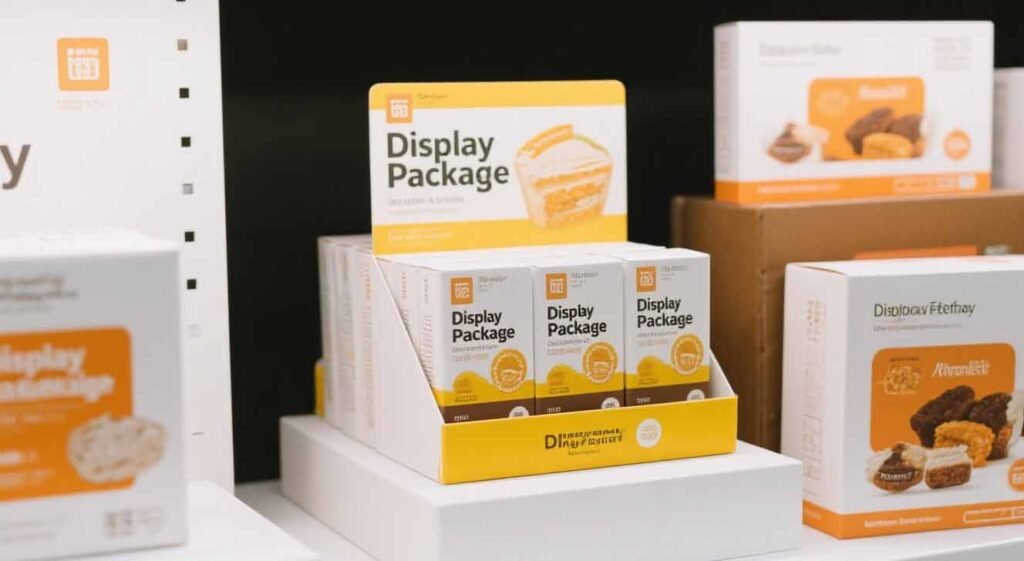
These acronyms overlap, but the focus shifts slightly:
- POP displaysare the broad category: any display or fixture placed where purchases happen (endcaps, aisles, checkouts). Think towers, bins, dump bins, and custom display boxes of all shapes.
- PDQ trays / counter displaysare small, fast-to-set trays or bins that ship pre-packed. They’re made to be placed “pretty darn quick” near the register or on shelves to catch impulse buys.
- SRP (shelf-ready packaging)is a case-to-shelf system: perforate, tear, and the case transforms into a tray so associates can restock in seconds—clean, consistent, and easy to shop.
When Should You Choose Custom Cardboard Display Boxes?
Choose a custom display box when you need:
- Speed to floor:Seasonal promos, new flavors, or price drops where lead times are tight and store teams are stretched. PDQ trays shine here.
- Storytelling beyond the shelf:A floor display can act like a mini popup shop—color, silhouette, and copy working together.
- Trial and impulse:Small formats near checkout or high-traffic aisles reliably nudge baskets upward.
Operational wins: SRP reduces touchpoints and errors; one tear and you’re front-faced.
If you’re scaling, corrugated boxes wholesale pricing helps keep unit costs predictable across test markets and seasonal waves. Many converters also offer kitting (packing product into displays) to reduce your internal handling.
Pro Tips From the Field
- Design to travel.A beautiful cardboard display box that arrives crushed won’t sell. Request a transit test or ISTA-style packout review for floor units.
- Think replenishment.If associates can’t restock in seconds, your display won’t stay full. SRP features—finger holes, perforations, printed “open here”—pay for themselves.
- Use the 10-foot test.Step back: Can you read the brand and benefit from aisle distance? If not, simplify.
- Respect planograms.Coordinate face counts and heights with the retailer so your custom display box gets approved the first time.
- Measure what matters.Track sales lift vs. control stores, basket size changes, and out-of-stock time to prove ROI and refine the next run. Industry research links strong POP presence to faster decisions and higher visibility.
Ready to Turn Browsers into Buyers?
What do you think makes display packaging most effective—the design, the placement, or the story it tells? Share your thoughts in the comments. Your insights might just spark the next big idea in custom cardboard display boxes and corrugated packaging!
FAQs
Is “display packaging” only for big brands?
No. Smaller brands often win disproportionate attention with smart custom display boxes and counter PDQs, especially at specialty or convenience stores where shoppers decide fast.
Do I need FEFCO codes to order?
Not required, but helpful shorthand. Sharing a FEFCO-style reference speeds quoting and avoids miscommunication on things like flaps, inserts, and trays.
What’s the difference between “display boxes cardboard” and “corrugated displays”?
People often say “cardboard” casually; most real retail displays use corrugated for strength and print quality—especially floor units or custom cardboard display boxes that must hold weight.
Can display packaging boost sales?
It can—especially for impulse and promotional items. Studies and market analysis point to strong in-store decision-making and the role of eye-level displays in speeding choices. As always, the lift depends on your category, creativity, and placement.