If you’ve ever unboxed a necktie and thought, “Huh — that packaging makes it look fancier,” you’ve felt the power of a good tie box. Whether you’re a small brand ordering custom tie boxes, a one-time shopper buying a tie gift box, or a DIYer wondering what size to cut out of cardboard, size matters. The right dimensions protect the tie, preserve its crease and shape, and create a polished first impression.
Below, this guide will walk you through the quick answer, the why behind those measurements, standard size options, how to measure for a perfect fit, materials and construction choices, and pro tips for ordering or designing your own boxes.
Common Tie Box Sizes
If you want the short, practical takeaway, here are commonly used external box dimensions you’ll see on retail shelves:
- Single tie retail / gift box:roughly 14 × 4 × 0.75–1.5 inches.
- Standard retail (more exact listings):25 × 4.75 × 0.75 in or similar 14 × 4½ × ¾ sizes sold widely.
- Double-tie / gift set box:14 × 5.5 × 1.5 in — made to hold two ties or a tie plus pocket square.
- Luxury / slim designer boxes:can be slimmer in height but use the same length area; e.g., 8 × 38.5 × 2 cm (about 4.25 × 15.2 × 0.8 inches) as a luxury sample.
Those 14-inch lengths show up repeatedly because a standard adult necktie (when folded/arranged for retail) fits neatly into that footprint. More about why below.
Why Tie Box Size Matters (It’s Practical and Emotional)
A necktie box is not just “a wrapper.” It’s protection, presentation, and branding all in one:
- Protection:ties are often silk or delicate fabrics. The right internal space prevents crushing, flattening, or unwanted creases during shipping and storage.
- Presentation:a well-sized tie gift box improves perceived value. A too-tiny box looks cheap, a too-large one looks sloppy.
- Logistics:standard sizes make packing, shipping, and retail shelving easier — which is why you’ll see repeat dimensions across suppliers.
And the practical root of that 14-inch length? Most standard ties measure about 57–58 inches from tip to tail. When ties are folded or arranged for retail presentation (folded in half, rolled, or styled with an insert), they commonly occupy a 14-inch box length. If you’re working with extra-long ties (≈62 inches), plan for a longer or more flexible presentation.
Breakdown: Box Types and Dimensions
| Box Type | Typical External Size (L×W×H) | Best For |
|---|---|---|
| Single tie retail / gift box | 14 × 4 × 0.75–1.5 in | Standard single-tie presentation; can include a bed insert or tissue. |
| Branded rigid / luxury tie box | (varies) e.g., 10.8 × 38.5 × 2 cm | Slim, bespoke finish for premium brands. |
| Double tie / tie + pocket square | 14 × 5.5 × 1.5 in | For gift sets or two ties — gives extra width and height. |
| Standard retail carton options | 14.25 × 4.875 × 0.875 in | Common off-the-shelf option for retailers and suppliers. |
Those numbers are what manufacturers and wholesalers list repeatedly — so if you want predictable fit and pricing, start with a 14-inch length baseline and adjust width/height depending on whether you plan to roll the tie, fold it flat, add tissue, or include extras.
How to Measure the Tie (Do This Before Ordering a Box)
Before you pick dimensions for a box necktie design, measure the actual product:
- Lay the tie flat(no knot) and measure from tip to tail. This gives you the full length. Most adult ties = 57–58 in.
- Decide presentation style:Will you fold in half, fold into thirds, or roll the tie? Rolling takes less width but more height; folding tends to use the 14-inch footprint.
- Measure the folded/rolled length and thickness:For a standard tie folded for retail, measure the folded length — it should be close to 13–14 in. Add buffer space.
- Account for inserts and extras:If you plan foam inserts, velvet lining, or tissue paper, add 0.25–0.5 in to internal height. For a greeting card or small accessory, increase the width.
Simple Sizing Rule of Thumb (A Tiny Formula)
If you want a quick math rule:
- Box length= folded/rolled tie length + 0–0.5 in buffer.
- Box width= width of the folded/rolled tie + 0.25–0.5 in (for tissue/air space).
- Box height= thickness of the folded/rolled tie + 0.25–0.5 in (for insert + a tidy fit).
Example: a standard tie folded to 14 in long and 3 in wide, thickness ~0.3 in when folded → internal box = 14.25 × 3.5 × 0.75 in (rounded to practical stock sizes). External dimensions will be slightly larger depending on board thickness. Suppliers commonly sell boxes in the closest standard external sizes: 14 × 4 × ¾ in or 14.25 × 4.75 × ¾ in.
Materials & Styles: More Than Size
When choosing your tie box construction, size interacts with material:
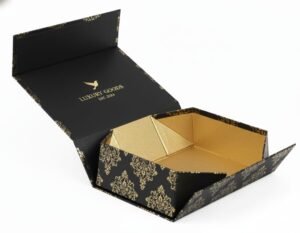
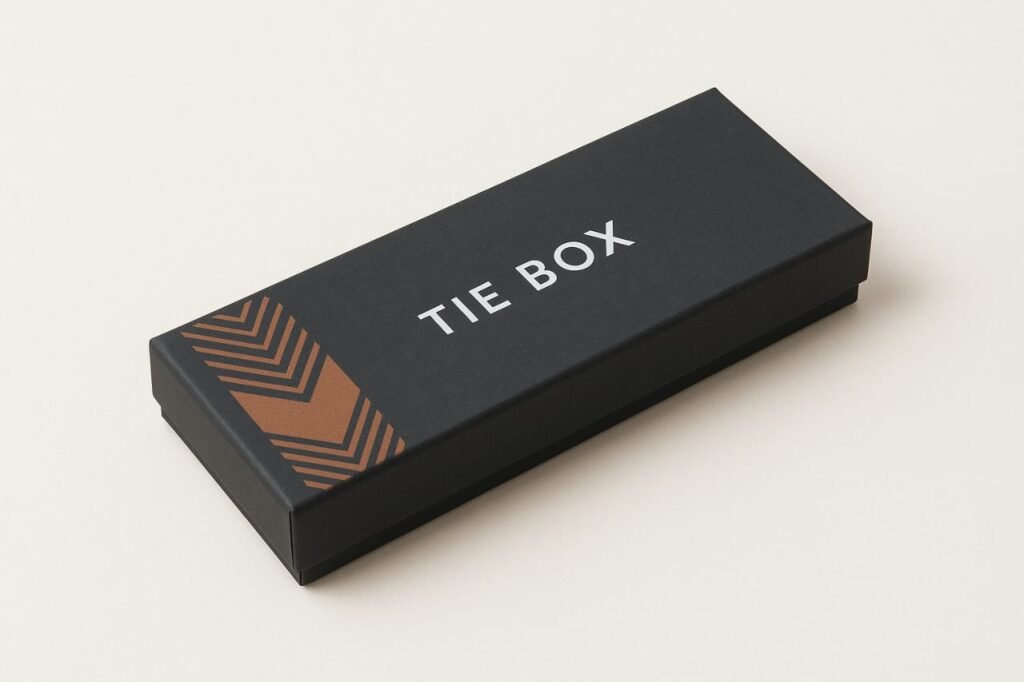
- Rigid (two-piece) boxes:premium look, sturdy feel, keeps shape — typical for branded gift boxes. Many luxury tie boxes use this style.
- Folding cartons (tuck top / roll end):cheaper, space-efficient for flat packing — often used in volume retail.
- Window boxes:great for retail display so customers can see the fabric before buying. Windows reduce perceived “mystery” and increase conversions in stores.
- Corrugated shipping cartons:if you ship in volume, put the retail box inside corrugated to protect during transit.
Eco note: if sustainability matters to you, many custom box printers offer recycled kraft options or FSC-certified board. Ask your supplier about recyclable linings and vegetable-based inks.
Ordering Custom Tie Boxes (What to Ask Your Supplier)
If you’re ordering custom tie boxes, here’s a checklist to get the right size and finish:
- Ask for a prototype/samplebefore full production — check fit and presentation. Suppliers often offer a sample run.
- Specify internal vs external dims: many printers want finished (external) dimensions; clarify whether they’ll account for board thickness.
- Request a dieline or mockupso you can visualize logo placement and insert layout.
- Confirm tolerances— ask how much variance (±) they use for small runs.
- Choose material with shipping in mind— rigid for retail and gifting, corrugated for direct ship orders.
FAQ
Can I use a standard 14" box for an extra-long tie?
If your tie is longer than ~58 in, test the fold/roll first. You may need a slightly longer box or a different folding pattern to avoid tight bends. Some specialty ties require custom lengths.
How much buffer should I leave inside the box?
0.25–0.5 in clearance in height and width is usually enough for tissue and a neat fit. For thick silk ties or foam inserts, lean toward 0.5 in.
What’s the cheapest way to package a tie?
Buy standard folding carton tie boxes (off-the-shelf 14 × 4½ × ¾ in options) and ship them inside corrugated cartons. Bulk buys lower unit cost.
Pick the Size That Fits the Story
A tie box is small but mighty: it protects the fabric, shapes the unboxing moment, and carries your brand. Start with the 14-inch length baseline that the market uses, measure your tie the way you’ll display it (folded, rolled, or flat), then add half an inch of buffer for a comfortable fit. If you want something premium or unusual, go custom — designers and printers can turn nearly any dimension into a tactile, branded experience.