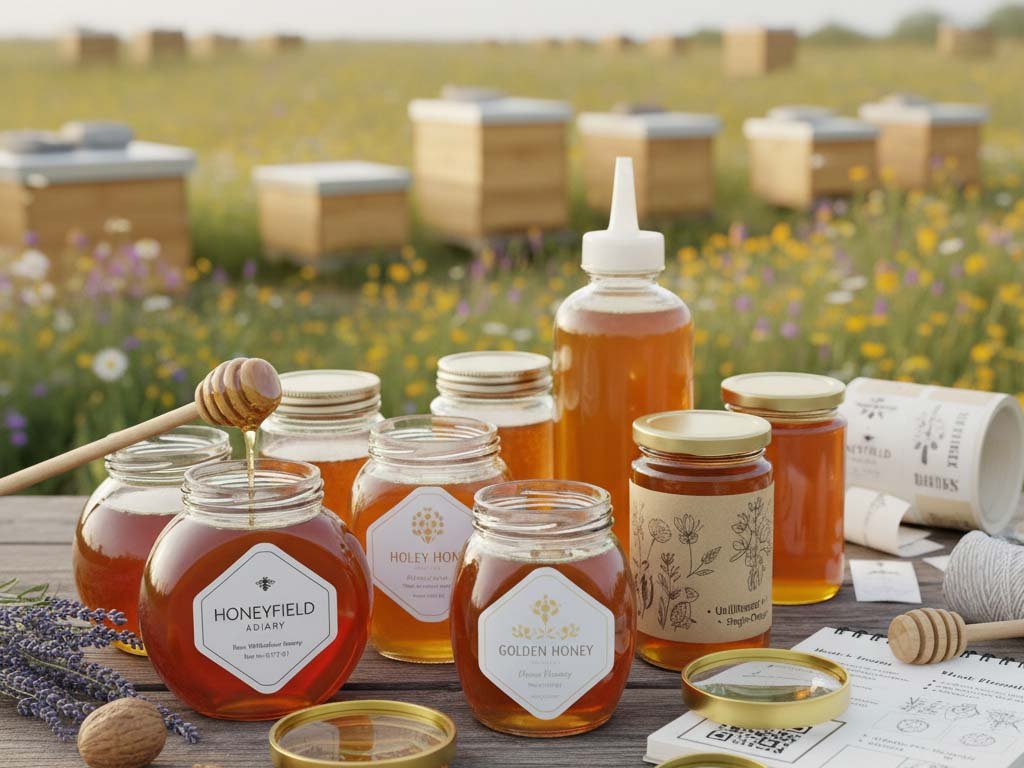
You’ve got this liquid gold sitting there—smells amazing, probably tastes even better, and honestly, you should be proud. But before you go putting some random sticker on top, take a second. A killer honey label? It’s gotta pull triple duty: sell your story, keep the food cops happy, and make some random shopper ignore everything else and grab your jar instead. Doesn’t matter if you’re just whipping up a handful of labels for the farmers’ market or going big with a pro batch for stores—this guide’s got you covered with straight-up advice, real examples, and design hacks you can actually use right now.
Why Good Honey Labels Matter
A honey label is not just decoration. It’s a legal declaration, a tiny marketing brochure, and a promise to the customer. Labels tell people what kind of honey they’re buying (raw, creamed, varietal), whether the product is single-ingredient, and who produced it. For sellers, correct labeling avoids regulatory headaches and builds trust with buyers who increasingly care about origin and processing. The U.S. Food and Drug Administration publishes clear guidance on labeling honey and honey products to help producers meet legal requirements.
On the international stage, the Codex Alimentarius sets widely recognized standards for honey composition and presentation; many countries reference the Codex standard when writing their own laws. Knowing and following these standards protects your brand and helps when you export or sell to specialized retailers.
The Must-Have Elements on a Honey Label
Regulations differ by country, but most successful commercial labels include the same essentials. Make sure every jar has:
- Product name: Use the common name—“Honey” or a variety such as “Clover Honey” or “Wildflower Honey.”
- Net weight: Expressed in metric and imperial units if you sell in multiple markets.
- Ingredient statement: Pure honey can be labeled as “100% Honey.” If you add flavorings, list them.
- Producer/packer name and address: Required for traceability.
- Country of origin: Increasingly important; new EU rulesrequire clearer origin information for blends.
- Nutrition panel: Often required for retail — check local rules for exemptions.
- Batch number & best-before date: Helpful for recalls and stock rotation.
For practical, country-specific guidance (especially if you sell in the U.S.), resources such as the National Honey Board summarize labeling points relevant to small producers and retailers.
Designing Labels that Sell and Don’t Fail the Compliance Check
Design matters, but compliance comes first. Start with the mandatory information, then layer your brand personality on top. Here are design choices that actually help sell:
- Front-of-pack clarity: Make “Honey” or your varietal the largest, clearest text.
- Short story: One line—“From our hives in the valley since 2016”—adds trust without clutter.
- Visual cues: Honeycomb motifs, a bee icon, or floral sketches make honey bee labels instantly recognizable.
- Callouts: “Raw,” “Unfiltered,” or “Single-Origin” help customers scan for attributes—only use verifiable claims.
- QR codes: Link to harvest photos, lab results, or a short beekeeping video to deepen connection.
Materials & Finish: What Survives Sticky Hands
Because jars get sticky, choose label stocks and adhesives that survive handling and refrigeration. Here’s a quick comparison:
| Material | Pros | Best for |
|---|---|---|
| Paper | Affordable, great color | Short-run artisan jars and personalized honey labels |
| Vinyl | Water-resistant, durable | Outdoor markets, long shelf life |
| Clear polypropylene | “No-label” premium look | High-end jars, visible honey |
| Foil / embossed | Luxurious finish | Gift packs, seasonal special editions |
Practical Label Templates (Copy You Can Use)
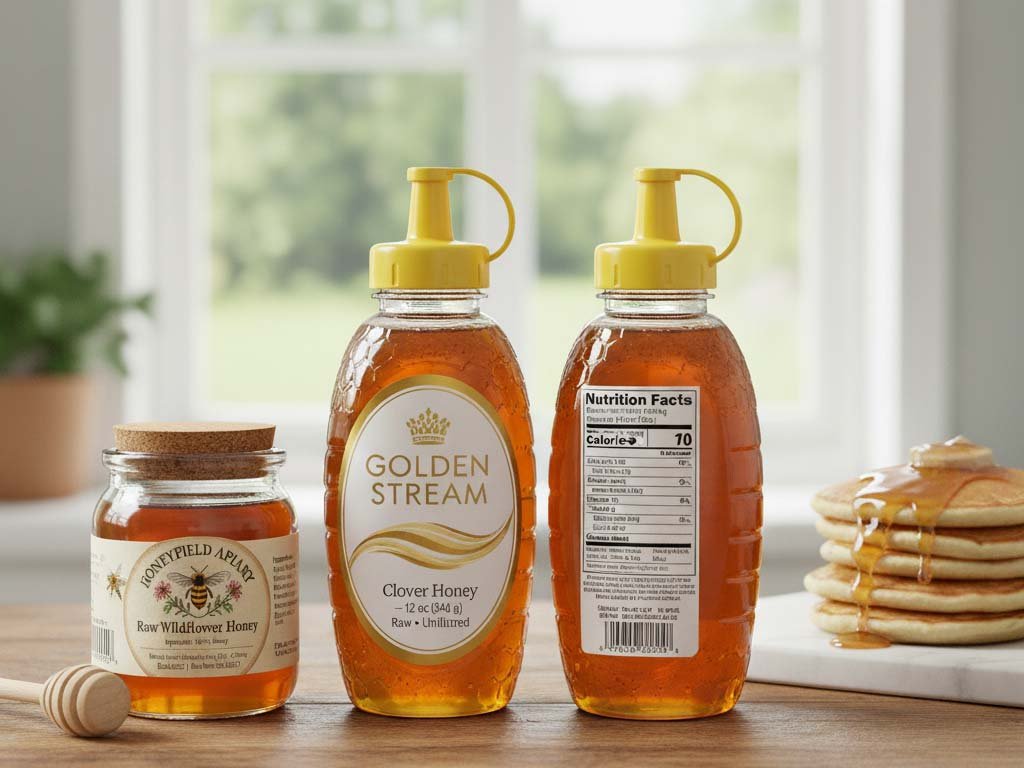
Small jar — front:
HONEYFIELD APIARY
Raw Wildflower Honey
Net wt. 2 oz (57 g)
Back:
Ingredients: 100% Honey
Bottled by Honeyfield Apiary, 12 Meadow Ln., City, Country
Batch: HFA0425 | Best before: 06/2027
Squeeze bottle — front:
GOLDEN STREAM
Clover Honey — 12 oz (340 g)
Raw • Unfiltered
Back: (include nutrition facts and contact info)
Custom, Personalized, and Private Label Honey
Custom honey labels and personalized honey labels are huge for weddings, corporate gifts, and local events. Buyers love jars with names and dates—those labels become keepsakes. If you offer private label honey, the relationship changes: retailers want consistent supply, traceability, and clean dielines for their brand layout. Private labels can scale your business, but it demands consistency and often third-party testing or certification.
Common Mistakes and How to Avoid Them
- Too much front-of-pack text: Keep the main message short.
- Skipping adhesive tests: Order proofs and test in the fridge and heat.
- Using unverifiable claims: Don’t claim “organic” or “raw” without documentation.
- Ignoring origin transparency: Blended honeys need clear origin statements under newer rules—especially in the EU.
Quick Consumer Insight: What Shoppers Look For
Consumers use labels to decide on health, origin, and processing. Surveys show ingredient lists, origin, and production claims are top influences when buying food—so honey labels for jars are a primary decision tool. Use the space to highlight what matters: origin, purity, and unique attributes.
Working With Printers & Dielines
Before a full run, request a printed proof on the actual stock. Provide dielines with a 1/8″ bleed and confirm minimum runs. Short digital runs suit personalized honey labels, while offset is cost-effective for large orders of honey jar labels or honey bottle labels. Ask for vector files and test adhesives before committing to thousands of labels.
Quick Label-Size Guide
Measure your container before finalizing a layout. Typical recommendations:
- Small hex jars: 2″×2″ (round)
- Medium jars: 3″×4″ (front) or 6″ wraparound
- Squeeze bottles: 2.5″×4.5″ or full wrap
Use vector PDFs (with dielines) to avoid resolution problems and miscuts that cause peeled corners.
Labels as Marketing
A label can prompt connection. Try lines like “Scan for this month’s hive update” or a mini-recipe: “Try with yogurt & lemon zest.” For private label honey, a clean, distinctive label helps the retailer stand out on shelf and online.
Mini Case Study: From Hive to Shelf
A small apiary in Oregon started with handwritten honey jar labels for farmers’ markets. After adding basic compliance info and a short origin story—“Willamette Valley, summer 2024”—sales rose. They invested in clear polypropylene labels for their premium line and used custom honey labels for weddings. When they offered private label honey to a local boutique, consistent dielines and a reliable supply schedule sealed the deal. The lesson: clear, honest labels and tested materials scale trust into sales today.
Final Thoughts
Good honey labels are practical and poetic: they present required facts clearly while hinting at the landscape, the bees, and the people behind the jar. Whether you’re designing honey jar labels for a roadside stand, ordering honey bottle labels for retail, creating personalized honey labels for events, or negotiating private label honey deals, the label is your handshake with the customer. Make it honest, well-made, and a little bit charming.
Short FAQs
Do I need a nutrition panel on a small-batch jar?
It depends,farmers’ market sellers sometimes have exemptions, but retail channels typically require a nutrition facts panel. Check the FDA or your national regulator.
Can I use “raw” or “unfiltered”?
Yes,if your process meets the definition and you keep records to support the claim.
Should I identify floral sources?
Yes for genuine single-source honeys (acacia, manuka). For blends, indicate “blend” and follow origin disclosure rules where required.
Are recycled labels OK?
Yes,many recycled stocks work well, but verify adhesive and coating compatibility with sticky handling.