Blog

Magnetic Gift Boxes Wholesale: Why Premium Brands Are Quietly Switching to Them
People often talk about product quality, branding, and pricing — but rarely do they pause to talk about the box itself. Yet in many cases,
What Products are It Mainly Used For?
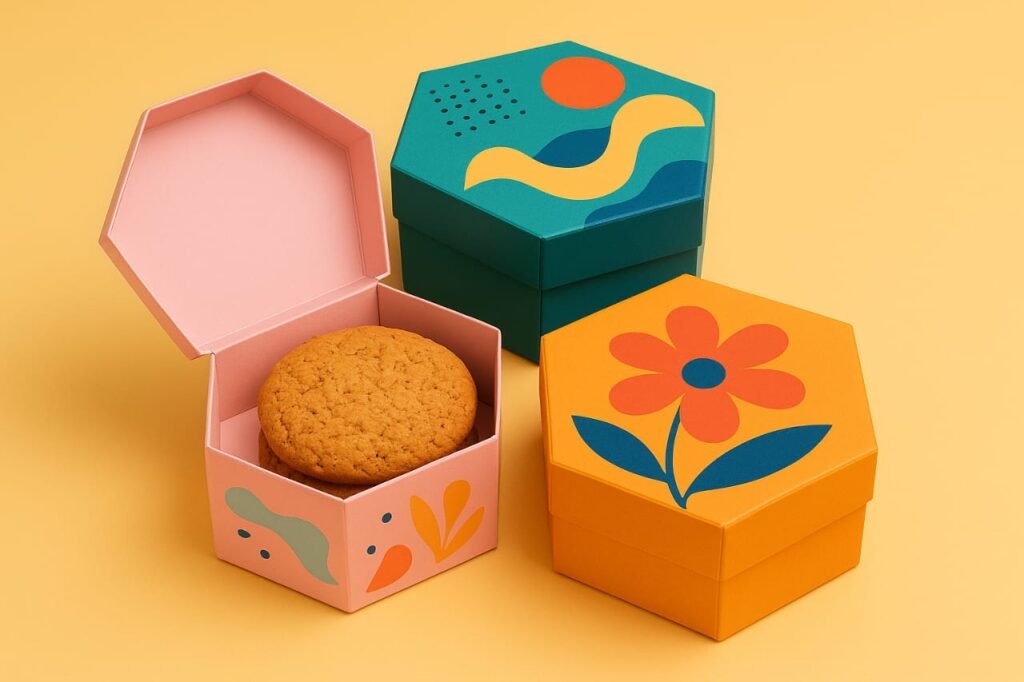
If you’ve ever paused at a store shelf because a package just looked cooler than the rest, chances are it wasn’t a plain rectangle. It might’ve been a hexagon box—a six-sided standout that turns heads before a customer even reads the label. In packaging, attention is currency, and hexagon boxes spend it wisely.
In this guide, we’ll unpack (pun intended) what a hexagon cardboard box actually is, why brands keep choosing it, and which products look and sell best inside a custom printed hexagon shaped box.
A hexagon box is a container whose footprint is a regular (or near-regular) hexagon—six equal or nearly equal sides—with a base and lid (or a single auto-bottom style), made from materials like paperboard, rigid board, kraft, or corrugated. The shape creates a distinctive “faceted” presentation and provides plenty of printable real estate on all sides for branding, labels, or windows. Large packaging companies describe hexagon packaging as an eye-catching, premium way to present products, fully customizable and printable on all six faces (plus the ends).
Many suppliers emphasize that hexagon boxes are popular because of their geometry (it feels luxurious), their structural sturdiness (especially in rigid boards), and their flexibility across categories from gifts to cosmetics to confectionery.
Takeaway: A hexagon box is a six-sided canvas that’s both pretty and practical.
The silhouette alone differentiates your product in a sea of rectangles. A unique panel arrangement makes every angle “front-of-pack,” which helps with brand blocking on shelves and in photos. Large converters like Smurfit Kappa explicitly call out the premium, exclusive feel of hexagonal packaging.
From matte/soft-touch lamination to gloss, foil, emboss/deboss, and spot UV, a custom printed hexagon shaped box can be dressed to match any brand mood—elevated, playful, or artisanal. Rigid versions are particularly good at telegraphing “luxury.”
You’ll find foldable paperboard versions for lighter goods, rigid set-up boxes for premium items, and even kraft or corrugated options for eco-forward brands and heavier contents. Multiple suppliers market hexagon formats across these materials for cosmetics, candles, gifts, and more.
Six printable sides = six storytelling opportunities. You can allocate panels to ingredients, rituals, sustainability notes, QR codes, or limited-edition art—without cluttering your primary “hero” face. (Suppliers highlight that you can print on all sides; use that real estate!)
Anything that benefits from a premium “giftable” look or a geometric display. Here are the most common categories you’ll see in the wild:
Perfumes, skincare sets, bath bombs, and boutique makeup often ship in hexagon formats because they photograph beautifully and feel gift-ready off the shelf. Rigid board gives the weight and hand-feel that beauty consumers associate with quality.
Candles love tall, rigid hexagon tubes/boxes. The sides add perceived value, and inserts keep the glass stable. Several rigid-box providers showcase candle applications specifically.
Rings, earrings, watches, silk scrunchies—small things that deserve “special” treatment look elevated in hexagons. Suppliers frequently list jewelry and gifts among top use cases.
Chocolates, macarons, cookies, honey jars, and tea tins look luxe in a hexagon gift box, especially for holidays and corporate gifting. Numerous vendors position hexagon boxes for sweets and favors.
Weddings, birthdays, and brand promos use compact hexagon boxes for keepsakes and treats. Even off-the-shelf favor kits (e.g., small kraft hexagon boxes) are widely sold online for DIY use.
Earbuds, craft tools, and small gadgets sometimes go hexagonal to stand out in premium lines. Vendors marketing rigid hexagon boxes list electronics among potential applications.
In one line: If it’s giftable, delicate, or premium—there’s a good chance a hexagon box suits it.
When you order a hexagon cardboard box, printers will usually ask for:
If you need to estimate internal volume for a regular hexagonal prism, a handy formula is:
Volume ≈ (3√3/2) × a² × h
(Use this only for regular hexagons; many dielines are “near-regular.” Your supplier will confirm precise internals.)
Pro tip: When in doubt, send your supplier the product plus a target unboxing style (snug vs. airy). They’ll dial in wall thickness, inserts, and tolerances so the fit feels premium.
Great for favors, confectionery sleeves, and lighter beauty SKUs. Cost-effective at scale and fully printable.
Best for premium candles, perfumes, jewelry, and gift sets; pairs well with velvet/foam inserts. Sturdy and photo-friendly.
Eco-forward look with higher durability. Perfect for rustic, natural, or minimalist brands—and for shipping shells with an internal rigid gift box.
Soft-touch (matte), high-gloss, foil stamping, emboss/deboss, spot UV, die-cut windows, ribbon pulls, and magnetic lids are all common on custom printed hexagon shaped boxes. (Suppliers consistently list these options as standard.)
| Product Type | Good/Better/Best Box Build | Typical Insert | Finish Ideas | Why It Works |
|---|---|---|---|---|
| Perfume / skincare set | Best: Rigid set-up hexagon | Foam or molded pulp | Soft-touch + foil logo | High perceived value, stable for glass. |
| Hand-poured candle | Best: Rigid + lid | Foam ring or card collar | Matte lamination + deboss | Weight + heat caution labeling space. |
| Chocolates / macarons | Better: Folding carton | Food-safe tray/dividers | Gloss + window | Gifting appeal; view of treats. |
| Jewelry & watches | Best: Rigid | Velvet pad/pillow | Foil + satin ribbon | Keepsake feel, premium unboxing. |
| Wedding / event favors | Good: Kraft folding | None or crinkle fill | Simple print + tag | Budget-friendly, easy to assemble. |
| Tea / specialty food | Better: Folding or rigid (depending on weight) | Card collar or tray | Matte + spot UV | Boutique look, stackable sides. |
Note: The table reflects common practices described by packaging providers and the customization options they advertise for hexagon styles. Always confirm food-contact materials and compliance when packaging edibles.
Angles catch light differently—your e-commerce images and UGC feel more dynamic. (That’s why you see luxury brands showcase faceted boxes in product shots.)
Six panels can each hold a micro-message—ingredients, origin, rituals, instructions, sustainability, and a QR link—without clutter. Converters note you can print every side, so take advantage.
A hexagon silhouette can nudge shoppers toward gifting—especially when paired with a ribbon pull, foil crest, and nested insert. Multiple vendors market hexagon boxes as inherently “giftable.”
Is it a primary gift box (rigid) or a lightweight unit carton (folding)? Candle glass vs. chocolate tray calls for different strength and inserts. Vendors categorize hexagon boxes across use cases—use those as a compass.
Inserts (foam, molded pulp, folded board, velvet pads) stabilize products and make unboxing clean. Many suppliers offer standard insert options alongside the box.
Think billboard panels: hero face, narrative, proofs (claims, certifications), instructions, brand story, and QR. Providers explicitly mention full-surface print options.
Request a dieline and a fully finished sample (especially for rigid), including the insert. Check fit, rattle, print alignment at edges/points, and lid friction.
If you need curbside-friendly packaging, ask for recyclable substrates and limit plastic windows. Kraft paperboard or uncoated stocks signal eco-intent while staying on brand. (Many suppliers offer kraft options for hexagon boxes.)
Usually, yes—particularly in rigid formats—because of more complex dielines, manual assembly steps, and lower factory efficiency vs. standard FOL/RSC or straight-tuck forms. However, the elevated look can justify a higher retail price or improve conversion in DTC.
Not really. You’ll find common favor sizes online (e.g., small kraft hexagon kits for events), but most brand packs are custom. If you’re prototyping quickly, an inexpensive favor pack can help you visualize scale, then you can commission a custom rigid or folding version.
Yes. Just mind the seams and alignment near the points; your designer should use the printer’s dieline to keep lines from breaking awkwardly at edges. Large converters highlight full-surface printing as a benefit of hexagon boxes.
Rigid hexagon boxes are particularly robust and praised for premium protection and display—ideal for glass candles, perfumes, and jewelry.
Shelby is a Senior Packaging Consultant at YiHongBox, specializing in creative packaging strategies and sustainable solutions. With years of experience in design innovation and market trends, she helps brands craft impactful, eco-friendly packaging that resonates with customers and elevates brand identity. Shelby shares practical insights for business owners, designers, and marketers looking to turn packaging into a competitive advantage.
People often talk about product quality, branding, and pricing — but rarely do they pause to talk about the box itself. Yet in many cases,
Some packaging tries too hard. It throws bold colors, huge logos, and busy designs right in your face, begging you to notice. Then there’s a