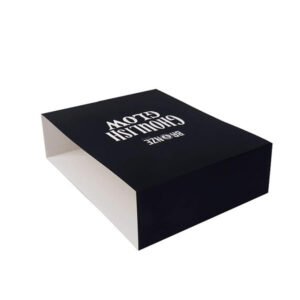
Tray and sleeve
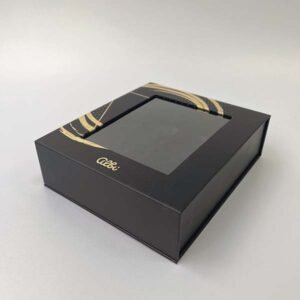
A sliding tray presents the vial row as it is pulled out. Agree on the closed fit, how far the tray should open, and where the customer can grip it.
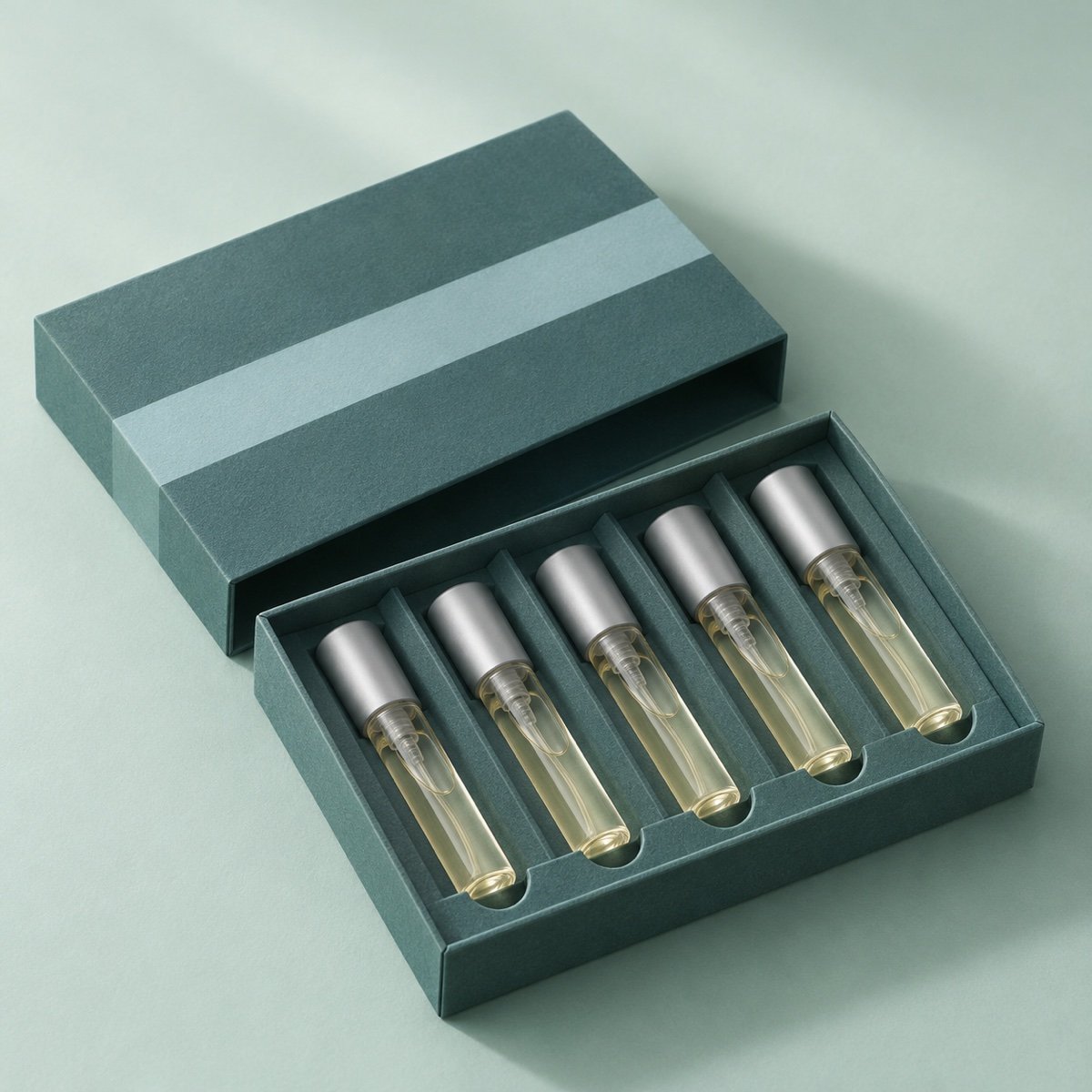
Custom printed boxes and fitted inserts for perfume sample vials and fragrance discovery sets. Build the layout around your vial count, cap dimensions, scent card and preferred opening style.
Standard MOQ: 1,000 boxes. Free design support; paid physical samples. Ask for a DDP quote to the US, Canada or Australia.
Images are original packaging concepts. Vials are illustrative props and are not included in the box quotation.
Custom perfume sample boxes bring several fragrances into one organized presentation. The outer box gives the set its identity; the insert holds each vial in the intended position and leaves room to lift it out. Use this format for a fragrance discovery collection, a retail sampler or a launch kit with a scent card.
Specify the actual vial and cap before choosing the box size. Two vials sold at the same nominal capacity can have different body diameters, spray heads and overall lengths. A good-looking insert is only useful if the real vial fits it without rattling, scraping the label or becoming difficult to remove.
A sliding tray presents the vial row as it is pulled out. Agree on the closed fit, how far the tray should open, and where the customer can grip it.
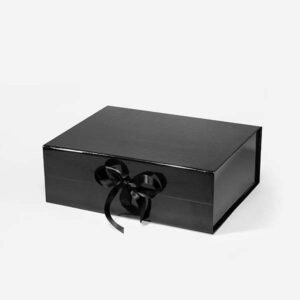
A lid that stays attached gives space for a scent index or sampling instructions. Check that a booklet or card does not press on the caps when closed.
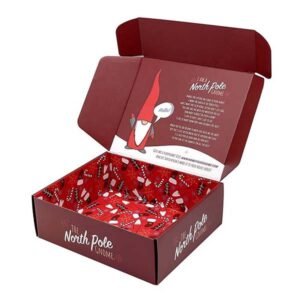
A printed carton with a fitted insert can suit a smaller sampler. Review the pack as a complete assembly rather than approving the outer carton and insert separately.
Define the number of vials, their orientation, removal access and the space for a card. Match each position to the fragrance identifier so the set remains easy to navigate.
If your project contains a full-size retail bottle rather than a vial collection, compare custom perfume boxes. If an existing presentation box already works and only the vial layout is changing, review custom insert options first.
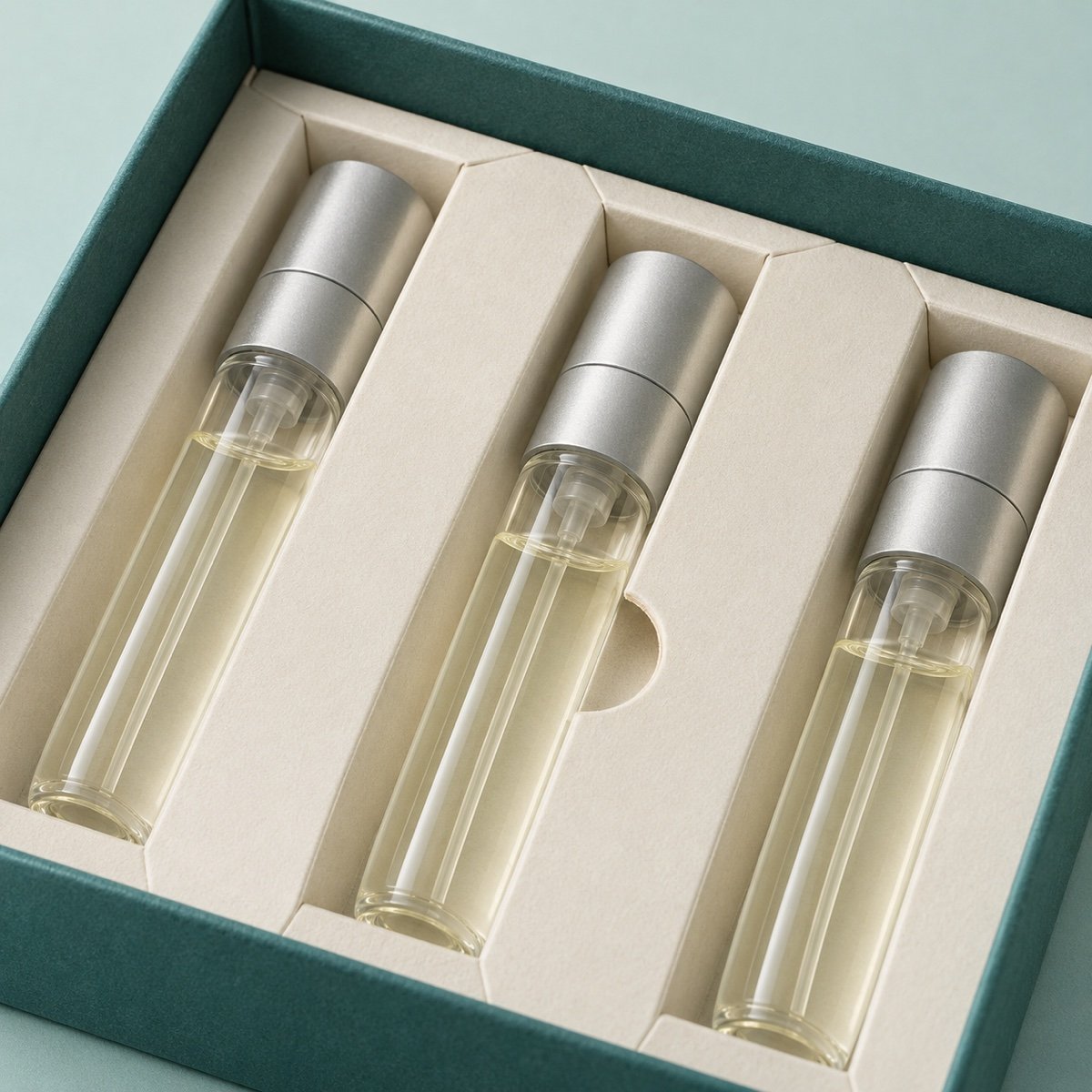
A paperboard insert and a foam insert are different constructions, not interchangeable descriptions. Ask us to compare a proposed material and retention layout around your vial. Do not use a polished rendering as a promise of transport protection: agree on the packed-sample checks your project requires.
Plan one consistent location for each fragrance name or position number. If the printed box is shared across several collections, a separately updated scent card may be worth comparing with a different outer-box artwork for every set. Confirm how the card and vial labels will be matched during packing; a beautiful box with a misplaced sample makes the set confusing.
Keep the finish specific. Supply the print target, proposed foil area or blind impression, and the desired paper feel. Our foil, embossing and debossing comparison explains what to inspect on a physical sample. If the assembled set will carry a checkout barcode, reserve a clear panel using the retail-box barcode checklist.
For sample approval, fit every vial, remove and replace each one, close the complete set and check the printed fragrance sequence. Record the sample ID and what changed between revisions. Keep the approved box, insert and artwork references together using the repeat-order specification checklist.
No. This page is for custom boxes and inserts. The glass vials and liquid shown in concept images illustrate a possible presentation; list any sourcing request separately so the supply scope can be confirmed.
Yes, the layout can be developed around your chosen quantity and vial dimensions. Changing the count may require a new insert and outer size. There is no fixed capacity that fits every vial and booklet combination.
Send both drawings and ask for a sample comparison. Do not assume one cavity will retain both simply because their fill volumes match. Separate inserts may be more appropriate if the bodies or caps differ.
Not automatically. If it will be sent to customers, review the complete packed construction and any outer mailer or cushioning. No leak-proof or transit-performance guarantee follows from the concept images. Filled-fragrance shipment arrangements are separate from the empty-box quotation.
The standard MOQ is 1,000 boxes. Design support is free; physical samples are charged. Typical planning allowances are about 7 days for sampling and about one month for bulk production after approval, subject to the confirmed project. Transit is separate. Include the delivery postcode for a DDP quote to the US, Canada or Australia.
Send the vial count, closed vial dimensions and a reference for the presentation you want. We can use those details to discuss the outer format, insert layout and physical sample.
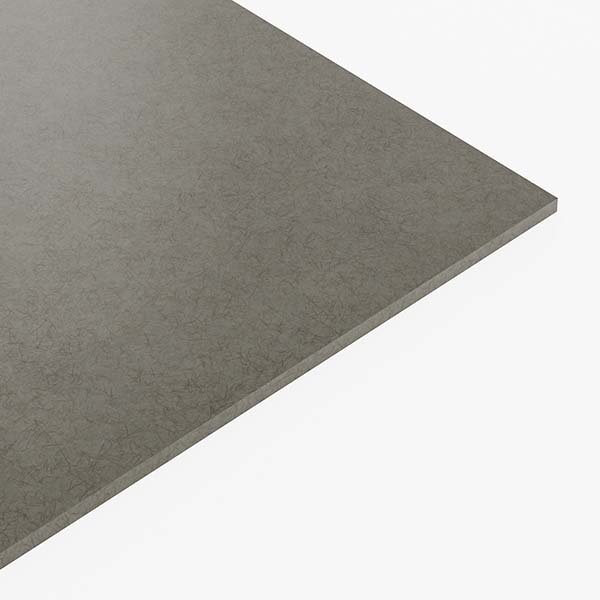
A thick and sturdy chipboard known for its premium quality and durability. It is used for luxury packaging and high-end product displays

A durable and lightweight paperboard material. It can have a clay-coated surface on one or both sides for enhanced printability.
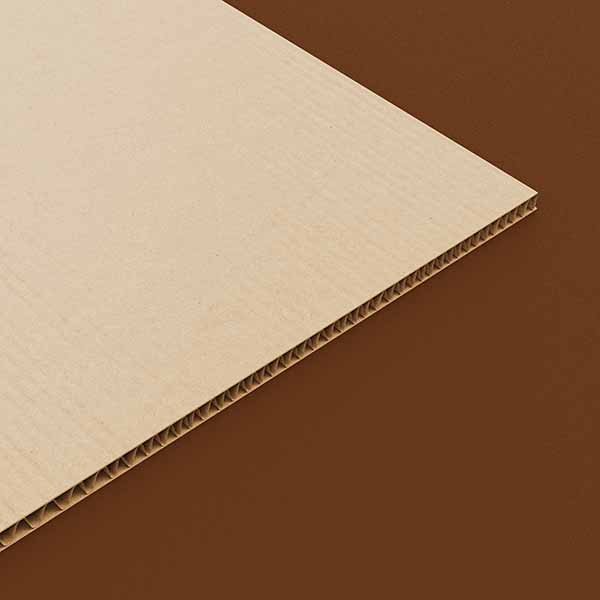
A strong and lightweight material with a fluted inner layer for added durability and cushioning. Perfect for shipping and product protection.
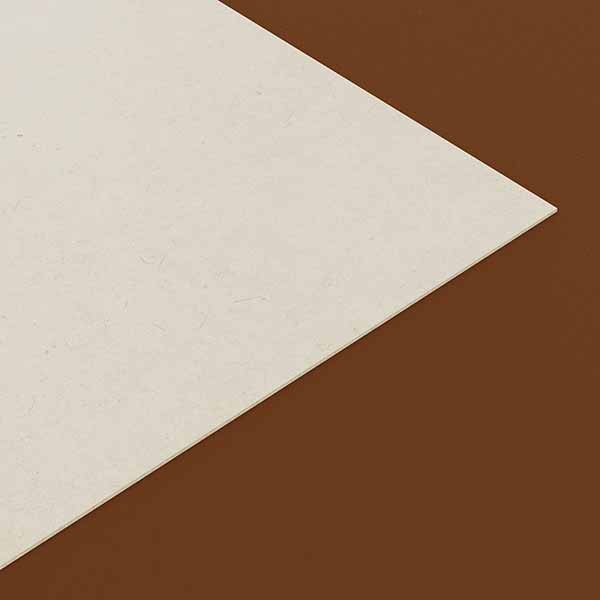
A strong, eco-friendly, unbleached kraft paperboard made from wood pulp. It has a natural brown color, making it ideal for sustainable packaging.
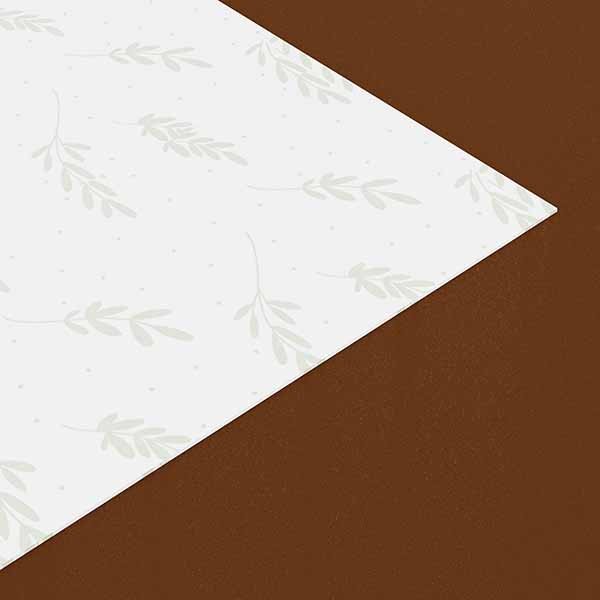
Water-based coating offers environmental friendliness and fast drying.
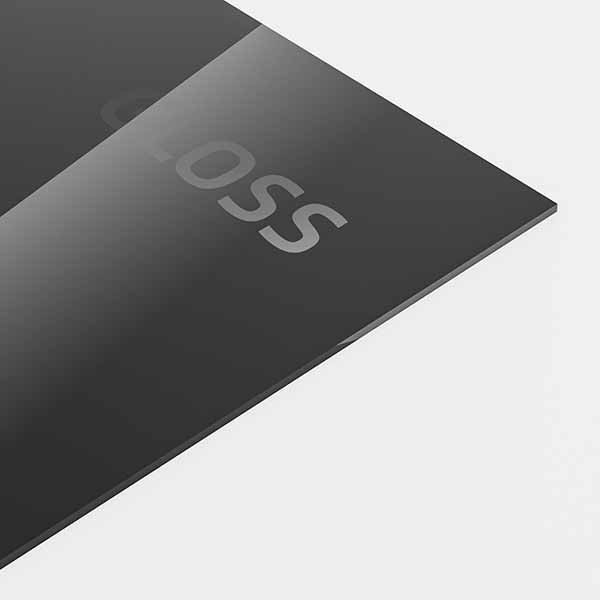
A shiny and vibrant finish thatenhances color depth andcontrast,making designs pop.
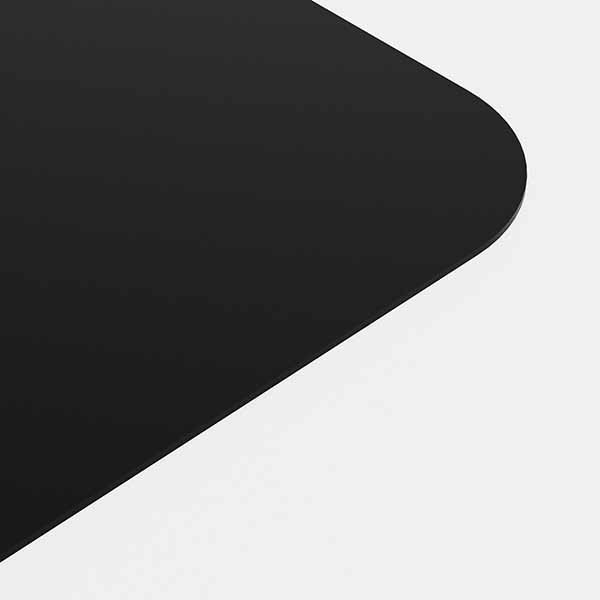
A velvety, premium finish that
adds a luxurious feel while
providing a subtle matte
appearance.
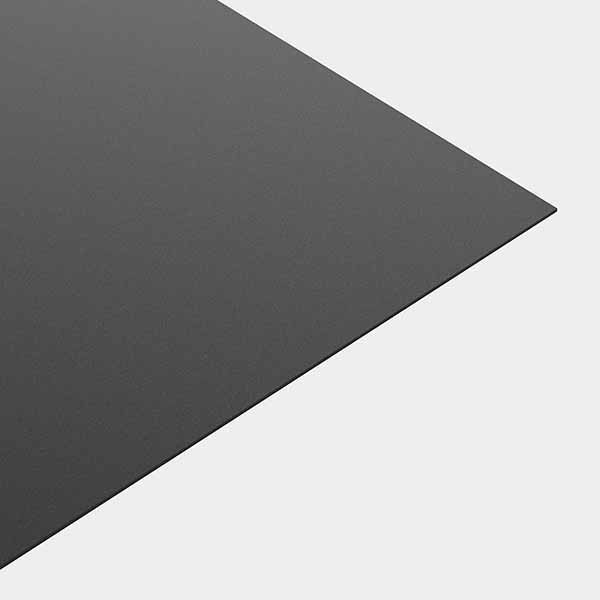
A low-gloss coating creates a muted, non-shiny appearance.
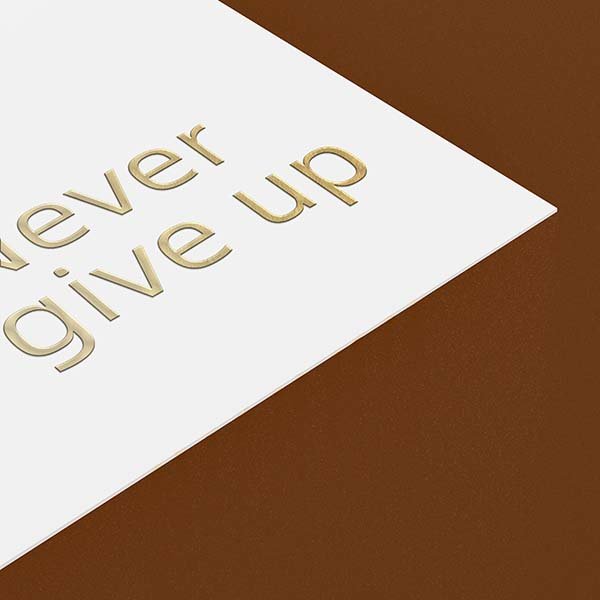
Form of relief printing in which foil is transferred to a surface at high temperatures.
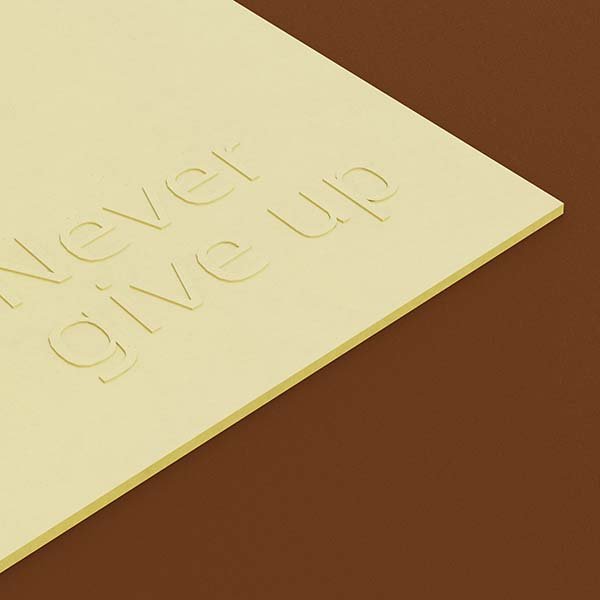
Creates a raised, textured effect on paper or cardstock.
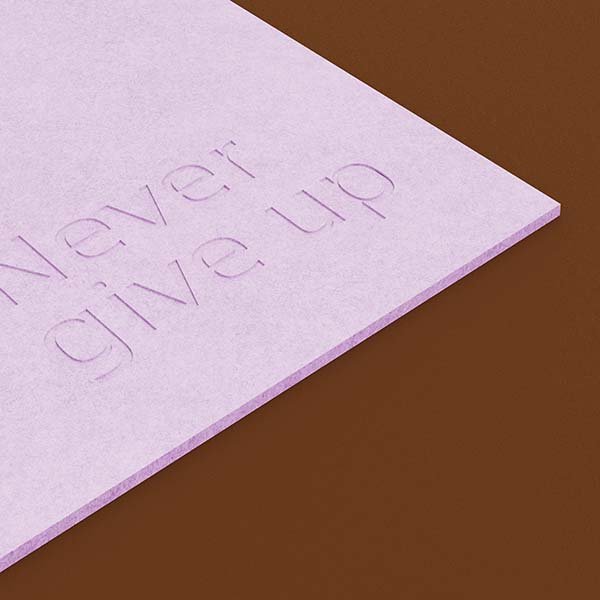
Creates a depressed, indented effect on paper or cardstock.
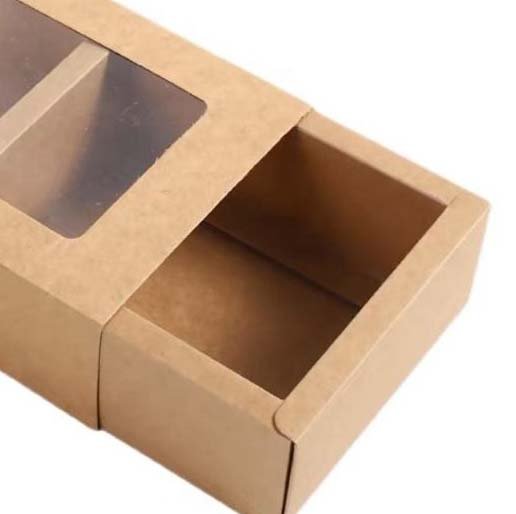
Die-cut shape is layered with plastic film to feature a window showcasing the product inside.