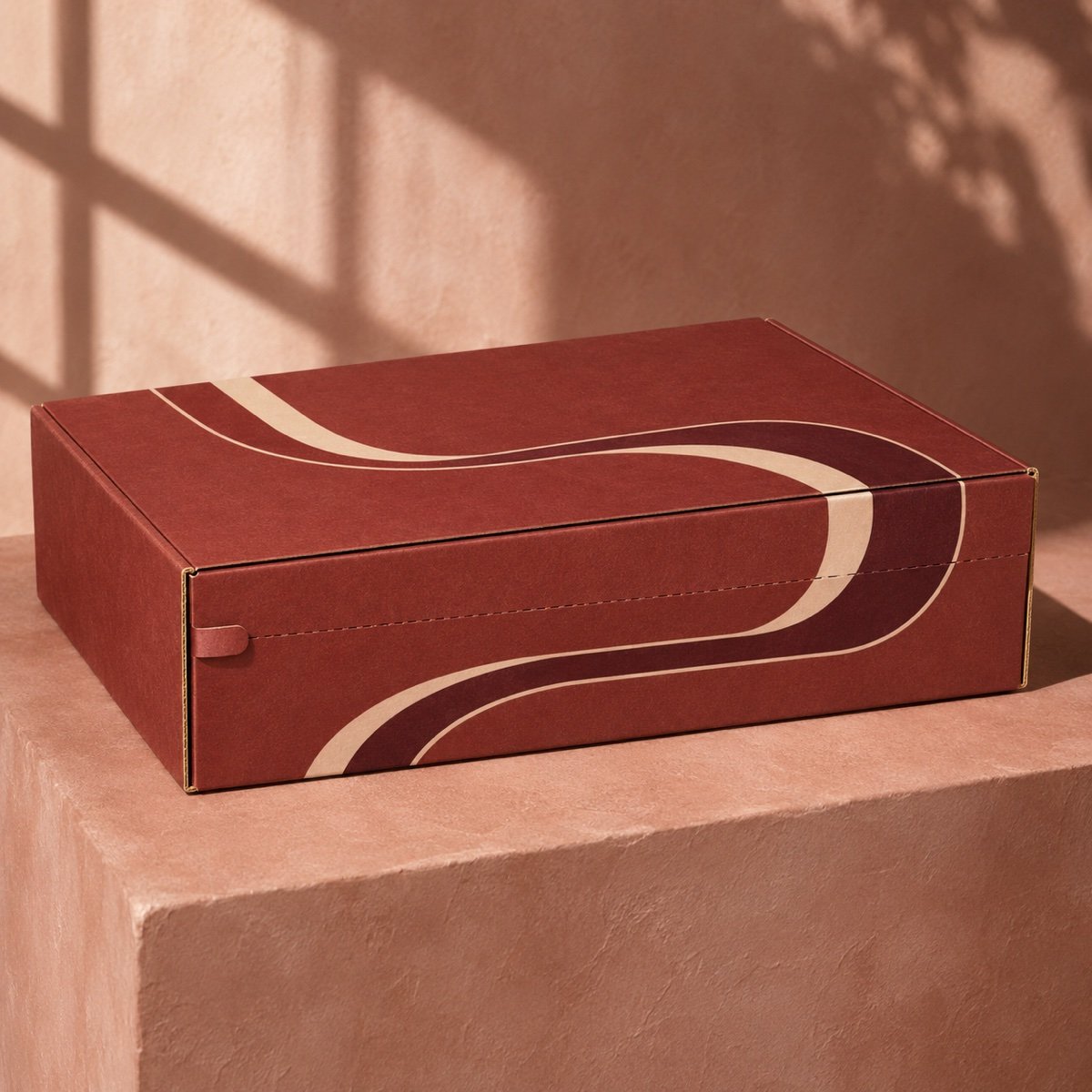
One corrugated box for delivery and an eligible return
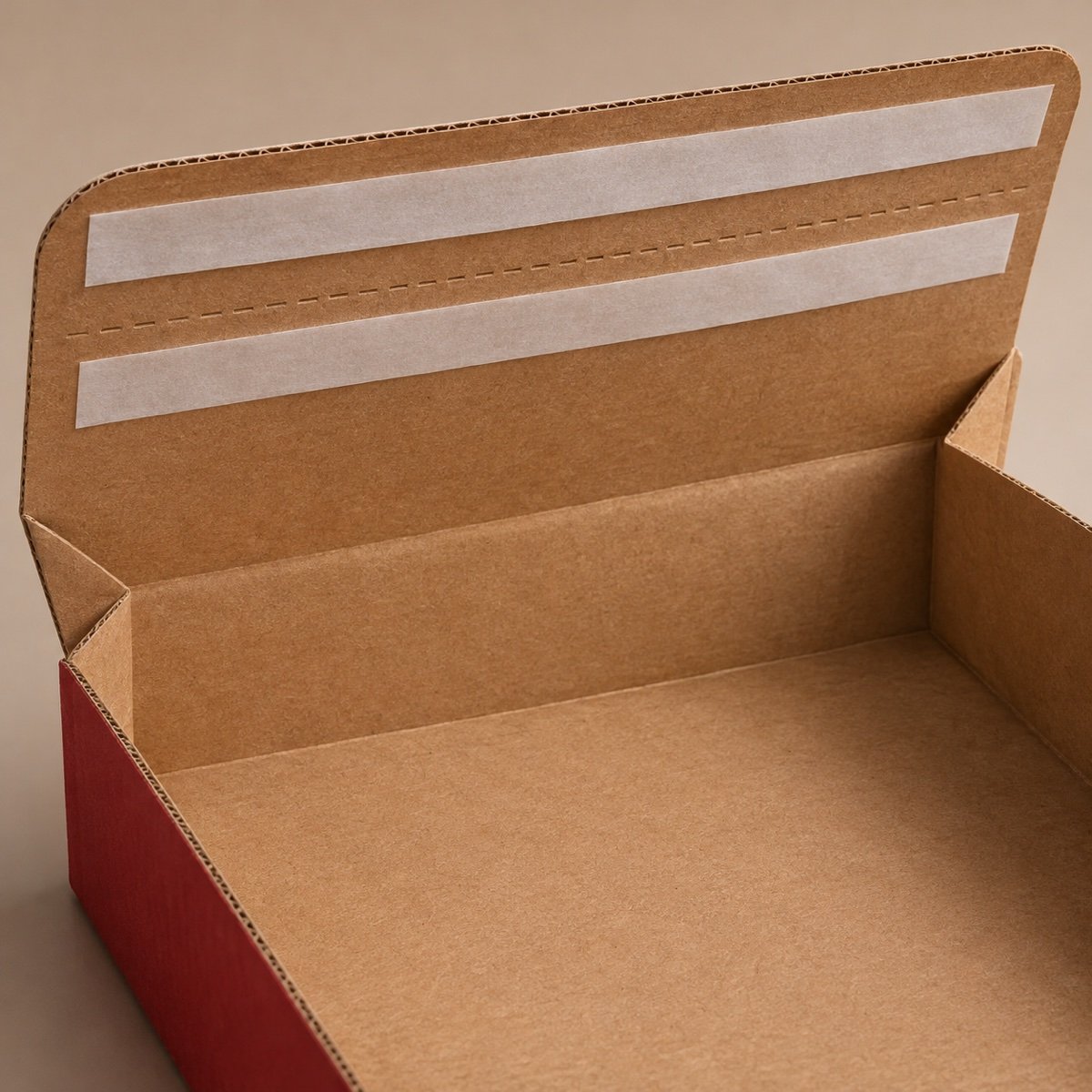
Custom return-ready mailer boxes combine a peel-and-seal strip for the first shipment, a tear strip for opening, and a second peel-and-seal strip for the return. The return strip stays covered until needed. Unlike a standard tuck-close mailer, the box is designed around what happens to the flap after opening: enough of it must remain to close the box again.
This format is useful for apparel, accessories and other e-commerce orders where shoppers may return all or part of an order. It is a two-closure carton concept, not an indefinitely reusable container. Confirm the closure on a filled sample before relying on it for either journey.
How the three strips work
01 / SEND
Seal the outbound order
The packer removes the first liner, closes the flap and presses it onto the matching panel. The second liner stays on.
02 / OPEN
Use the tear strip
The customer pulls the marked tab to open along the intended path without peeling off the unused return liner.
03 / RETURN
Reseal on the second strip
If the carton is still sound, the customer repacks the order, peels the second liner and presses the flap shut.
Specify the carton and the closure together
- Size for the filled pack. Send the product dimensions, packed weight and any insert or folded garment thickness. Share both the heaviest outbound configuration and a typical partial return so the box can be assessed for movement on both legs. Use our mailer sizing guide when comparing different finished outer dimensions.
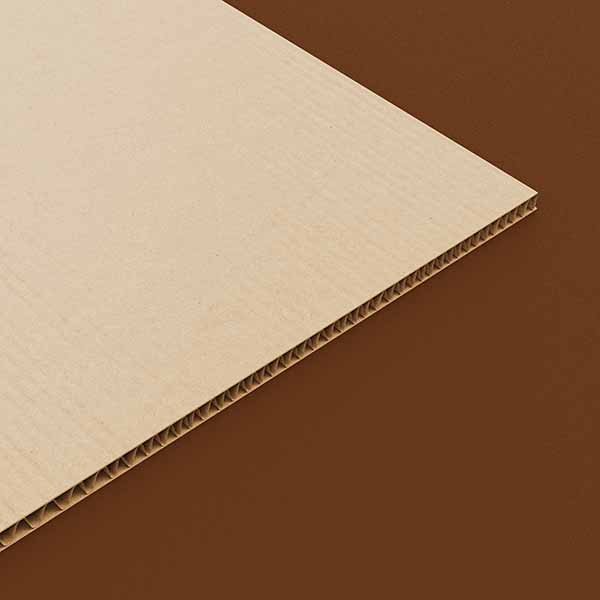
- Choose board and print as a pair. Compare E-flute and B-flute corrugated board against product weight, fit and distribution needs. Confirm the adhesive on the actual receiving surface, including any ink, coating or laminate. Do not assume a seal proven on plain kraft performs the same on a coated panel.
- Reserve space for labels and instructions. Use short, distinct directions for the tear tab and the liner marked for returns. Agree on a flat label panel that does not bridge the opening line or block the pull tab. Follow the carrier’s instructions for covering or removing old shipping labels on a return.
If your customer does not need a built-in return seal, compare a standard custom mailer box instead. If items shift when only part of the order comes back, evaluate a fitted insert or another way to protect the return contents.
Approve a send–open–reseal sample
- Close a filled sample with the first strip using the same hand pressure and packing sequence your team will use.
- Pull the tear tab without a knife. Look for tearing beyond the intended path, a damaged fold or a return liner that lifts with the opening strip.
- Put the return contents back in, check the fit, then use the remaining adhesive strip. Look for gaps, lifted edges or a return label that covers an important closure feature.
- Agree on which packed sample and shipping checks the buyer needs. Record the exact board, finish and adhesive combination so a later order does not silently substitute a different closure.
Frequently asked questions
Are the tear strip and the two seals the same part?
No. One adhesive strip closes the box for delivery and another closes it for return; the tear strip is the opening feature. Check that opening the box leaves the second liner intact.
Can I use a matte laminate or print inside the box?
Share the artwork and desired finish at quoting. Confirm which panels can be printed and whether the adhesive landing area needs to be left uncoated. Approve the selected combination on a finished sample.
Should a customer reuse a crushed or wet carton?
No. This design is for a return in a carton still fit to ship. Tell customers to use suitable replacement packaging if the board or closing flap is damaged, and to follow your return instructions.
What do you need to quote my order?
Send the inner dimensions or item dimensions, packed weight, quantity per size, print coverage and delivery postcode. Tell us what will be returned and whether you need DDP delivery to the United States, Canada or Australia.
What are the MOQ and sample terms?
The standard MOQ is 1,000 boxes. Design support is free and physical samples are charged. Allow about 7 days for sampling and about one month for bulk production after approval as planning estimates, subject to the confirmed construction and order. Transit is separate.
Request a quote for a two-way mailer
Send your packed dimensions, a product photo and the return instructions you plan to print. We can review how much flap space is available and what to confirm on a physical sample.