Choosing between E-flute and B-flute mailer boxes is not simply a question of which board is thicker. It is a procurement decision that affects print quality, compression strength, product protection, packing speed, storage space, freight volume, and the consistency of every delivery your customer opens.
For many ecommerce, subscription, apparel, beauty, gift, and consumer-product brands, E-flute provides the refined print surface and compact profile they want. B-flute may be the safer choice when the product is heavier, the delivery route is demanding, or additional cushioning is valuable. The right answer depends on the complete packed product—not the empty box alone.
This guide gives packaging buyers a practical way to compare both options, prepare a clear request for quotation, approve a useful physical sample, plan transit testing, and calculate a realistic DDP landed cost. If you need a broader introduction first, read our custom mailer box design and wholesale guide.
Quick recommendation
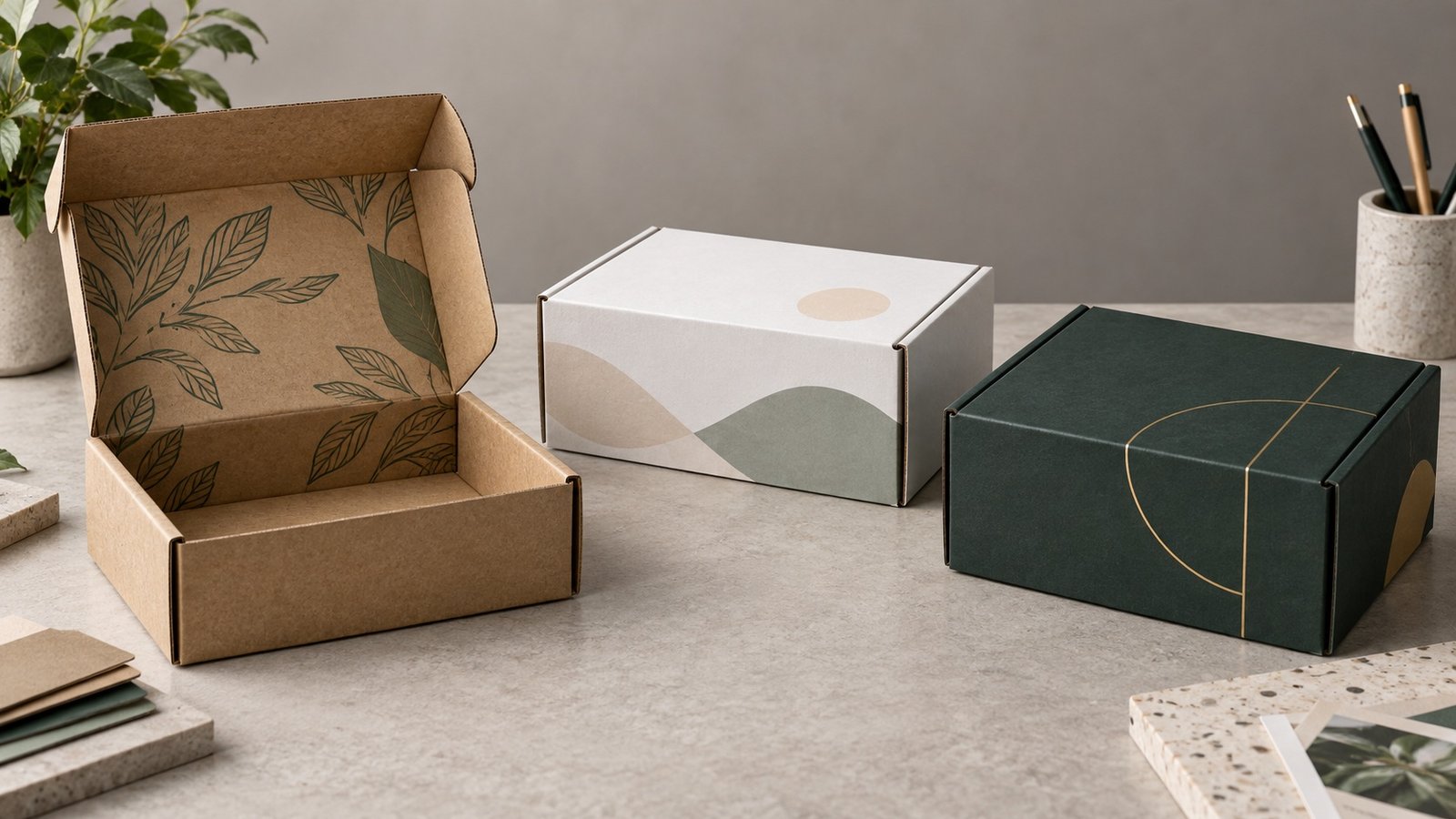
- Choose E-flute when premium printing, a slimmer profile, clean folds, and lighter ecommerce products are the priority.
- Choose B-flute when greater cushioning, stacking strength, or a more demanding parcel route matters more than the finest print surface.
- Do not approve either option until the supplier has tested the actual product, insert, box dimensions, closure, and distribution route as one packaging system.
What Is a Custom Mailer Box?
A custom mailer box is normally a one-piece, die-cut corrugated box with a hinged lid, tuck-in front panel, and interlocking side walls. It is commonly delivered flat and assembled without glue or staples at the packing station. Compared with a standard regular slotted shipping carton, a mailer offers more printable surface, a cleaner presentation, and a more controlled unboxing sequence.
That does not automatically mean every mailer is ready to ship without an outer carton. The answer depends on product fragility, total packed weight, board grade, closure method, climate exposure, carrier network, and acceptable cosmetic damage. Our guide to mailer boxes versus shipping boxes explains the structural distinction in more detail.
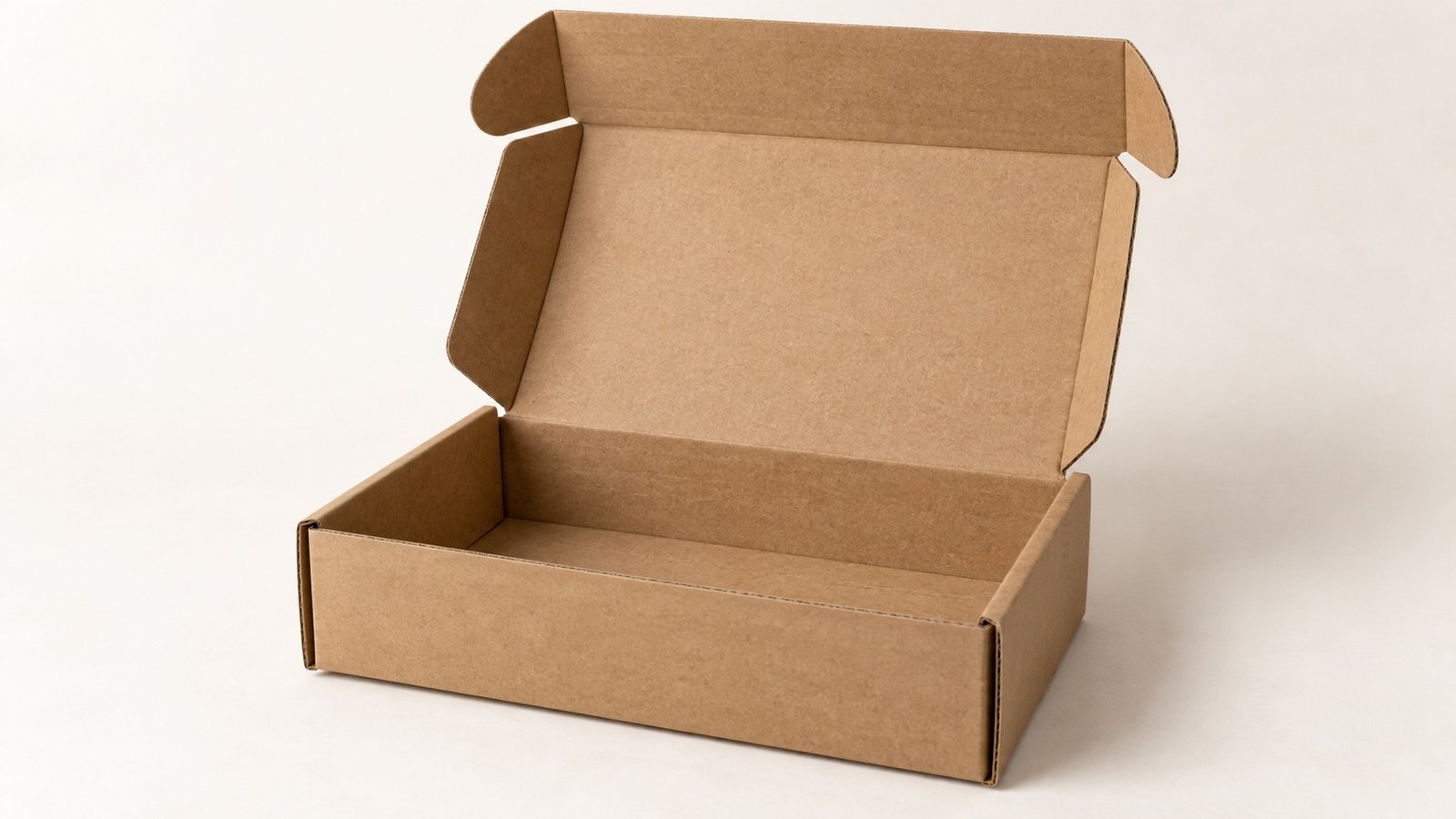
Procurement teams should therefore specify whether the custom mailer will serve as:
- a presentation box placed inside a separate shipping carton;
- the primary parcel container shipped directly to the customer;
- a retail or subscription box moving through a fulfillment network; or
- a multipurpose pack that must work for both retail presentation and ecommerce delivery.
This single decision changes the appropriate flute, paper grade, coating, closure, insert, and test plan.
E-Flute vs B-Flute: The Practical Difference
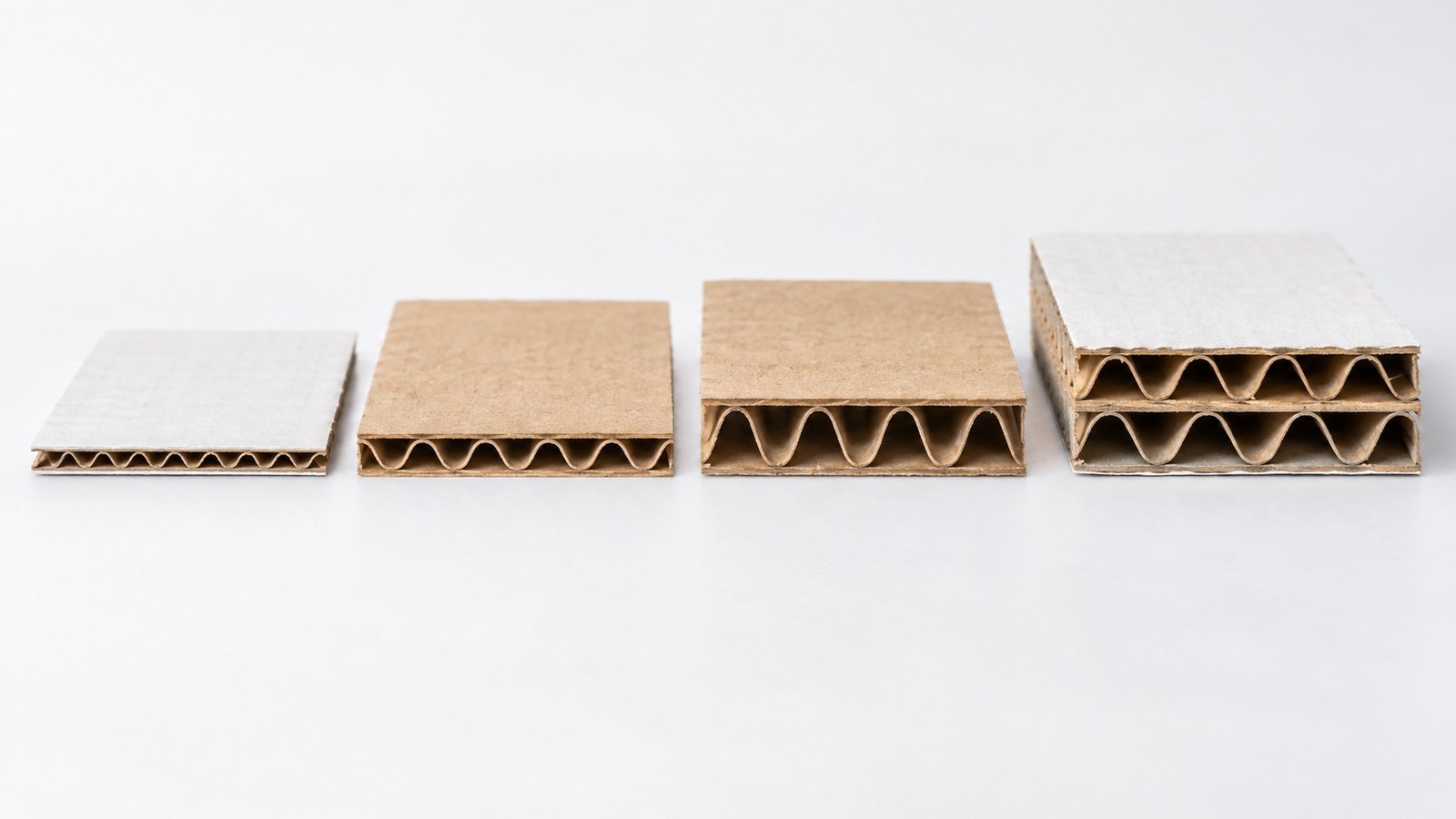
Corrugated board combines outer and inner liner papers with a wave-shaped medium. The height and frequency of those waves influence the board’s thickness, rigidity, cushioning, fold quality, and printable appearance. Exact caliper varies by mill, paper combination, machine, and measurement method, so the supplier’s material specification should always control the final purchase order.
| Buying factor | E-flute mailer box | B-flute mailer box |
|---|---|---|
| Typical profile | Fine, relatively thin corrugation, often around 1–2 mm depending on specification | Thicker corrugation, often around 2.5–3.5 mm depending on specification |
| Print appearance | Usually smoother and better suited to detailed graphics | Good for bold graphics, but the heavier flute can show more surface variation |
| Cushioning | Moderate; often paired with an insert for fragile products | Generally greater due to the deeper flute profile |
| Storage and cube | Slimmer blanks can reduce storage volume | More board volume per blank |
| Common fit | Beauty, apparel, accessories, small electronics, subscriptions, gifts | Heavier kits, multiple products, glass items with inserts, demanding parcel delivery |
The European Federation of Corrugated Board Manufacturers publishes a technical quality catalogue covering flute types and corrugated-board testing. Use such standards as a common language, but put the actual agreed material construction and acceptance criteria in your RFQ and purchase order.
When E-Flute Is the Better Buying Choice
E-flute is often the first option to evaluate when the box has to look like branded retail packaging while still providing corrugated protection. Its finer flute profile creates a comparatively even surface for printed liner, supports tighter folds, and keeps the assembled pack visually compact.
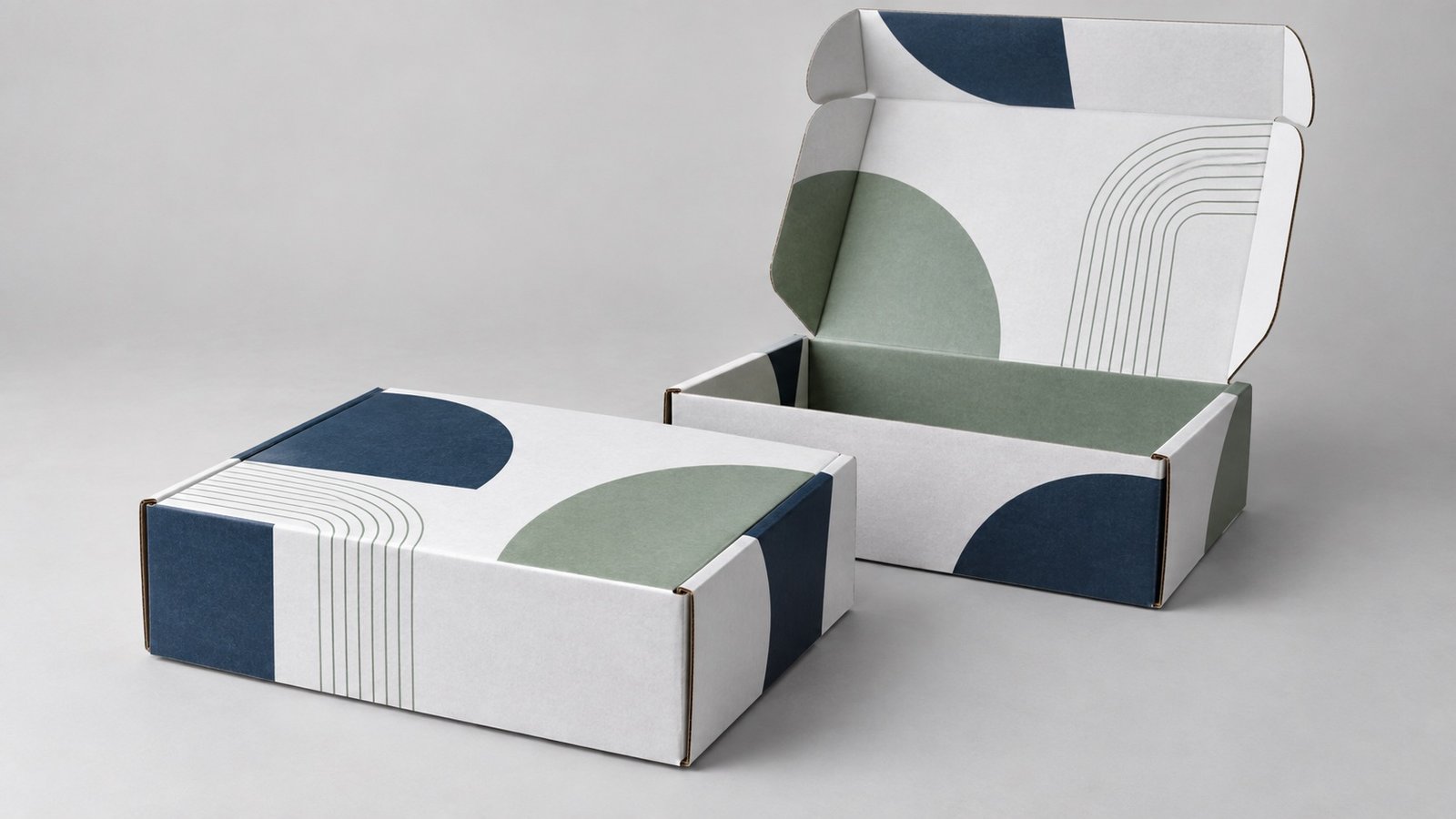
E-flute usually makes sense when:
- the product is light or moderately weighted;
- fine typography, photography, or close color control is important;
- the mailer includes interior printing for a premium unboxing experience;
- the packed box will be placed inside an outer shipping carton;
- warehouse and fulfillment storage space is limited;
- a neat, compact edge profile supports the brand position; or
- a fitted insert will manage movement and localized impact.
Typical applications include skincare sets, jewelry accessories, apparel, stationery, small technology accessories, influencer kits, and compact subscription shipments. However, “E-flute” alone is not a strength specification. The liner papers, medium weight, recycled-fiber content, moisture condition, dimensions, print coverage, and die-cut design all influence final performance.
When B-Flute Is the Safer Choice
B-flute has a deeper profile and is commonly evaluated when cushioning and structural robustness matter more than achieving the thinnest possible presentation. It can be helpful for heavier products, larger dimensions, mixed-product kits, or parcel routes where the box may encounter repeated handling and stacking.
B-flute deserves consideration when:
- the packed product is relatively heavy for the box footprint;
- the product contains glass, ceramics, bottles, or other impact-sensitive components;
- the box has a wide lid or long unsupported panels;
- the mailer may ship without an additional outer carton;
- compression and edge protection are key concerns;
- the delivery route includes multiple sorting and transfer points; or
- the customer can accept a slightly thicker, more visibly corrugated profile.
B-flute is not automatically “better” because it is thicker. An oversized B-flute box with excessive void space can perform worse than a correctly sized E-flute box with a well-designed insert. Start with the product and route, then engineer the package around them.
Choose Flute by Product Risk, Not by Appearance Alone
A useful specification begins with five inputs: packed product weight, fragility, dimensions, value, and distribution environment. The buyer should also define what counts as failure. A broken product is an obvious failure, but a premium brand may also reject crushed corners, scuffed print, lid opening, or an unboxing presentation that no longer looks new.
Use this decision sequence:
- Measure the product correctly. Record maximum product dimensions, not just nominal dimensions. Include caps, accessories, cables, and protective bags. Our custom box measurement guide explains the basic dimension order.
- Define movement allowance. Decide how much clearance is needed for packing while preventing movement in transit.
- Select the insert. Paperboard, corrugated, molded pulp, or foam each changes the box size and impact response. See our guide to box insert types and materials.
- Choose a preliminary flute and paper combination. Ask the supplier to state the full construction, not only “E” or “B.”
- Prototype the packed system. Evaluate assembly, fit, closure, print, and product removal.
- Test for the real route. Screening tests and distribution simulations answer different questions.

Printing: Why E-Flute Often Looks More Refined
The print result depends on both the printing process and the liner surface. Buyers commonly compare direct flexographic printing, litho-laminated printing, and digital printing. The most appropriate option depends on artwork complexity, color targets, order volume, budget, and sample strategy.
Direct flexographic printing
Flexographic printing applies ink directly to the corrugated surface. It is efficient for bold graphics and larger runs, especially on kraft or white liner. Very small text, smooth gradients, and photographic imagery require careful prepress review because corrugated surfaces and ink absorption can affect detail.
Litho-laminated printing
Litho lamination prints artwork on a separate paper sheet and mounts it to corrugated board. It is often selected when brands want detailed graphics, controlled color, or a more retail-like surface. The added paper and processing can affect cost, lead time, recyclability communication, and folding behavior, so approve the finished construction rather than a flat print proof alone.
Digital printing
Digital production can be valuable for prototypes, design testing, multiple versions, and some production quantities. Color and surface appearance may differ from the mass-production method, so the quotation and sample approval should state whether the physical sample represents structure only, color direction, or the exact intended process.
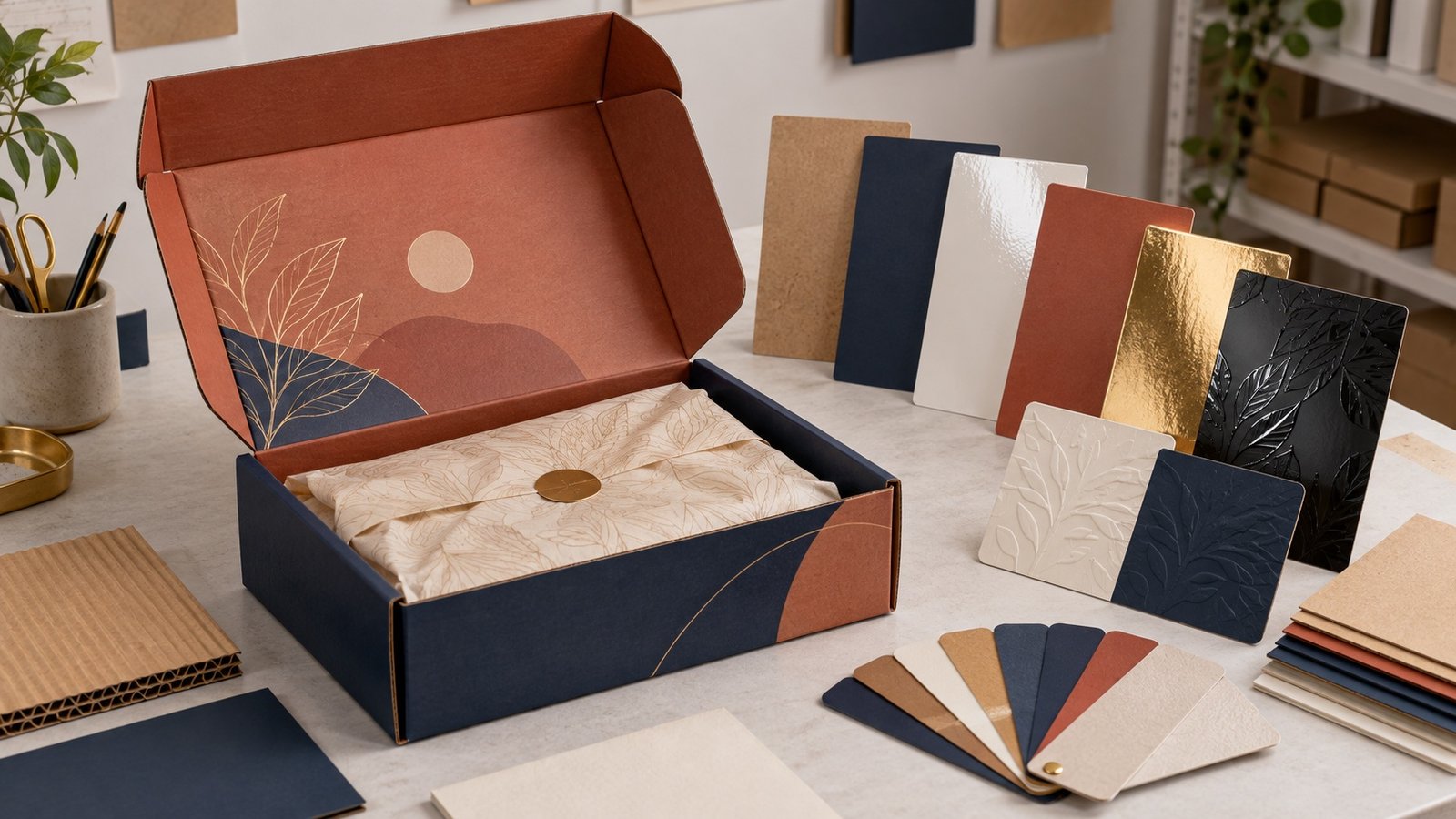
Finishes require a packaging-level check
Matte or gloss lamination, aqueous coating, spot varnish, foil, embossing, debossing, and specialty papers can improve presentation, but every finish adds a practical question. Will the fold crack? Will dark solids scuff? Will foil remain aligned across a crease? Does the coating change recyclability claims? Can barcode scanners read the final surface? Ask these questions during sample approval, not after mass production.
For the U.S. market, avoid vague, unsupported environmental language. The U.S. Federal Trade Commission advises marketers not to make broad, unqualified “green” or “eco-friendly” claims and explains when recyclable or recycled-content claims need qualification in its Green Guides summary.
Board Strength: Ask for Measurable Specifications
A quotation that says only “high-quality corrugated material” is not comparable. Request measurable information for the proposed construction. Depending on the market and supplier, this may include paper grammage, combined board caliper, edge crush test rating, burst strength, or another agreed performance value.
Your RFQ should also state:
- internal finished dimensions and dimension tolerance;
- maximum packed product weight;
- flute profile and complete paper combination;
- kraft or white outer and inner liner;
- printing method, color standard, and approved reference;
- coating or finish on each printed surface;
- insert material, retention points, and tolerance;
- closure method, tamper seal, or shipping tape requirement;
- flat-pack bundle quantity and master-carton specification;
- acceptance criteria for print, dimensions, assembly, and cosmetic defects; and
- required transit test or buyer-specific packaging protocol.
Sampling: What a Useful Physical Sample Must Prove
A beautiful empty sample proves very little about distribution performance. The most useful sample is assembled, packed with the real product or a dimensionally accurate substitute, closed exactly as it will be in fulfillment, and evaluated after realistic handling.
Separate sample approval into four decisions:
- Structure: dimensions, assembly sequence, locking tabs, lid alignment, and packing speed.
- Fit: product clearance, insert retention, removal experience, and accessory placement.
- Appearance: color, registration, surface finish, crease quality, scuff resistance, and interior presentation.
- Performance: compression, drop, vibration, climate exposure, and closure integrity appropriate to the route.
YiHongBox provides free design support and charged physical samples. A custom physical sample typically takes about seven days after structural and artwork details are confirmed. Mass production is typically about 30 days after final sample and artwork approval, with complexity and seasonal capacity able to affect the schedule.
Transit Testing for Ecommerce Mailer Boxes
There is no universal drop test that proves a package is suitable for every carrier and product. The test method should reflect the packed weight, product vulnerability, parcel method, fulfillment path, destination, and failure criteria.
The International Safe Transit Association’s procedure overview distinguishes basic integrity screening, partial simulations, and general simulation tests. For ecommerce programs, ISTA 3L is designed around hazards in retailer fulfillment and direct-to-consumer delivery, including shock, vibration, compression, temperature, and humidity. ISTA also notes that testing should be reconsidered when the product, package, material, closure, manufacturing process, or distribution system changes.
Carrier guidance can provide an additional reality check. Canada Post’s packaging guidance, for example, recommends a rigid, good-quality outer container and says packaging should generally withstand a drop of about one metre onto concrete. This is useful input, but it is not a substitute for a test plan specific to your packed product.
Minimum test discussion for a mailer-box supplier
- Will the mailer ship alone or inside an overbox?
- What is the packed weight and center of gravity?
- What drop orientations and heights are relevant?
- Is vibration testing required for the intended parcel route?
- How much compression may occur in storage or transport?
- Will humidity weaken the selected liner and medium?
- What product damage and cosmetic damage are acceptable?
- Does any material, size, insert, or supplier change trigger retesting?
How Inserts Change the E-Flute vs B-Flute Decision
A well-designed insert can let a slimmer box perform better by preventing acceleration and impact inside the package. A poor insert can transfer force directly into a fragile component, create pressure points, or allow the product to escape its retention features.
Paperboard inserts work well for light products and clean presentation. Corrugated inserts add cushioning and can remain within a paper-based material system. Molded pulp suits many sustainability-led programs and complex forms, although tooling and surface expectations must be considered. Foam may provide excellent protection for sensitive or high-value products, but it changes material separation and environmental messaging.
Do not specify the outer box before the insert concept is stable. The insert determines cavity dimensions; cavity dimensions determine internal box size; box size and packed weight influence flute choice and freight cube. Explore our custom box insert options when planning a complete packaging system.
Cost Comparison: Look Beyond the Unit Price
E-flute may use less storage volume, while B-flute may reduce damage risk in a demanding application. Either can be the lower-cost solution depending on the product and route. Compare total landed and operational cost rather than accepting the lowest box price.
| Cost category | Questions for the quotation |
|---|---|
| Development | Are structural design, dieline, artwork check, tooling, and physical samples included or separate? |
| Production | What flute, paper, print process, finishes, inserts, and packing method are included? |
| Freight cube | What are the master-carton dimensions, quantity per carton, gross weight, and total shipment volume? |
| Import and delivery | Does the quote include freight, customs clearance, duties, taxes, final delivery, and destination surcharges? |
| Operations | How long does assembly take? Does the box require tape? How much warehouse space is needed? |
| Failure cost | What are the expected damage, return, repack, and customer-service costs if protection is insufficient? |
Our B2B packaging cost-optimization guide provides a broader framework for reducing cost without removing value from the customer experience.
What DDP Shipping Does—and Does Not—Include
Under Delivered Duty Paid (DDP), the seller takes extensive responsibility for delivering the goods to the agreed destination, including import clearance and applicable duties and taxes, while the buyer is generally responsible for unloading unless the contract states otherwise. The named destination must be precise. “DDP USA” is not a complete instruction; a postal code, delivery facility, appointment requirements, lift-gate needs, and receiving constraints can change the quotation.
The International Chamber of Commerce is the authoritative publisher of the Incoterms rules, including DDP. Treat the Incoterm and named place as part of the sales contract, not as a casual shipping label.
YiHongBox supports DDP quotations for the United States, Canada, and Australia. To compare quotations fairly, provide the same destination, quantity, delivery window, product description, master-carton plan, and unloading conditions to every supplier.
Sustainability and FSC Options
Corrugated mailers can be designed around paper-based materials, but buyers should distinguish material choice from an on-product environmental claim. Ask which liner and medium are recycled, whether coatings or inserts affect local recyclability, and whether an FSC-certified material option is available for the specific order.
The Forest Stewardship Council explains the difference between FSC 100%, FSC Mix, and FSC Recycled labels. FSC also states that use of its trademarks and on-product labels is controlled; confirm the appropriate chain-of-custody and label approval route before placing the mark in artwork.
A Procurement-Ready RFQ Checklist
Send the following information to receive a useful custom mailer box quotation:
- company, brand, and contact details;
- destination country, postal code, and preferred Incoterm;
- order quantity—YiHongBox’s standard custom MOQ is 1,000 pieces;
- product type, packed weight, maximum dimensions, and fragility;
- required internal box dimensions or product samples for structural design;
- preferred E-flute, B-flute, or request for an engineering recommendation;
- kraft or white liner and any FSC-certified material requirement;
- exterior and interior printing, Pantone references, and artwork files;
- coating, foil, embossing, window, tear strip, or other features;
- insert material and product layout;
- whether the mailer ships alone or inside an outer carton;
- required test method and pass/fail criteria;
- physical sample quantity and approval schedule; and
- target mass-production and delivery date.
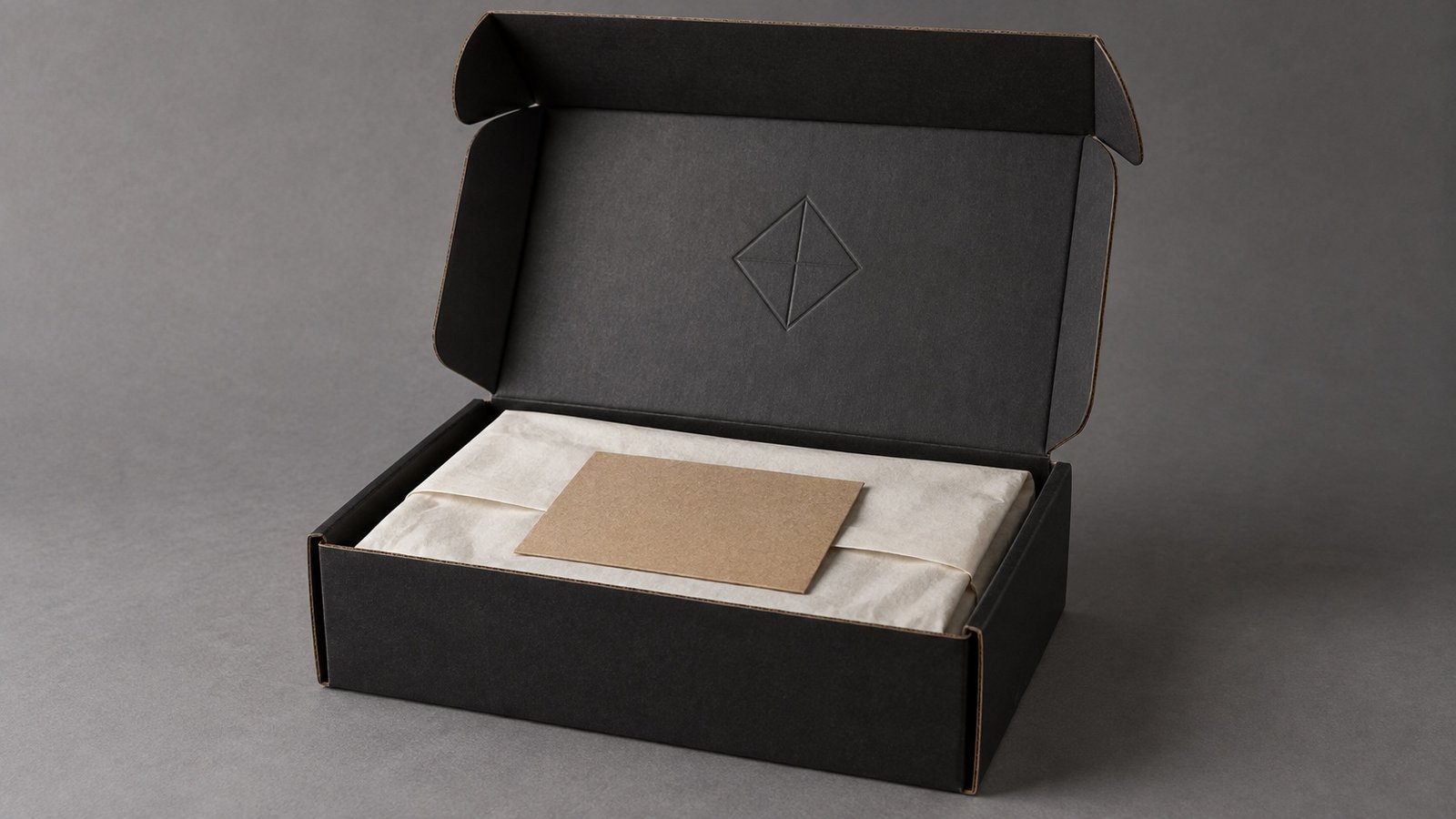
Request an E-Flute or B-Flute Mailer Box Quote
Send your product dimensions, packed weight, quantity, artwork, destination postal code, and delivery target. YiHongBox will recommend a structure, provide free design support, prepare a charged physical sample, and quote DDP delivery where requested.
Frequently Asked Questions
Is E-flute or B-flute better for custom mailer boxes?
E-flute is often better for detailed printing, a slimmer profile, and light-to-medium products. B-flute is often better when additional cushioning, panel stiffness, or robustness is required. The correct choice depends on the packed product, insert, dimensions, and distribution route.
Is B-flute always stronger than E-flute?
No. Flute profile is only one part of board performance. Liner and medium specifications, recycled content, moisture, dimensions, die-cut design, closure, and the direction of applied forces all matter. Compare complete board specifications and test the finished package.
Can an E-flute mailer box ship without an outer carton?
It can in suitable applications, but this should not be assumed. Evaluate product fragility, packed weight, closure security, cosmetic expectations, climate, and parcel handling. A packed-product transit test is the safest basis for the decision.
Which flute gives better print quality?
E-flute usually provides a finer surface profile that suits detailed graphics. Print quality also depends on the liner, artwork, ink system, press, lamination method, coating, and color-control process.
What is the minimum order for custom mailer boxes?
YiHongBox’s standard minimum order quantity for custom mailer boxes is 1,000 pieces. Different sizes or artworks should be identified by SKU when requesting a quote because splitting the quantity may affect pricing and production planning.
How long does a custom mailer box sample take?
A physical custom sample typically takes about seven days after the structure, materials, and artwork are confirmed. Complex inserts, specialty materials, or unusual finishes may require additional time.
How long does mass production take?
Mass production is typically about 30 days after final sample and artwork approval. The confirmed schedule should also allow for prepress, material availability, quality review, peak-season capacity, and international delivery.
Can YiHongBox provide DDP delivery?
Yes. YiHongBox supports DDP quotations for destinations in the United States, Canada, and Australia. Provide the full delivery address or postal code, quantity, required date, and receiving conditions so freight, customs, duties, taxes, and final delivery can be quoted accurately.
Are FSC-certified mailer box materials available?
FSC-certified paper options can be specified. Confirm the exact material, chain-of-custody route, and permitted on-product label for the order before final artwork approval.
What files should a buyer send for quotation?
Send product dimensions, packed weight, quantity, destination, desired box style, artwork or brand guidelines, insert requirements, finish preferences, and target delivery date. If you do not have a dieline, YiHongBox can provide structural design support.
Final Buying Recommendation
Choose E-flute when your priority is a refined printed surface, compact storage profile, and premium presentation for a lighter product. Choose B-flute when the packed product and delivery route justify greater cushioning or structural depth. In both cases, the best purchasing decision comes from a complete written specification, a representative physical sample, and testing of the finished packed product.
Do not compare suppliers using flute name and unit price alone. Compare the full paper construction, finished dimensions, printing method, inserts, master-carton plan, testing, lead time, and DDP scope. That is how a procurement team turns an attractive box concept into repeatable packaging performance.
Ready to start? Review YiHongBox’s custom mailer box options, explore our complete custom packaging capabilities, or send your RFQ for a tailored recommendation.