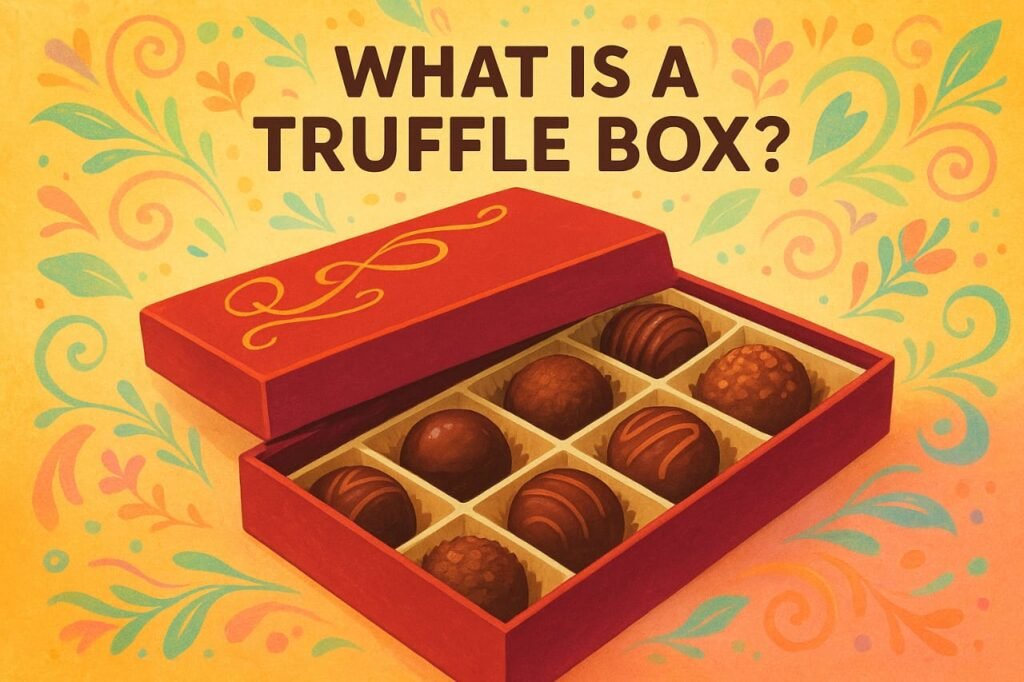
Chocolate truffles just hit differently. Those bite-sized bombs of happiness—shiny, sometimes rocking a dusting of cocoa, sometimes just chilling under a ganache squiggle. But here’s the real magic: toss those in a truffle box and suddenly, it’s a whole event. The box isn’t just a boring old container; it’s like the red carpet for your candy. Protective? Sure. Gorgeous? Usually. And honestly, it’s a flex for whatever brand’s behind it. Whether you’re handing off a box to your best friend or trying to sling fancy truffles in your shop, that packaging is the real MVP. People eat with their eyes first, right?
Let’s just jump right in—truffle boxes. What are they? Why does everyone suddenly act like they’re the next big thing? Which ones are actually worth drooling over? And, for real, how do you even pick a good one, whether you’re throwing a party, trying to impress clients, or just want something that looks as good as it tastes. Grab your sweet tooth and hold on, it’s about to get deliciously complicated.
What Makes a Box a Truffle Box?
At first glance a truffle box might look like any other small confection box. But it’s engineered around the needs of delicate ganache-filled chocolates. Key characteristics include:
- Individual compartments or insertsthat keep each truffle from bumping or rubbing against another.
- A rigid or semi-rigid structurethat resists crushing during handling and transport.
- Moisture and temperature considerations— often the materials and liners help buffer against humidity and light heat.
- Aesthetic finish— truffle boxes are commonly designed to create a sense of luxury or personality (think foil stamping, matte laminates, ribbons).
Put simply: a truffle box equals protection + presentation
For example, a generic candy box might allow truffles to shift during transport, causing smudges or cracks in the delicate shell. Others may lack food-safe liners, which can affect taste and texture. That’s why truffle packaging often includes paper cups, dividers, or cushioned inserts that keep every piece looking pristine. Without these details, even premium truffles risk arriving messy — lowering both their appeal and value.
Anatomy of a Truffle Box
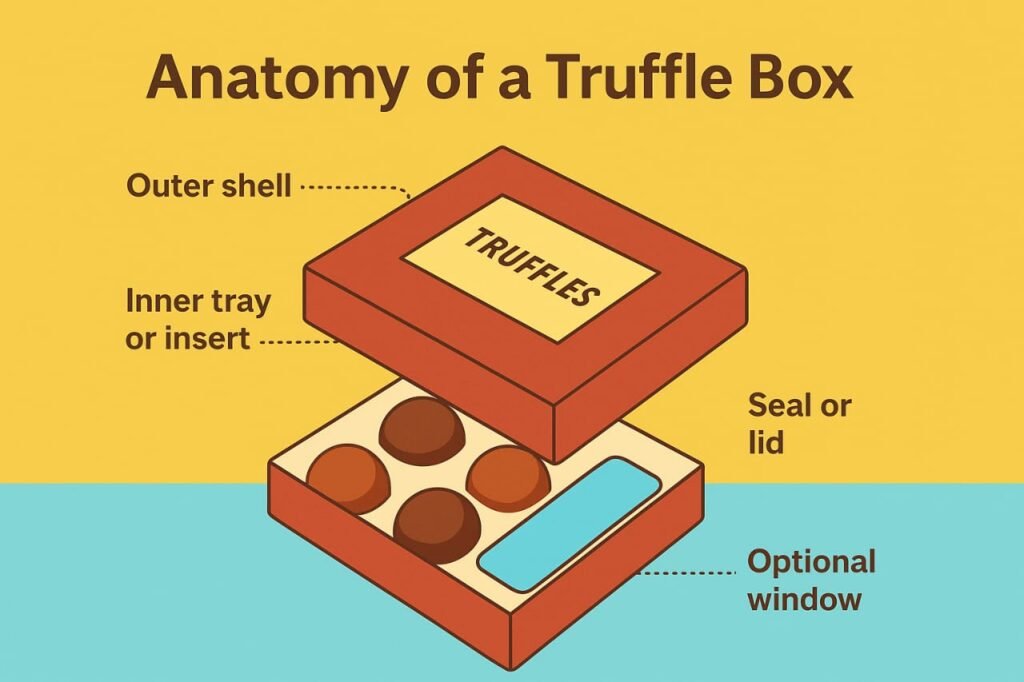
Most truffle candy boxes share common parts:
- Outer shell— the visible part that carries the design, logo, and tactile finish
- Inner tray or insert— usually molded paperboard, plastic, or biodegradable cellulose that nests each truffle
- Seal or lid— could be a flap, magnetic closure, or sleeve that keeps the box closed and fresh
- Optional window— a plastic or cellulose window lets customers see the boxed chocolate truffles inside
An intentionally chosen insert is often the difference between a box that wrecks chocolates in transit and one that delivers them intact and Instagram-ready.
Popular Types of Truffle Boxes and Why Each One Works
| Type | What It Looks Like | Best For |
|---|---|---|
| Classic compartment box | Rectangular with a tray of circular wells | Everyday retail; artisanal truffles |
| Window Box | Cardboard with a transparent window | Retail displays and impulse purchases |
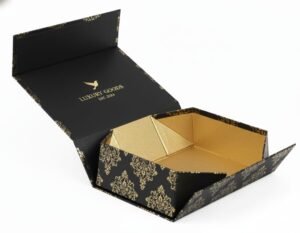
| Rigid luxury box | Sturdy, magnetic-lid boxes with soft liners | Weddings, corporate gifts, premium assortments |
| Mini favor box | Tiny single-serving boxes, often with ribbon | Wedding favors, party giveaways |
| Eco kraft box | Recycled kraft paper with simple printing | Sustainable brands and earthy aesthetics |
| Custom-shaped box | Heart, round, hexagon — shaped to theme | Seasonal promotions, limited editions |
Let’s not sleep on those drawer-style truffle boxes—they slide open like you’re revealing treasure. It’s got that “tiny jewelry chest” vibe, super extra for chocolate, but who’s complaining? Then there’s the clear acrylic boxes. People are into those lately. You get to stare at your chocolate like it’s some kind of edible art exhibit, plus you can use the box after you’ve demolished the truffles. Both kinds just prove packaging’s not just about holding stuff—it’s kind of part of the whole chocolate ritual.
Each format answers a question: who’s the recipient, how will it be transported, and what story should the packaging tell?
Designing for Function as Much as for Looks
A truffle box must balance form and function. When designers focus only on looks, chocolates can melt, shift, or stick. When they focus only on utility, the box may look dull and fail to sell. Here are practical considerations:
- Compartment depth: Shallow wells can let truffles tip; a depth of one to one-and-a-half times a truffle’s height is ideal.
- Materials: Rigid paperboard gives luxury. Recycled kraft is eco-friendly. In some cases, a thin food-safe plastic tray keeps chocolates separated better during long shipping.
- Temperature control: For hot climates, include thermal sleeves or recommend cold packs for shipping premium assortments.
- Food safety: Use food-contact safe liners and inks that meet regulatory standards in your market.
Personalization and Custom Truffle Boxes
Honestly, nothing screams “I actually put some thought into this” like a box of truffles with your name on it. Maybe it’s just a shiny ribbon with someone’s initials, or that embossed gold lettering that makes you feel a little fancier than you probably are. Suddenly it’s not just chocolate—it’s a whole vibe, a sweet memory wrapped up in sugar and good intentions.
And for brands? If you’re not using custom truffle boxes as a sneaky marketing move, you’re missing out. Toss in a card, drop your Instagram handle, maybe even a cheeky QR code that whisks people away to your wild origin story or a “subscribe and get fat” chocolate club offer. It’s basically edible advertising, and who’s gonna complain about free chocolate?
Bulk customization also works well for corporate gifting: think logo-printed truffle gift boxes for client appreciation or employee rewards.
Sustainability: The Rise of Eco-Friendly Truffle Packaging
Consumers increasingly expect responsible choices. Chocolate truffle packaging boxes made from post-consumer recycled paper, compostable window films, and soy-based inks are now mainstream. Brands should clearly state:
- Which materials are recyclable or compostable
- Whether any inner trays are recyclable or need separate disposal
- Certification where applicable (e.g., FSC-certified paper)
Sustainable design doesn’t kill the vibe of luxury—if anything, it gives it a bit of an edge. Think about it: rich, tactile materials, those cozy earthy colors, and a little bit of embossing for flair. Looks fancy, but you don’t have to feel guilty about it trashing the planet. Some brands are really going all-in, slipping in sleeves packed with seeds. When you’ve devoured all the chocolates, you just plant the box. Herbs or wildflowers instead of yet another empty box in the landfill. Now that’s what I call a glow-up for packaging. Others replace petroleum-based windows with biodegradable cellulose film, giving visibility while reducing plastic use. A 2023 survey found that 70% of consumers actively prefer sustainable packaging, making eco-friendly truffle boxes not just an ethical choice but also a smart business strategy.
Truffle Boxes as Gifts — Occasions that Work Best
Truffles are inherently giftable. Popular moments include:
- Valentine’s Day— small truffle gift box assortments are classic
- Christmas & Holidays— limited-edition boxed chocolate truffles with seasonal packaging
- Weddings— single-serving truffle candy boxes or personalized favors
- Corporate Events— logo-branded chocolate truffle boxes for client gifts
- Birthdays & Anniversaries— personalized truffle boxes tailored to the recipient
The right box size and design depend on whether the gift is intimate (one or four truffles) or grand (a 24-piece celebratory box).
Shipping, Storage, and Shelf Life
Truffles have a shorter shelf life than plain chocolate bars because of perishable fillings. Basic rules:
- Storage: Keep cool (ideal 12–16°C / 54–61°F) and dry.
- Shipping: In warm months, use insulated packaging and cold packs for premium assortments.
- Shelf life: Many ganache truffles last 2–4 weeksrefrigerated; always test and label with a best-before date.
Clear storage instructions printed on the truffle box packaging reduce returns and customer disappointment.
Buying and Selling — Price and Perceived Value
Packaging heavily influences perceived value. A modest increase in packaging quality can justify a higher price point. Consider tiered offerings:
- Everyday line— simple truffle candy boxes in kraft or basic print
- Gift line— mid-range chocolate truffle boxes with windows and color printing
- Luxury line— rigid truffle gift box with foil, magnetic closure, and silk lining
Offer add-ons like personalized truffle boxes or small message cards to capture customers looking for a bespoke touch.
A Quick Checklist Before You Order Truffle Boxes
- How many truffles per box? (1, 4, 9, 12, 24?)
- Will boxes be shipped long distances or handed over in-store?
- Are inserts needed? What material?
- What impression should the packaging create? (eco, luxury, playful)
- Is personalization or bulk branding required?
Answering these will guide you to the right compromise between cost and impact.
Final Thoughts
A truffle box is more than a container — it’s a storyteller. It protects fragile sweets and announces quality before anyone takes a bite. For small chocolatiers, it’s a branding canvas; for gift-givers, it’s a way to show care; for recipients, it’s part of an unboxing moment they’ll remember.