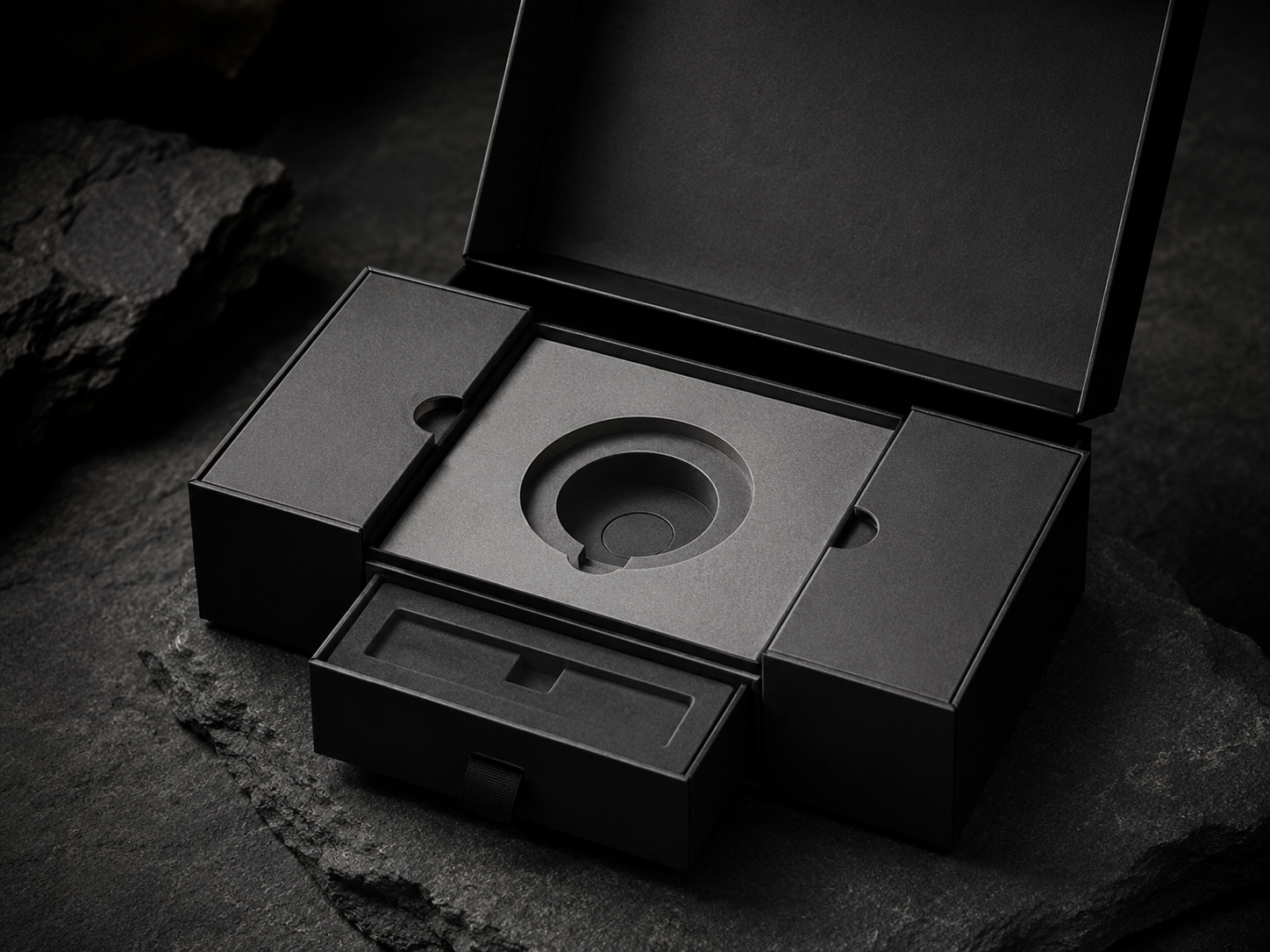
A smart ring may feel almost weightless on the finger. In marketing language, it can even be described as a “0-gram” product because the user experience is designed to disappear into daily life. But when that tiny wearable arrives in a 250-gram or 300-gram box, the contrast feels dramatic. Why does such a small device need such a heavy package?
The short answer: high-end tech packaging is not just a container. It is a value amplifier. For premium smart rings, earbuds, compact wearables, watches, and high-ticket accessories, packaging must protect a small object, organize multiple components, slow down the unboxing sequence, create tactile confidence, and justify the product’s price before the device is even touched.
This is the logic behind smart ring packaging and premium weighted packaging engineering. A box that weighs far more than the product can be rational when the weight is designed, distributed, and connected to a better customer experience. The problem is not weight itself. The problem is meaningless weight.
Packaging Mass Is a Message
Small premium tech products often face a perception problem. The product may be technologically advanced, but its physical presence is minimal. A ring, tracker, earbud case, or compact sensor does not naturally fill the hand. Without the right packaging, the product can feel smaller than its price.
Weighted packaging solves this mismatch by giving the customer an immediate physical signal: this is precise, valuable, protected, and intentional. The box becomes a bridge between invisible engineering and visible luxury.
| Lightweight Product Challenge | Customer Risk | Weighted Packaging Response |
|---|---|---|
| The product is tiny and easy to overlook | The purchase can feel less substantial than the price | A rigid box adds presence, stability, and ceremonial weight |
| The device contains invisible technology | Customers cannot see the engineering complexity immediately | Precise inserts, layered reveals, and dense materials make the technology feel deliberate |
| The product is easily scratched or misplaced | Damage or confusion can reduce trust before first use | Custom cavities, ring holders, accessory wells, and protective trays keep every part in position |
| The first touchpoint is the shipping box | The brand may feel generic or low-value | Premium outer packaging turns delivery into a brand moment |
| The product needs setup instructions | Unboxing can become messy or frustrating | Layered cards and QR-led instructions guide the user without cluttering the box |
What Is “Weighted Engineering” in Premium Tech Packaging?
Weighted engineering is the deliberate use of material thickness, board density, insert structure, magnetic closure feel, opening resistance, center of gravity, and tactile rhythm to make packaging feel more premium and more controlled. It is not about making a box heavy for vanity. It is about making the box feel stable, protective, and valuable.
For a smart ring, the actual device might occupy only a small portion of the box volume. The rest of the package must do functional work: hold the ring upright, protect the surface, separate charging accessories, carry sizing or warranty cards, support retail display, and give the customer a clear opening path.
This is why custom magnetic rigid boxes are often used for premium tech and wearable products. They create a controlled opening moment, a strong hand feel, and enough structural depth for custom inserts.
Where Does the 300 Grams Actually Go?
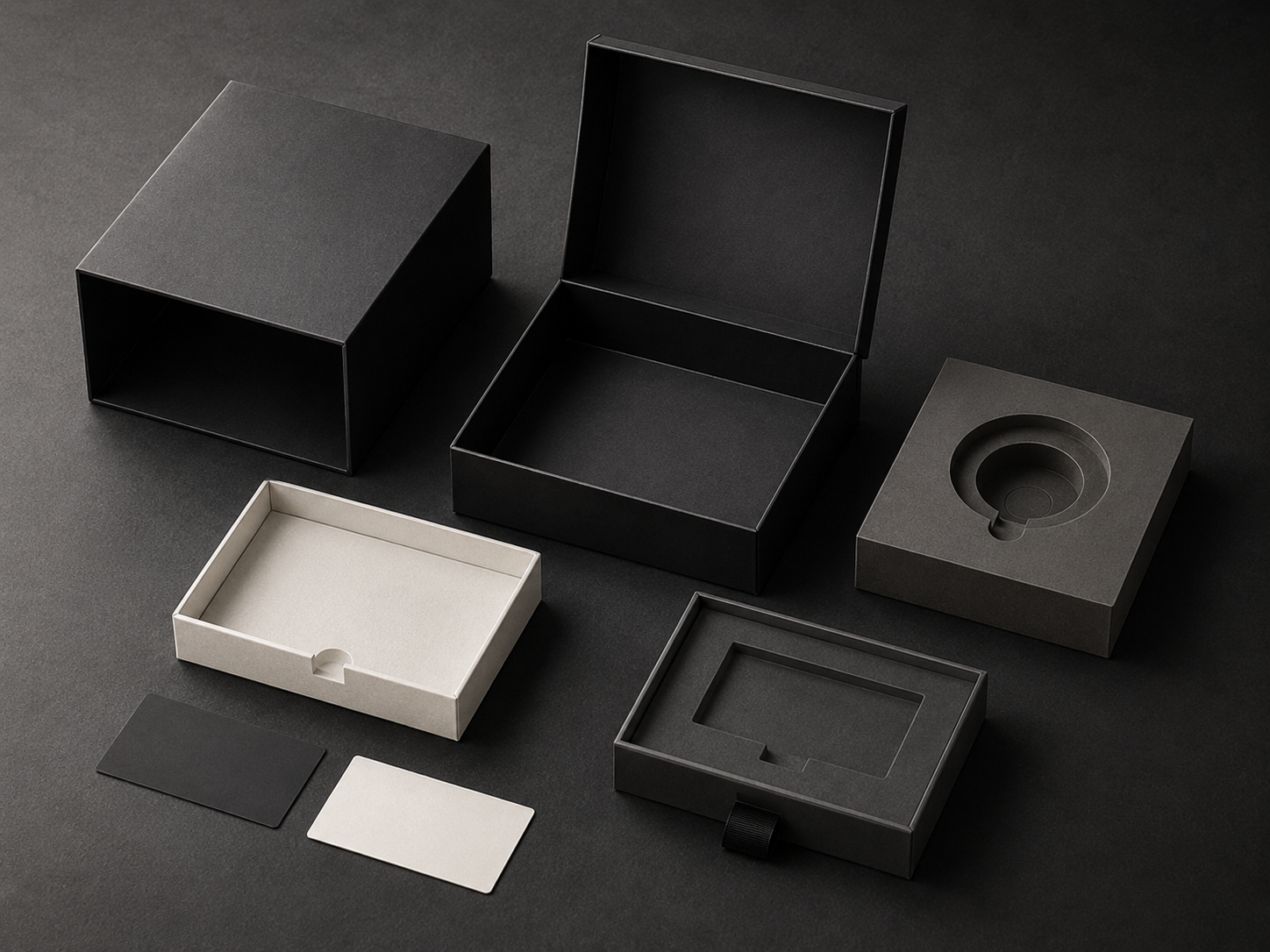
A 300-gram package is not a single block of material. In a well-designed premium tech box, the weight is distributed across the rigid board, paper wrap, insert tray, closure system, protective layers, cards, and sometimes a secondary sleeve or shipping-ready outer structure.
| Packaging Component | Approximate Role in the Weight | Engineering Purpose | Premium Experience Value |
|---|---|---|---|
| Rigid greyboard shell | Largest weight contributor | Compression resistance, shape retention, box stiffness | Creates the first tactile impression of value |
| Wrapped specialty paper | Small to medium contribution | Surface protection, color consistency, texture control | Communicates design discipline and brand tone |
| Custom insert or tray | Medium contribution | Holds the ring, charger, cable, manual, or sizing components | Makes the tiny product look organized and important |
| Magnetic closure or structural lock | Small contribution | Controls opening resistance and closure confidence | Creates a satisfying moment of precision |
| Cards, sleeve, and instruction layers | Small contribution | Guides onboarding, warranty, sizing, and care information | Turns setup into a clean sequence instead of a loose paper pile |
| Protective shipping design | Variable contribution | Supports parcel handling, drops, vibration, and compression | Protects the brand promise before the customer opens the box |
Why Smart Ring Packaging Needs More Structure Than the Product Itself
Smart rings create a unique packaging challenge because the product is small, personal, expensive, and easy to lose. The packaging has to do the work that the product cannot do physically. It must enlarge the moment without making the product feel artificially inflated.
1. The Box Must Make a Tiny Product Feel Intentional
A ring-sized product can disappear visually inside a large box unless the insert is designed with precision. The cavity, height, color contrast, and opening angle need to direct attention to the ring immediately. This is why a simple tray is rarely enough for premium wearable tech.
2. The Opening Sequence Must Slow Down the Customer
Premium packaging is partly about pace. A magnetic lid, a wrapped inner tray, a reveal card, and a dedicated ring holder can turn a five-second opening into a 30-second brand experience. That slower pace gives the customer time to register quality.
3. The Insert Must Protect Against Micro-Damage
Small electronics and wearables can be vulnerable to scratches, scuffs, loose movement, and accessory collision. A good insert keeps the ring separated from the charger, printed material, cables, and sample parts.
4. The Packaging Must Support Setup
Unlike a simple jewelry box, smart ring packaging often needs to guide app pairing, charging, sizing, warranty registration, care instructions, and returns. A layered packaging system keeps that information organized without overwhelming the user.
5. The Box Must Feel Premium Enough for Social Sharing
Premium tech buyers often photograph unboxing moments. A rigid box with a strong insert layout, clean contrast, and well-managed negative space is easier to film and share than a loose product tray.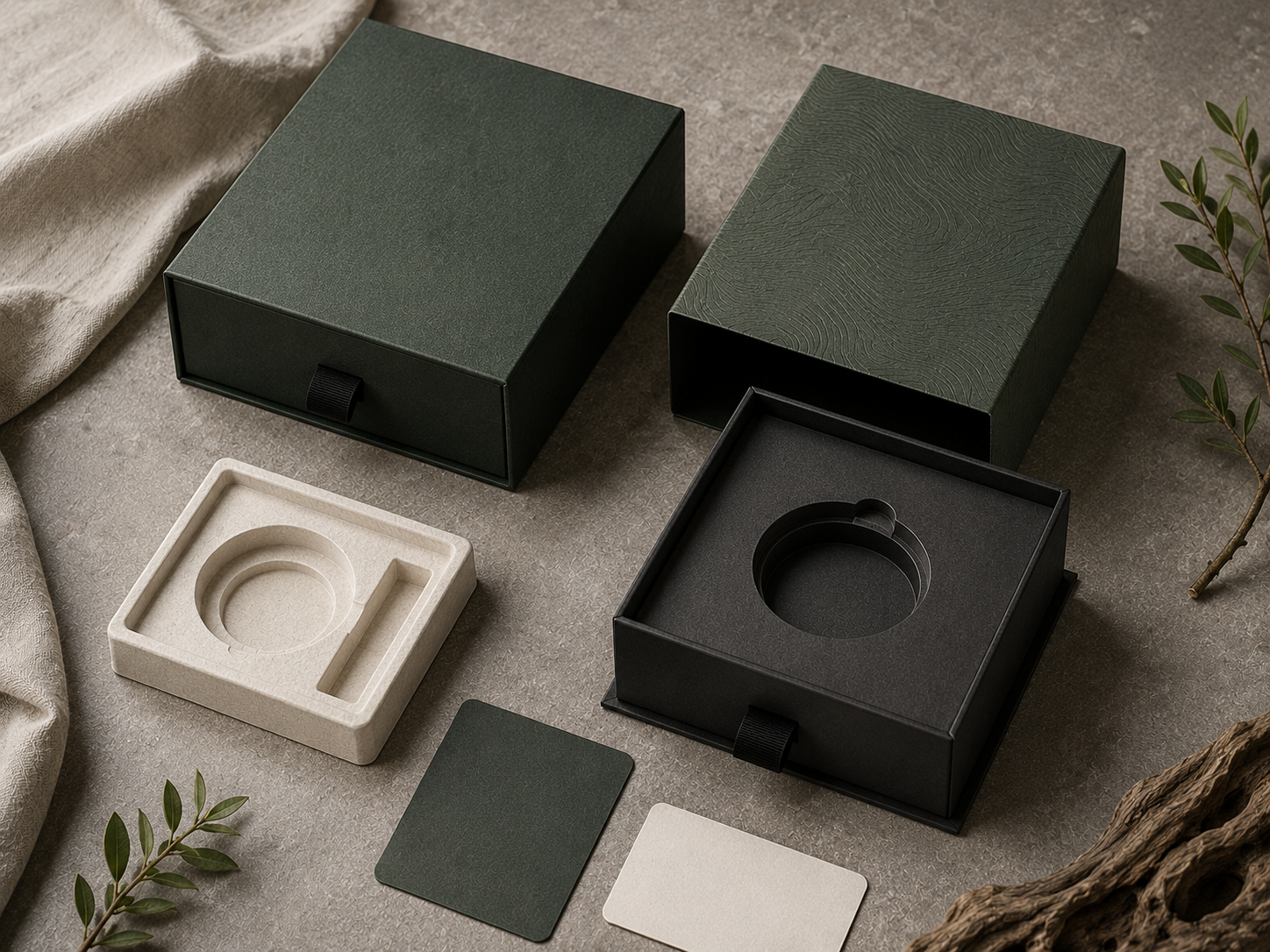
The Psychology Behind a Heavy Box for a Light Product
Packaging weight changes how people interpret value. A thin, flexible box may be efficient, but it rarely feels expensive. A rigid box with controlled opening resistance can make the same product feel more secure and more premium.
This is especially important for categories where the product’s value is not fully visible. A smart ring may include sensors, software, battery design, waterproofing, and miniaturized engineering, but the customer cannot see most of that work. Packaging becomes the physical proof of invisible precision.
| Packaging Signal | What the Customer Feels | How to Design It Properly |
|---|---|---|
| Box weight | Substance, seriousness, price confidence | Use rigid board and insert density where protection or hand feel matters |
| Opening resistance | Precision, control, anticipation | Use magnetic closures, friction-fit trays, or sleeve movement carefully |
| Insert accuracy | Engineering quality and product safety | Measure device, charger, and accessory tolerances before sampling |
| Surface texture | Premium touch and brand personality | Use matte paper, soft-touch alternatives, embossing, or controlled spot finish |
| Sound and closure feel | Confidence and completion | Avoid loose rattling; tune insert fit and closure pressure |
When 300-Gram Packaging Becomes Wasteful
Not every heavy box is good packaging. A 300-gram package is only defensible when the extra weight creates protection, reuse, retail presence, onboarding clarity, or a stronger brand experience. If the weight is just decorative bulk, it can become expensive, inefficient, and harder to justify.
For smart rings and premium tech accessories, brands should ask four questions before approving a heavy package:
- Does the added weight protect the product or only make the box feel bigger?
- Does the box improve the customer’s first setup experience?
- Can the box be reused for storage, charging accessories, or warranty materials?
- Does the packaging still make sense when shipping cost, storage space, and sustainability goals are considered?
The best premium tech packaging feels substantial but not wasteful. It is engineered weight, not decorative mass.
How to Build a Premium Smart Ring Packaging System
A strong smart ring package should be designed as a system: outer protection, retail presentation, product reveal, accessory organization, onboarding, and post-purchase storage. The box is not finished when it looks good in a render. It is finished when it works through shipping, unboxing, setup, and reuse.
| Design Layer | Recommended Packaging Choice | Why It Matters for Smart Rings |
|---|---|---|
| Outer structure | Magnetic rigid box, drawer box, or lid-and-base rigid box | Creates premium presence and protects the small product during handling |
| Primary insert | Paperboard insert, molded pulp, EVA alternative, or wrapped rigid tray | Holds the ring in the visual center and prevents movement |
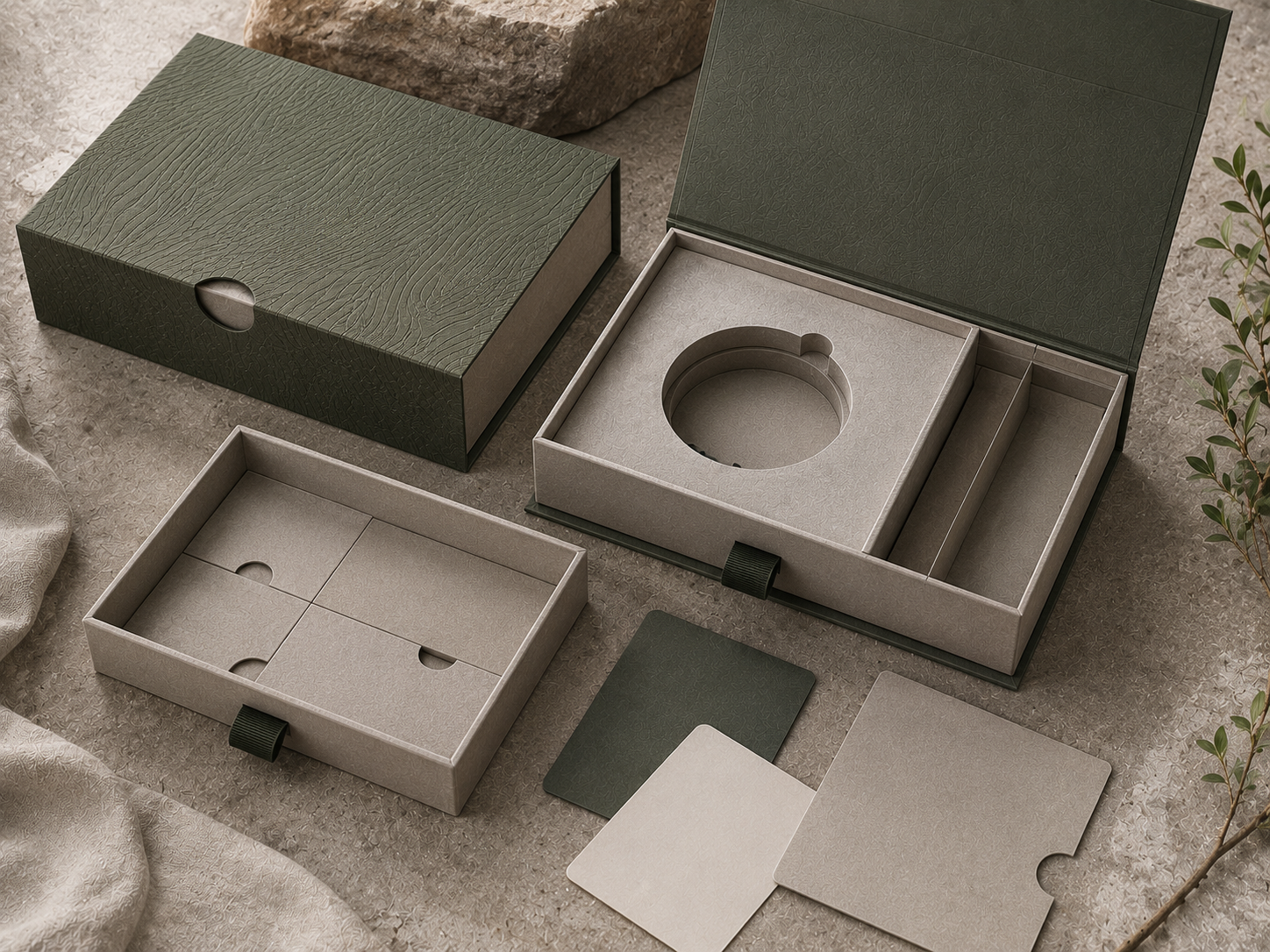
| Accessory zone | Hidden tray, side cavity, or second layer | Separates charger, cable, sizing card, and manual from the ring |
| Information layer | Minimal card plus QR-led setup page | Reduces paper clutter while keeping onboarding clear |
| Surface finish | Matte black, deep grey, soft-touch paper, embossing, spot UV, or restrained foil | Supports a premium technology identity without overwhelming the small product |
| Secondary branding layer | Packaging sleeve or belly band | Allows campaign messaging, SKU differentiation, or limited-edition updates |
SEO Value: Turn Packaging Engineering Into Searchable Content
For independent websites, smart ring packaging is not only a product design topic. It can also become a search asset. Buyers searching for custom smart ring packaging, premium tech packaging, wearable device packaging, and custom rigid boxes for electronics are often looking for suppliers who understand both protection and brand perception.
Each image should have descriptive alt text, and each packaging page should connect the structure to a use case. Google’s image SEO best practices and SEO starter guide both emphasize clear, helpful context. For packaging websites, that means describing the box type, product category, material, insert, and commercial use case.
Internal links also matter. A smart ring article should connect naturally to relevant packaging products such as custom gift boxes, custom black gift boxes, custom packaging sleeves, and broader custom packaging box solutions.
Protection Still Comes Before Perception
Premium feeling is important, but protection is non-negotiable. Smart rings and compact devices can be affected by drops, vibration, compression, moisture exposure, and accessory movement. Packaging should be tested against realistic handling conditions, not only judged by appearance.
Organizations such as ISTA focus on transport packaging performance and testing. Even if a brand does not run a full formal test for every small batch, the packaging development process should still include drop checks, compression checks, insert fit checks, shake tests, and real parcel trials.
How to Keep Weighted Packaging More Sustainable
Premium tech brands should avoid the trap of using sustainability as a reason to make packaging look cheap, but they should also avoid unnecessary mass. Good weighted packaging can still use smarter material choices and clearer environmental communication.
- Use paper-based inserts where they can meet protection requirements.
- Reduce unnecessary plastic windows, foam blocks, and decorative filler.
- Design the rigid box for reuse as accessory storage.
- Use packaging sleeves to update campaigns without rebuilding the main structure.
- Explain materials and reuse clearly instead of making vague green claims.
For environmental claims, references such as ISO 14021 can help brands think more carefully about self-declared sustainability language. The message should be specific: paper insert, reduced plastic tray, reusable rigid box, FSC paper option, or simplified material system.
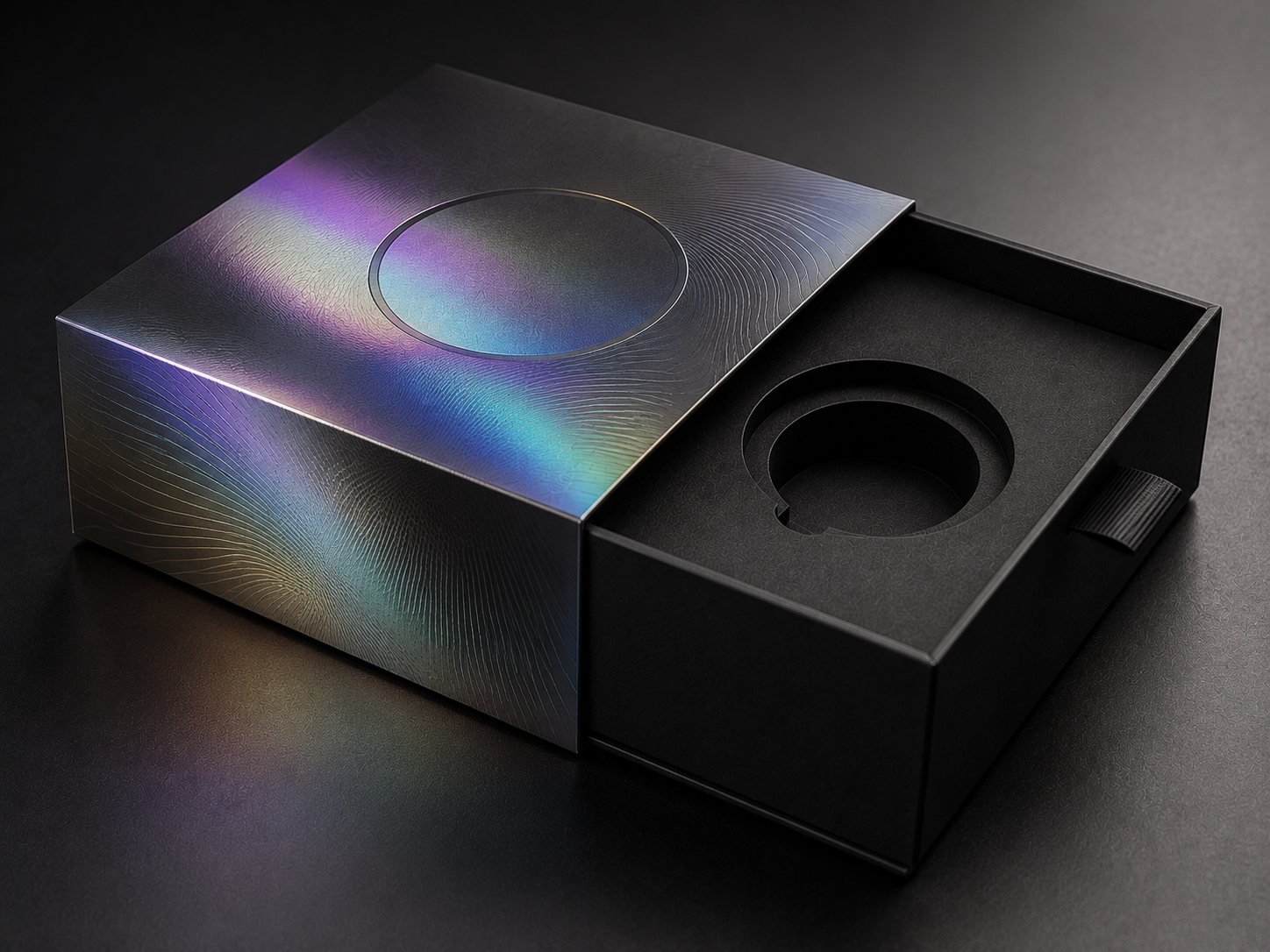
Conclusion: Weight Should Be Engineered, Not Added
A smart ring does not need a 300-gram package because the product is physically large. It needs a carefully engineered package because the product is small, expensive, delicate, and emotionally dependent on first impression. The right box gives the product a stage, protects the parts, organizes onboarding, and turns invisible technology into a tangible premium experience.
But the weight must have a purpose. The future of premium tech packaging is not heavier boxes for the sake of luxury. It is smarter mass, better inserts, cleaner materials, stronger storytelling, and a more disciplined unboxing sequence.
Contact YihongBox to develop custom smart ring packaging, premium wearable tech boxes, and weighted rigid packaging systems that feel substantial, protect the product, and support your brand positioning.
FAQ: Smart Ring Packaging and Weighted Premium Boxes
Why does smart ring packaging need to be much heavier than the ring?
Because the package must protect a small premium device, organize accessories, guide setup, create a premium hand feel, and make the product’s invisible technology feel tangible.
Is 300 grams too heavy for wearable tech packaging?
Not automatically. It depends on the box size, product value, shipping model, insert design, and reuse function. A 300-gram package can be justified when the weight improves protection, perception, and customer experience.
What box type works best for premium smart rings?
Magnetic rigid boxes, drawer boxes, and lid-and-base rigid boxes are strong options. The right choice depends on the unboxing sequence, accessory layout, insert style, and brand positioning.
Can smart ring packaging use paper inserts instead of foam or plastic?
Yes, when the structure is tested properly. Folded paperboard, molded pulp, and wrapped rigid trays can protect small wearables while supporting a more sustainable material story.
How can brands make premium tech packaging less wasteful?
Use weight only where it improves structure or experience, remove decorative filler, design for reuse, simplify materials, and use sleeves or cards for campaign updates instead of rebuilding the entire box.
Can YihongBox create custom packaging for smart rings and wearable tech?
YihongBox can customize rigid boxes, inserts, sleeves, printing, finishes, and product-specific layouts for compact premium devices. Share your product dimensions, accessory list, quantity, and preferred box style through the Contact page to discuss a packaging plan.