I. Introduction: The Humanization Shift and Pricing Paradox
Let’s address a fascinating contradiction in modern consumer behavior: A millennial will happily eat a $10 microwaved dinner but will, without hesitation, swipe their credit card for a $100 customized joint health powder for their Golden Retriever.
Welcome to the era of Pet Humanization. Pets are no longer just animals that sleep in the backyard; they are officially “fur babies,” and their owners are fiercely protective “pet parents.” According to comprehensive industry projections from Morgan Stanley analyzing the booming pet economy, consumer spending on premium pet health, wellness, and preventative care is skyrocketing at an unprecedented rate.
However, this massive market shift creates a severe pricing paradox for D2C pet brands. If you are charging premium prices for a high-grade probiotic or hip-and-joint supplement, but it arrives in a flimsy, resealable plastic pouch that resembles cheap kibble, you instantly trigger a psychological alarm.
To the consumer’s brain, cheap packaging equates to low-quality, potentially unsafe ingredients. In this highly humanized market, if your packaging doesn’t reflect the same clinical grade as a luxury human supplement, your product’s perceived value will plummet. To command and sustain top-tier pricing, brands must abandon the “feed bag” mentality and invest in premium rigid boxes and custom packaging solutions that physically validate the high cost of the product inside.
II. Psychology: Selling to the “Pet Parent”
To master the structural engineering and design of premium pet supplement packaging, you must first understand a fundamental marketing truth: The pet consumes the product, but the human’s anxiety buys it.

When a pet parent purchases an expensive supplement, they are not just buying a blend of vitamins and minerals; they are buying peace of mind. They are actively trying to soothe their “pet parenting guilt” and ensure their companion lives as long and healthy a life as possible. Therefore, your packaging’s primary job is not to appeal to an animal’s senses, but rather to comfort the human’s visual and tactile expectations.
This behavioral shift is deeply rooted in anthropomorphism—the attribution of human traits and emotions to non-human entities, a concept heavily studied in modern consumer psychology. Because owners now view their pets as literal children, they subconsciously demand the exact same rigorous safety standards, clinical purity, and premium presentation that they would expect from pediatric medicine or their own daily wellness routines (like Athletic Greens or Ritual).
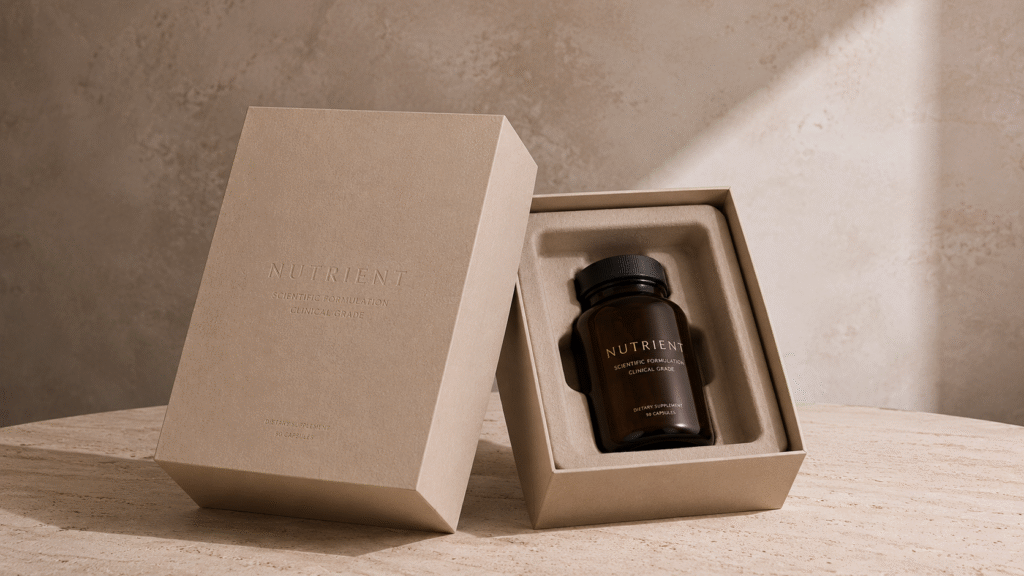
If your packaging is chaotic, loud, and uses cheap materials, it fails to soothe that anxiety. Instead, your packaging must project absolute clinical safety and scientific authority. The heavy, tactile feel of a high-quality matte box, combined with the reassuring structure of custom protective inserts that securely cradle the glass bottles or blister packs inside, acts as a physical tranquilizer for the buyer. It neurologically whispers to the pet parent: “You made the right choice; this is the safest, highest-quality care available for your family member.”
III. The Visual Disaster: Why a $50 Powder Cannot Live in a "Plastic Pouch"
There is a severe cognitive dissonance in the current pet wellness market. A consumer will confidently pay $50 for a 30-day supply of canine probiotics, only to receive a shiny, resealable plastic pouch covered in hyper-saturated colors and cartoon dog faces.
This is the “Kibble Bag” Stigma. When you package a high-ticket supplement in the exact same format as a $5 bag of mass-market dog treats, you are actively destroying your product’s perceived value.
1. The Collapse of Trust in Flexible Plastic
In the humanization era, pet parents are deeply skeptical. When they handle a flimsy plastic pouch, their brain subconsciously registers a lack of clinical care. According to consumer perception studies highlighted by Ipsos on packaging materials and brand trust, consumers overwhelmingly associate paper-based, structured packaging with premium quality and safety, while thin plastics are associated with cheap, mass-produced commodities.
⚠️ The Anatomy of a Packaging Failure:
The Zipper Anxiety: Flimsy plastic zip-locks often fail to close properly after a few uses. To the anxious pet parent, an unsealed bag means the expensive powder is absorbing moisture, oxidizing, and losing its efficacy.
The Countertop Eyesore: A crumpled plastic pouch looks terrible on a kitchen counter. Consequently, it gets hidden away in a dark pantry, breaking the daily visual reminder to feed the pet—which directly plummets your subscription retention rates.
2. Upgrading to Structural Integrity
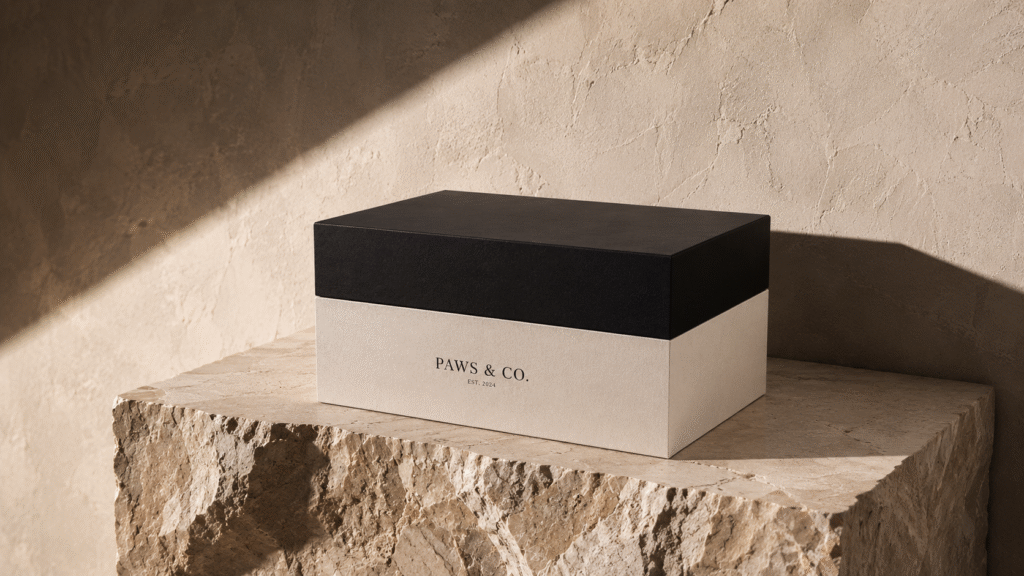
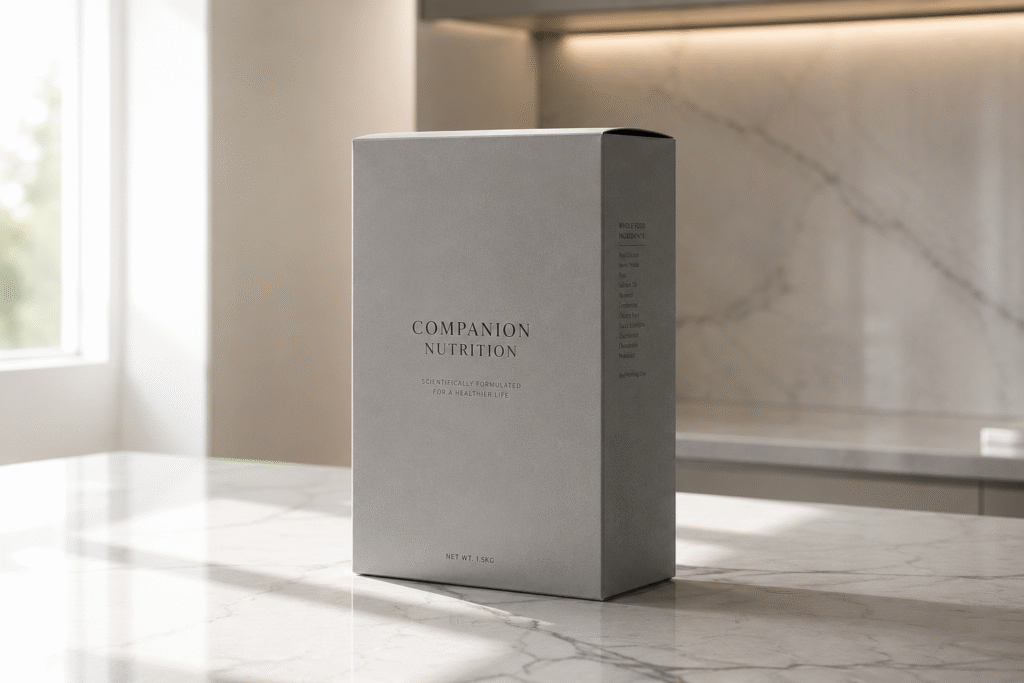
To command a premium price, you must abandon flexible pouches and upgrade to structured packaging. By transitioning to premium folding cartons or rigid presentation boxes, you create a protective “vault” for your product. The crisp corners and unyielding physical structure immediately communicate that the contents inside are precious, scientifically formulated, and worth every penny.
IV. The Pharmaceutical Aesthetic: Borrowing "Clinical Trust" from Human Supplements
If traditional pet packaging is the problem, what is the visual solution? The answer lies in your customer’s own medicine cabinet.
To bypass the consumer’s skepticism, premium D2C pet brands must relentlessly plagiarize the visual language of high-end human supplements and prescription medications. We call this the Pharmaceutical Aesthetic. By adopting these clinical design codes, you bypass the “pet food” category entirely and position your product as a legitimate healthcare intervention.

1. The Clinical Design Codes (A Visual Matrix)
To achieve this aesthetic, your packaging must incorporate specific psychological triggers that humans already associate with safety, purity, and medical authority.
| The Design Element | The Psychological Trigger | The Packaging Execution |
| Material Weight & Opacity | “This compound is potent and sensitive to degradation.” | Replace clear plastic with Heavy Amber Glass or frosted acrylic jars. The dark tint implies that the active ingredients require protection from UV light. |
| Minimalist Typography | “This is backed by science, not marketing gimmicks.” | Utilize a “Prescription-Style” layout. Black-and-white palettes, grid-based typography, and precise scientific jargon (e.g., listing exact milligram dosages) over cartoon graphics. |
| Tamper-Evident Mechanisms | “This product is sterile, pure, and untouched.” | Implement thick custom printed labels and tamper-evident seals across the lid. |
2. The Power of the "Unbroken Seal"
In the healthcare sector, the seal is non-negotiable. As strictly outlined by the FDA’s official guidelines on Tamper-Evident Packaging, a visible, physical barrier is required to assure consumers of product safety and integrity.
While pet supplements may not be legally bound by these strict human drug regulations, psychologically, the pet parent demands the same standard. When a customer has to physically break a thick, branded paper seal to open your custom rigid box—and then peel away an induction-sealed foil liner under the bottle’s cap—you are establishing a baseline of absolute, undeniable trust. You are proving that your brand treats their “fur baby” with the exact same clinical rigor as a human patient.
V. Micro-Frictions: Engineering the Ritual of Feeding
In mass-market pet commerce, the ultimate logistical goal is “frustration-free packaging.” The industry wants the consumer to rip open a bag and pour the kibble into a bowl in under two seconds. However, when you are selling a high-ticket, scientifically formulated pet supplement, efficiency is the enemy of premium perception.
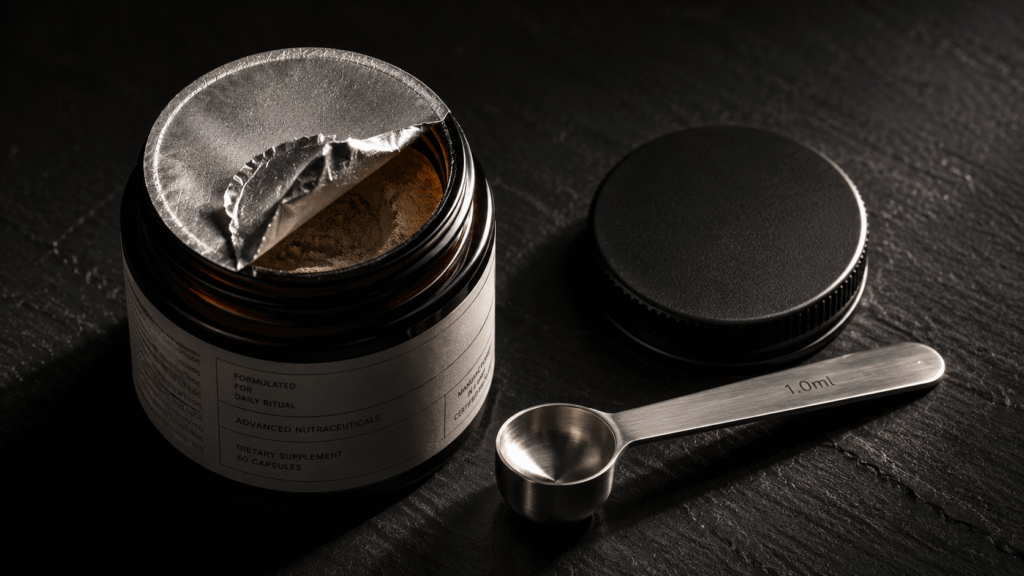
To maximize the perceived value of your product, you must intentionally introduce Micro-Frictions. These are elegantly designed physical barriers that deliberately slow down the opening process, transforming a mundane daily chore into a mindful, premium ritual.
1. The Psychology of Effort Justification
When a package opens too easily, the human brain instantly categorizes the contents as a cheap commodity. By forcing the pet parent to put a slight, deliberate effort into accessing the supplement, you trigger a well-documented cognitive bias known as Effort Justification (highlighted by behavioral science experts at The Decision Lab). We subconsciously assign a higher value to things we have to work for.
The Anatomy of a Premium Feeding Ritual:
The Weighted Closure: Instead of a cheap plastic flip-top, utilize a heavy, threaded metal lid that requires two to three deliberate rotations to open.
The Secondary Barrier: Integrating premium custom accessories and seals—such as a thick, branded induction foil that must be carefully peeled back—adds a neurological layer of “uncovering a treasure.”
The Precision Tool: Never let the customer use a random plastic kitchen spoon. Include a bespoke, laser-engraved stainless steel dosing scoop resting on a custom tray.
By designing these micro-frictions, the act of feeding the pet is elevated from a rushed morning task to a solemn, clinical ritual of care.
VI. Structural Engineering: From Bulk Tubs to "Calendar" Formats
For decades, the standard format for pet supplements has been the “bulk tub”—a large plastic cylinder filled with 30 to 60 days’ worth of loose powder. While cost-effective for the manufacturer, this format is fundamentally flawed for premium D2C brands focusing on efficacy and customer retention.
1. The Efficacy and Compliance Crisis
Every time a pet parent opens a bulk tub, the entire batch of powder is exposed to ambient humidity, oxygen, and potential bacterial contamination from hands or wet spoons. By day 20, the active ingredients (like probiotics or omega fatty acids) may have severely degraded.
Furthermore, bulk tubs suffer from a massive “compliance” issue. Pet parents forget to administer the dose. When a 30-day supply lasts for 45 days because of missed doses, your subscription renewal rate collapses. In human medicine, the World Health Organization (WHO) identifies poor medication adherence as a critical failure point—and the exact same behavioral failure applies to pet parents.
2. The Daily Dose Revolution
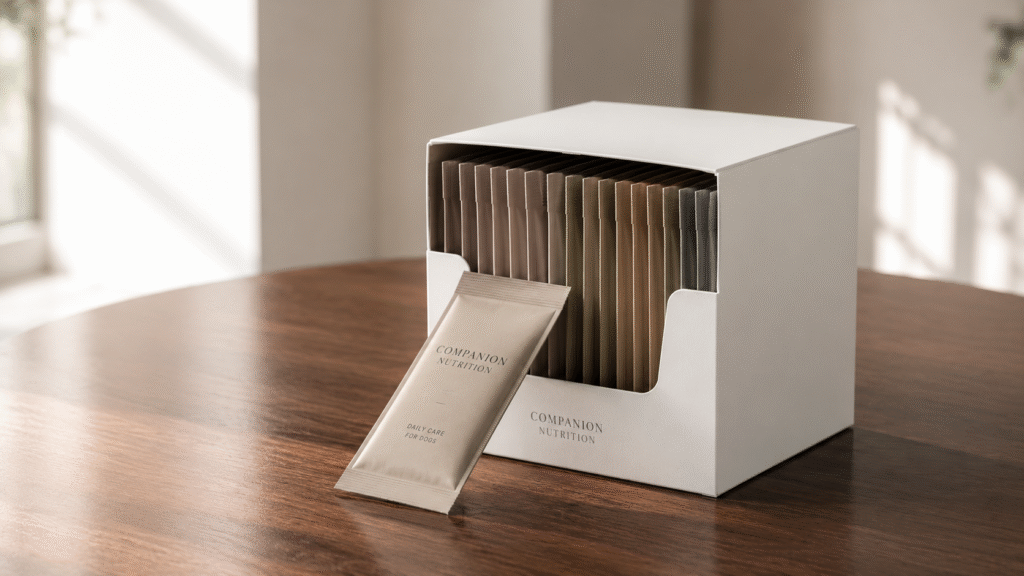
The ultimate structural upgrade is transitioning from bulk tubs to Daily Dose Formats, such as calendar blister packs or individual tear-away sachets housed in a beautifully engineered custom folding carton.
| Structural Format | Freshness & Efficacy | Habit Formation (Compliance) | Brand Perception |
| Traditional Bulk Tub | Decreases daily due to repeated oxygen/moisture exposure. | Low. Easy to forget if the supplement was given today. | Mass-market, industrial, cheap. |
| Daily Calendar/Sachet Pack | 100% Preserved. Each dose is hermetically sealed until the exact moment of consumption. | High. Visual tracking (e.g., Monday, Tuesday markers) forces daily habit-building. | Clinical, precise, human-grade luxury. |
By engineering a “calendar” dispenser box where the pet parent pulls out one perfectly sealed sachet per day, you guarantee absolute freshness. More importantly, you create a visual accountability system. If it is Wednesday and the Tuesday sachet is still in the box, the pet parent immediately corrects their behavior, ensuring your product is consumed exactly on schedule—locking in that crucial Month-2 subscription renewal.
VII. Personalization via VDP: "This is for Leo, Not Just Any Dog"
In the highly emotional landscape of pet humanization, pet parents deeply resent “one-size-fits-all” solutions. When they spend $100 on a supplement, they do not want a generic “Hip & Joint Formula for Large Breeds.” They want a highly specific, customized regimen that acknowledges their pet as an individual.
According to landmark consumer research by McKinsey & Company, over 71% of consumers expect companies to deliver personalized interactions, and 76% get frustrated when this doesn’t happen. In the pet sector, this expectation is magnified tenfold.

1. The Magic of Variable Data Printing (VDP)
How do you scale personalization without destroying your supply chain efficiency? The answer is Variable Data Printing (VDP).
By integrating your e-commerce CRM data directly with advanced digital printing and custom finishes, VDP allows the printing presses to seamlessly swap text, names, and graphics on every single package or insert card without ever stopping the production line.
🎯 High-Impact Personalization Strategies:
The Customized Welcome Card: Instead of a generic thank-you note, the customer opens the box to a premium card that reads: “Happy 5th Birthday, Leo! Here is your customized September wellness plan.”
Breed-Specific Packaging: Dynamically printing a subtle, elegant silhouette of a Golden Retriever on the outer sleeve if the customer registered a Golden, rather than using a generic dog icon.
Dynamic Dosing Instructions: Printing the exact scoop measurements on the inner lid based on the specific pet’s weight data captured at checkout.
This 1-on-1 communication transforms a cold e-commerce transaction into a deeply personal healthcare relationship, cementing fierce brand loyalty.
VIII. The Tactile Experience & Barrier Technology: Securing Trust in the Hand
The moment a customer physically touches your packaging, their brain performs a subconscious micro-calculation regarding its worth. In neuromarketing, heavy, textured materials instantly signal high value, durability, and scientific validity.
However, in the world of high-grade pet supplements, packaging cannot just rely on aesthetics—it must perform flawlessly on a chemical level.

1. The Dual Engine of Premium Materials
To justify a premium price tag, your custom packaging materials must serve a dual purpose: they must feel luxurious to the human hand while providing uncompromising structural and chemical protection for the active ingredients inside.
| Material Component | Sensory Benefit (The Human Experience) | Functional Benefit (The Barrier Technology) |
| Heavyweight Rigid Board | The dense physical weight implies substance, absolute clinical safety, and a premium price tag. | Provides elite crush resistance during turbulent e-commerce transit, ensuring glass bottles arrive intact. |
| Soft-Touch Matte Coating | Mimics the velvety feel of a premium skincare box, projecting a sophisticated, calming, and sterile clinical aesthetic. | As noted by experts in sensory marketing and packaging design, these coatings also provide essential scuff resistance and slight water repellency. |
| High-Barrier Foil Liners (Sachets) | The crisp, metallic sound of tearing the sachet reassures the customer of an unbroken, hermetic seal. | Absolutely blocks oxygen, ambient moisture, and destructive UV light, ensuring probiotics and vitamins remain 100% potent. |
2. Engineering the "Vault"
When you combine a soft-touch custom rigid presentation box with high-barrier interior materials, you are no longer just wrapping a product. You are engineering a medical-grade sanctuary. The customer physically feels the friction of the premium paper, hears the crisp tear of the foil, and trusts that the expensive supplement they purchased is perfectly preserved.
IX. Retention Engine: The Subscription Box Strategy
In the D2C pet wellness space, selling a single bottle is rarely the ultimate goal. The entire financial model relies on recurring monthly revenue (MRR). However, many brands hit a catastrophic wall known as the “Month-3 Churn Cliff.” By the third delivery, the initial excitement fades, the pet parent forgets to administer the dose, and the unboxing experience becomes mundane.
To prevent this, your packaging must evolve from a static container into a dynamic Retention Engine.
1. Combating "Unboxing Fatigue"
If the pet parent receives the exact same visual stimulus every single month, their brain habituates to it. The delivery stops being a “gift for my fur baby” and devolves into a mere “monthly supply restock.” According to classic research by Bain & Company published in the Harvard Business Review, increasing customer retention rates by just 5% increases profits by 25% to 95%. Therefore, keeping the unboxing experience fresh is a high-ROI priority.
2. The Modular "Wardrobe" Approach
You do not need to redesign your expensive core structural box every month. Instead, you should adopt a Modular Packaging Architecture tailored for subscription box packaging.
🔄 How Modular Subscription Packaging Works:
The Static Core: The heavy, protective inner rigid presentation box remains exactly the same all year to maintain supply chain efficiency and clinical consistency.
The Dynamic Sleeve: You slide a highly cost-effective, custom-printed paper sleeve over the core box. This sleeve can change monthly based on seasons, pet birthdays, or specific health milestones (e.g., “Month 3: Building a Stronger Gut Microbiome”).
The Surprise Insert: Dropping a small, inexpensive interactive element inside the box—like a branded silicone lick mat one month, and a customized sticker sheet the next—reactivates the dopamine spike and gives the pet parent a reason to look forward to the mail.
X. The CFO's Perspective: ROI of Premium Packaging
When founders look at the unit cost of a clinical-grade, personalized rigid box with high-barrier blister packs, the immediate reaction is often sticker shock. They compare it to the pennies it costs to buy a standard plastic zip-pouch.
However, viewing packaging strictly as a line-item expense is a critical operational error. When evaluated through the lens of Value Engineering (VAVE) principles, premium packaging is a high-yield marketing and retention asset that fundamentally alters the unit economics of your business.
1. The Financial ROI Breakdown (Without the Math Jargon)
Let us systematically compare the financial outcomes of cheap plastic packaging versus “Human-Grade” structural packaging.
Pricing Power (The Margin Multiplier)
The Plastic Pouch: The consumer’s psychological anchor is set to “mass-market pet food.” They will balk at paying more than $30, severely capping your gross margins.
The Clinical Rigid Box: The presentation perfectly mimics a $150 human longevity supplement. The pet parent effortlessly justifies an $80 to $100 price point, generating a massive leap in absolute profit per unit.
Compliance & Replenishment (The Velocity Booster)
The Bulk Tub: The pet parent frequently forgets to feed the supplement. A 30-day supply stretches into 45 days. They pause or cancel their subscription because they “still have too much left.”
The Daily Calendar Box: The visual accountability of daily sachets or blister packs forces strict adherence. The product is consumed exactly in 30 days, guaranteeing that the next subscription charge processes seamlessly.
Customer Lifetime Value (The LTV Engine)
The Generic Mailer: Zero emotional connection. High churn rate after the first few months.
The Personalized Experience: Through variable data printing and a pharmaceutical aesthetic, you build unshakeable trust. The pet parent becomes a lifelong brand advocate, exponentially increasing your LTV while simultaneously lowering your Customer Acquisition Cost (CAC) through organic, user-generated unboxing videos.
By investing in high-quality, sustainable packaging solutions that speak to the anxiety of the pet owner, you are directly funding your brand’s profitability.
XI. Conclusion & Call to Action
In the fiercely competitive, highly emotional landscape of the modern pet economy, you are not selling a blend of glucosamine and probiotics. You are selling peace of mind.
If your packaging looks like a bag of cheap kibble, you are fundamentally betraying the “humanization” standard that today’s devoted pet parents demand. The thickness of your packaging board, the crispness of your foil seals, and the precision of your daily doses represent the literal thickness of your brand’s competitive moat.
Stop packaging pet food. Start engineering clinical wellness rituals.
Are you ready to escape the “plastic pouch” stigma and elevate your D2C pet supplement brand to human-grade luxury?
Take the first step today. Reach out to the structural engineers at Yihong Packaging to request custom packaging prototypes and white samples. Send us your product dimensions and current challenges, and our VAVE experts will design a bespoke, clinical-grade packaging system that protects your active ingredients, soothes pet parent anxiety, and exponentially increases your pricing power.
Contact our structural experts now to build your brand’s new visual sanctuary.
FAQ
Isn't a premium rigid box too expensive for a pet supplement?
t is an investment, not a cost. While a standard plastic pouch might cost $0.50 and a premium rigid presentation box might cost $4.00, the psychological impact of the rigid box allows you to confidently price your product at $80 instead of $30. Furthermore, the clinical aesthetic directly reduces subscriber churn, maximizing your Customer Lifetime Value (LTV).
What is Variable Data Printing (VDP), and why is it crucial for pet brands?
VDP is a digital printing technology that allows us to change text and graphics on every single printed piece without slowing down the press. In the highly emotional pet sector, it allows you to print the specific pet’s name (e.g., “Leo’s Daily Vitamins”) or breed-specific instructions directly on the insert cards or outer sleeves, offering a hyper-personalized 1-on-1 brand experience.
How does heavy amber glass benefit both the product and the marketing?
Functionally, thick dark amber glass acts as an ultimate high-barrier material, protecting sensitive ingredients (like probiotics or omega oils) from destructive UV light and oxidation. Psychologically, the heavy, cold touch of glass instantly triggers the “Pharmaceutical Aesthetic,” borrowing clinical trust from human medicine cabinets and validating your premium price point.
How does packaging actually solve the problem of customers forgetting to feed the supplement?
Traditional bulk powder tubs offer zero visual accountability. By upgrading to a “Daily Calendar” format—where exact doses are packaged in individual sachets or blister packs arranged by day—the packaging acts as a physical checklist. If a pet parent misses a Tuesday dose, the unbroken sachet sits there as a visual reminder, drastically improving compliance and ensuring they are ready for their next monthly subscription renewal.
Do premium rigid supplement boxes need an outer shipping carton?
Yes, without exception. A clinical-grade rigid box is your “masterpiece” and should never be covered in shipping labels or subjected to the dirt of a delivery truck. It must be placed inside a durable, perfectly sized corrugated mailer box to preserve the soft-touch finishes and pristine clinical aesthetic until it reaches the customer’s kitchen counter.
How do we prevent "unboxing fatigue" for our monthly subscribers?
You implement a Modular Packaging Architecture designed specifically for subscription box fulfillment. Instead of paying for a new structural box every month, you keep the expensive inner core box identical all year. You then refresh the experience monthly by sliding on a new, highly affordable custom-printed paper sleeve or dropping in a new personalized insert card.