I. Introduction: Sight Attracts, Touch Closes the Deal
Imagine spending millions of dollars on brand positioning, hiring top-tier graphic designers, and executing flawless social media campaigns. A consumer, entirely captivated by your visual branding, finally orders your $500 luxury face cream. But the moment the package arrives and they pick up the box, it feels flimsy, hollow, and light.
In that split second, the luxury illusion shatters. The brand positioning collapses.
In the premium retail and D2C sectors, visual design (Sight) is only responsible for attracting the customer. It is the physical, sensory feedback of the packaging (Touch) that ultimately justifies the premium price tag. As explored in the Harvard Business Review’s research on sensory marketing, this phenomenon is rooted in Neuromarketing—the study of how human brains subconsciously respond to marketing stimuli.
When dealing with fine jewelry, luxury watches, or high-end cosmetics packaging, the physical properties of your box—its weight, temperature, and surface friction—dictate the consumer’s perceived valuation of the product inside. In this guide, we will decode the “Tactile Economics” of luxury packaging and show you how to engineer a box that practically begs for a higher price point.
II. The Psychology of Weight: Why "Heavy" Equals "Expensive"
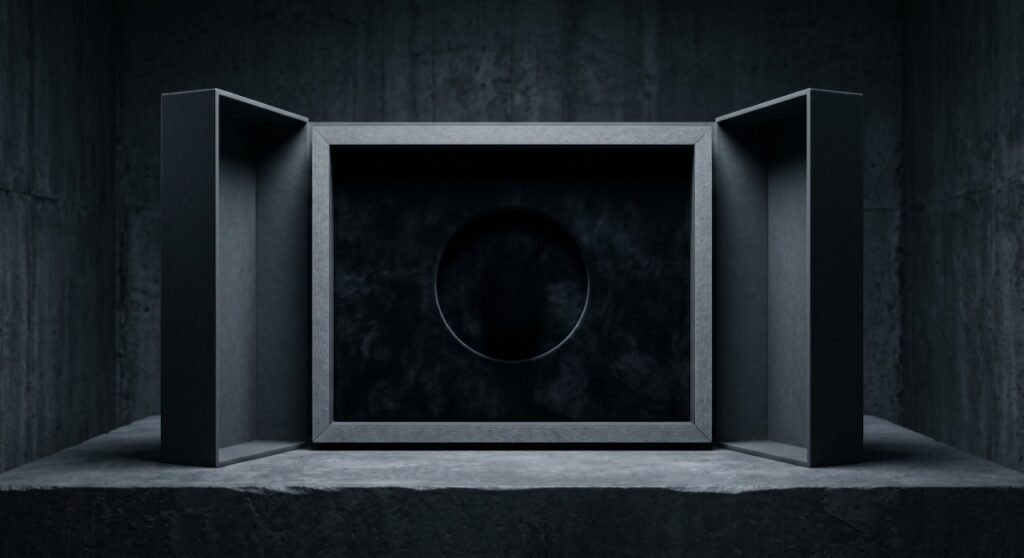
There is a deeply ingrained cognitive bias in human evolutionary psychology (often documented in consumer behavior studies): we subconsciously associate density and weight with high quality, durability, and immense value. Think about a solid gold bar versus a hollow piece of aluminum.
If a brand wants to charge a premium, the product—and the box it arrives in—must possess a satisfying, substantial “heft.”
1. The Material Reality: Beyond Standard Greyboard
Most generic custom rigid boxes on the market are constructed using 800GSM greyboard.While this is sufficient for mid-tier products, it feels entirely inadequate for true luxury.
The Heavyweight Upgrade : At Yihong Packaging, when engineering boxes for top-tier skincare sets or luxury spirits, we immediately step up to high-density 1200GSM, 1500GSM, or even 1800GSM greyboard. This drastic increase in board density fundamentally changes the physics of the box.
2. The 50ml Cream Case Study
Consider a $300 jar of anti-aging face cream. The actual product is physically small (50ml). If shipped in a standard folding carton, it feels incredibly light, triggering buyer’s remorse before the product is even opened.
The Engineering Fix : We counteract this by placing the small jar inside an oversized, thick-walled rigid box. However, we do not leave it hollow. We insert a custom-molded, high-density platform (such as an MDF wood core or heavy rigid foam) wrapped in premium velvet.
By artificially increasing the overall packaging mass without significantly changing the freight tier, the customer pulls a heavy, solid, vault-like object from the shipping mailer. The psychological message is instantaneous: “This is a serious, potent, and expensive product.”
III.The "Damping Effect": Engineering the 3-Second Reveal
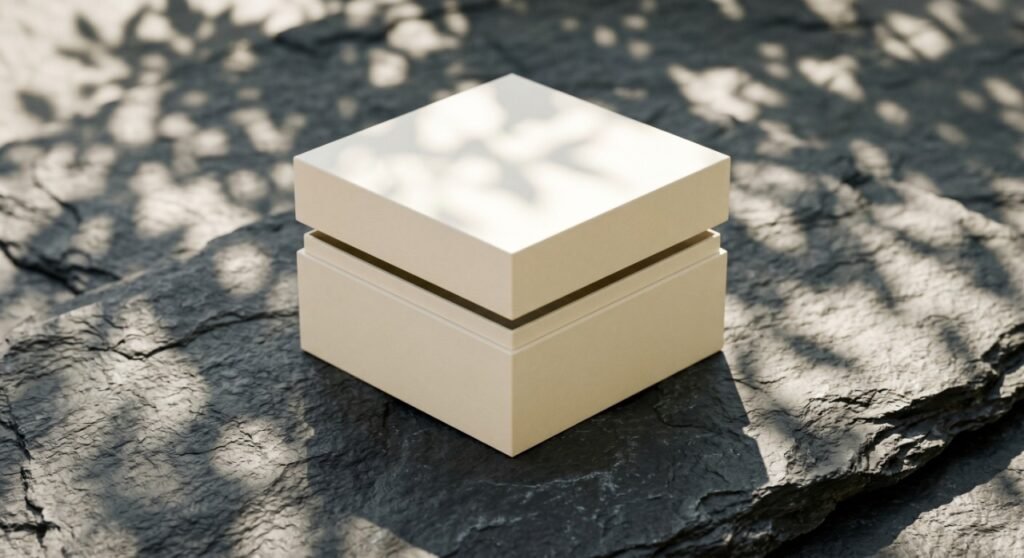
If the weight of the box sets the initial expectation, the process of opening it is the main event. In the luxury sector, the most coveted structural design is the Telescope Box (Top and Bottom Box). But it’s not just about the shape; it’s about how it moves.
Have you ever picked up an iPhone box by the lid and watched the bottom tray slowly, smoothly glide out? That satisfying resistance is not an accident; it is a highly engineered feature known as the “Damping Effect”
1. The Aerodynamics of Packaging
Engineering perfect damping is an exercise in aerodynamics and extreme precision. It is the packaging equivalent of Swiss watchmaking.
The Vacuum Seal : To achieve this effect, our structural engineers must control the dimensional tolerance between the inner base and the outer lid to a microscopic 0.1 to 0.2 millimeters.
The Science : When the tolerances are this tight, pulling the lid up creates a temporary vacuum (negative air pressure) inside the box. The air struggling to seep in through the microscopic gap is what creates that smooth, slow-motion descent. If the gap is too large, the box falls open instantly (feeling cheap). If the gap is too tight, the consumer has to forcefully pry it open (causing frustration).
2. The Emotional Value of the 3-Second Delay
From a neuromarketing perspective, this slow reveal taps into the psychological principle of Delayed Gratification, a concept widely studied by the American Psychological Association.
By forcing the consumer to wait exactly 2 to 3 seconds for the box to open, you are stretching out their dopamine spike. You are transforming a mundane task (“opening a box”) into a theatrical ceremony. When that $500 face cream is finally revealed, the brain has already concluded that whatever was guarded by such a precise, deliberate mechanism must be extraordinarily valuable.
IV. Fingertip Magic: High-ROI Tactile Finishes

Once the visual design has drawn the customer in and the weight has anchored the price, their fingertips take over. In the luxury tier, flat, glossy printed paper is the enemy. It feels industrial, mass-produced, and cold.
To justify a premium price, the box must offer immediate, micro-textural feedback. Here are the three most powerful tactile surface finishes that deliver the highest Return on Investment (ROI):
1. Soft-Touch Lamination
The Sensation: Soft-touch lamination adds a microscopic layer of polyurethane to the box, giving the paper a distinctively velvety, rubberized, or peach-fuzz feel.
The Neuromarketing Cue : For high-end skincare, this is the ultimate weapon. When a consumer’s fingertips graze a soft-touch box, the brain immediately registers “supple,” “hydrating,” and “baby-soft.” You are physically demonstrating the end-result of your cosmetic product before they even open the jar.
2. Blind Embossing & Debossing
The Sensation: Pressing a metal die into the thick board to create a raised (embossed) or recessed (debossed) 3D design, without the use of any ink or foil.
The Neuromarketing Cue : Blind embossing is the epitome of “Quiet Luxury” and “Old Money” aesthetics. It forces the consumer to run their fingers over the logo to trace the brand name. This tactile friction creates deep memory retention. It whispers confidence, whereas bright, flashy metallic inks often scream for attention.
3. Textured Specialty Papers
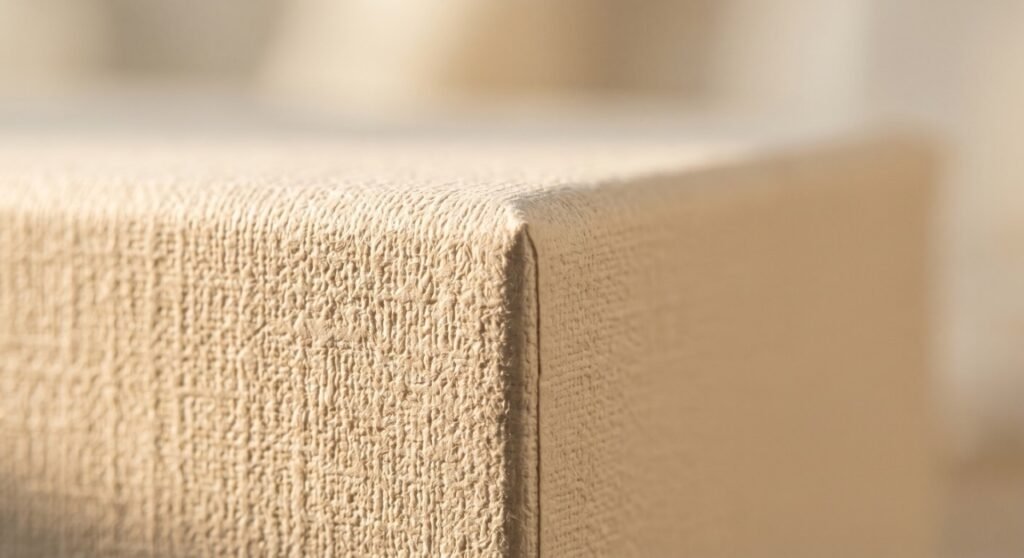
The Sensation: Instead of printing on smooth coated paper, wrapping the rigid box in uncoated specialty papers that have inherent, physical textures like linen , leather , or raw woodgrain .
The Neuromarketing Cue : Tactile textures directly communicate the brand’s DNA. A heavy linen texture on a skincare box instantly subliminally communicates that the ingredients inside are organic, botanical, and pure. It shifts the perceived value from a “chemical lab product” to an “artisanal, nature-derived remedy.”
V. The Thermal Illusion: Temperature Cues in Luxury Packaging
When we evaluate an object through touch, our fingertips register not only texture but also temperature. Human brains subconsciously link a “cold touch” to high-value, enduring natural materials—a haptic association supported by scientific research on thermal sensations and consumer judgment. Conversely, a neutral or “room-temperature” touch often triggers subconscious associations with cheaper, mass-produced industrial plastics.
If your rigid box uses very thick paperboard but still feels somewhat like a generic plastic container, it is likely missing the strategic application of temperature cues.
1. The Cold Touch of Luxury
To instantly elevate a paper-based box, we introduce elements that remain physically cooler than the ambient room temperature.
Cold Foil & Metal Plaques : Instead of standard foil stamping, luxury brands can embed a Custom Zinc-Alloy Metal Plaque into the lid recess. When the consumer’s fingers brush against this cold, hard metallic surface to open the box, the brain receives an immediate signal of uncompromising quality and weighty expense.
2. The Warm Contrast of Protection
While the exterior should project a cold, impenetrable exclusivity, the interior must offer psychological warmth and protection for the precious item inside.
Micro-Suede & Velvet : After touching the cold exterior metal, the consumer opens the box to find their $500 face cream resting in a premium custom packaging insert lined with high-pile velvet or micro-suede.This sudden shift from “external cold” to “internal warmth” creates a powerful sensory contrast. It visually and physically communicates that the product is delicate, revered, and deeply cared for.
VI. Micro-Frictions: Engineering the Layers of Anticipation
Many brands mistakenly believe that packaging should be as easy to open as possible. While this is true for everyday e-commerce, it is completely wrong for luxury. As noted by Vogue Business in their analysis of luxury e-commerce, true luxury is never given away easily; it demands a ritual.
In behavioral psychology, this is achieved by designing Micro-Frictions . By forcing the customer to physically navigate through multiple layers to reach the product, you are compounding their anticipation.
1. The Tension of the Ribbon
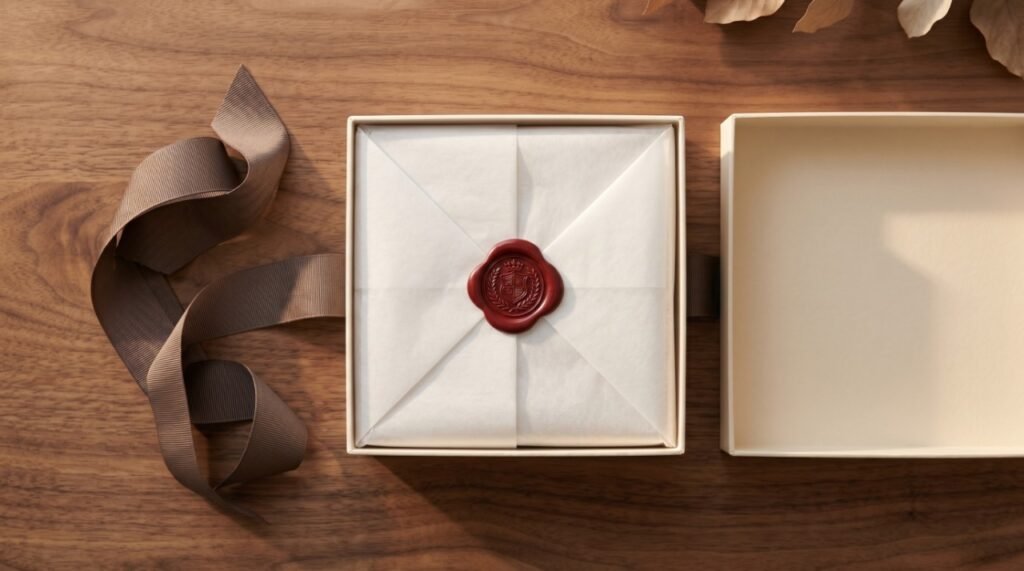
The Ritual:A thick, premium Grosgrain Ribbon—one of our many custom packaging accessories—tightly wrapped around the box forces the user to pause. The physical friction of untying the knot requires intention and focus. It signals the transition from the chaotic outside world into a private, exclusive brand moment.
2. The Breaking of the Seal
Once the lid is removed, the product should not be completely naked.
Tissue Paper & Wax Seals : Covering the product with crisp, custom-printed tissue paper secured by a heavy wax seal or a deeply embossed sticker is an absolute must.
The Psychology : The physical act of gently tearing the paper or breaking the seal provides an incredibly satisfying micro-friction. It mimics the ancient act of breaking a royal crest. It tells the consumer: “You are the first and only person to access this. It has been sealed exclusively for you.”
VII.The Guilt-Free Premium: Reconciling Heavyweight Luxury with ESG
Historically, luxury packaging meant excess: layers of unrecyclable plastic, toxic glues holding heavy composite boards together, and dense EVA foam inserts. Today, however, we are facing a paradigm shift. Modern affluent consumers (especially Gen Z and Millennials) experience immense “eco-guilt” when they are forced to throw away non-recyclable packaging.
Furthermore, with strict Extended Producer Responsibility (EPR) regulations and the European Commission’s directives on packaging waste enforcing massive penalties on plastic packaging by 2026, brands can no longer afford to ignore ESG (Environmental, Social, and Governance) standards. How do we maintain the “heavy, premium feel” without violating sustainability?
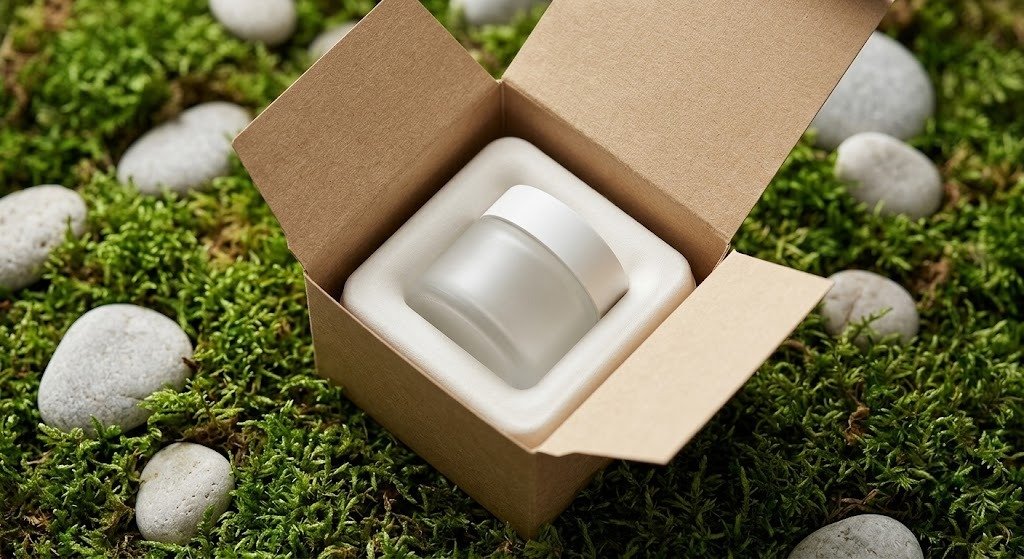
1.Beyond Foam: High-Density Molded Pulp
For decades, high-end face creams and perfumes were nestled inside EVA or polyurethane foam. While foam feels protective, it is an absolute nightmare for the environment.
The Sustainable Upgrade:We replace cheap foam with our sustainable high-density molded pulp packaging.Unlike the rough, cheap pulp used in egg cartons, wet-pressed pulp is engineered under extreme heat and pressure. It emerges with an incredibly smooth, almost ceramic-like finish and a dense, weighty structure.
The ROI: It cradles the product perfectly, feels heavy and expensive, and is 100% biodegradable. You earn a massive PR win by stamping “Plastic-Free” on the bottom of your $300 product.
2. Mono-Material Heaviness
Traditional rigid boxes use glues to bind paper to a greyboard core, making them extremely difficult to recycle.
The Engineering Fix: Aligning with McKinsey & Company’s insights on sustainable packaging trends, our structural team utilizes Mono-Material Engineering. By taking a single sheet of extremely thick, FSC-certified virgin kraft paper and utilizing complex origami-style folding techniques (locking tabs and double-walls), we can simulate the thickness and crush-resistance of a glued rigid box. No glue, no mixed materials—just pure, heavy, 100% curbside-recyclable elegance.
VIII.VAVE for Luxury: Premium Feel Without the Premium Price
Engineering a luxury box does not mean handing over a blank check to your packaging supplier. True packaging excellence lies in VAVE (Value Analysis/Value Engineering)—the science of maximizing the perceived value of a product while aggressively stripping away unnecessary costs.
If you are launching a new premium D2C brand, how do you deliver a neuromarketing masterpiece on a strict budget?
1. Asymmetrical Budget Allocation
Luxury is about focus. You do not need expensive tactile finishes on every single square inch of the box.
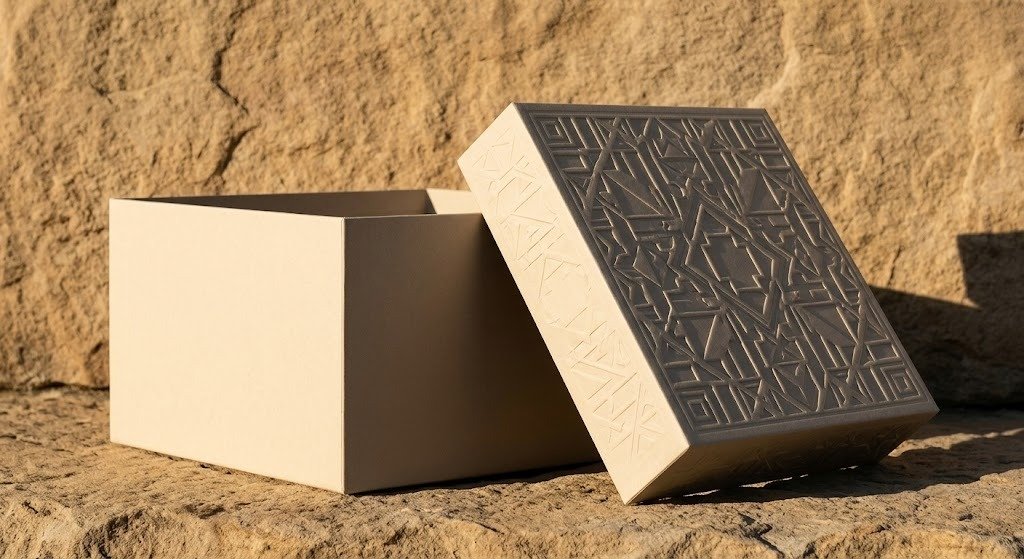
The Strategy: Spend 90% of your finishing budget on the “First Touchpoint”—usually the center of the top lid. Apply a deep blind emboss and soft-touch lamination only to the lid where the consumer’s hand will naturally rest.
The Savings: Leave the bottom and sides of the box as uncoated, unprinted, high-quality matte paper. The consumer’s brain will anchor the luxury value to that incredible first touch on the lid, completely ignoring the minimal sides. You cut your tooling and printing costs in half without sacrificing the premium illusion.
2. Structural Volume: The "False Bottom" Secret
The Strategy: Instead of buying excessively thick solid boards for the entire structure, our engineers design a “False Bottom” using smartly folded E-flute corrugated board hidden underneath the velvet insert.
The Savings: This structural trick instantly elevates the product, making the internal presentation look twice as deep and substantial. It captures the psychological ROI of “massive volume” but uses inexpensive air and folded corrugated structural support to fill the space, dramatically lowering both the material cost and the shipping weight compared to a solid wood or acrylic box.
IX.The Sound of Luxury: Auditory Cues in Packaging
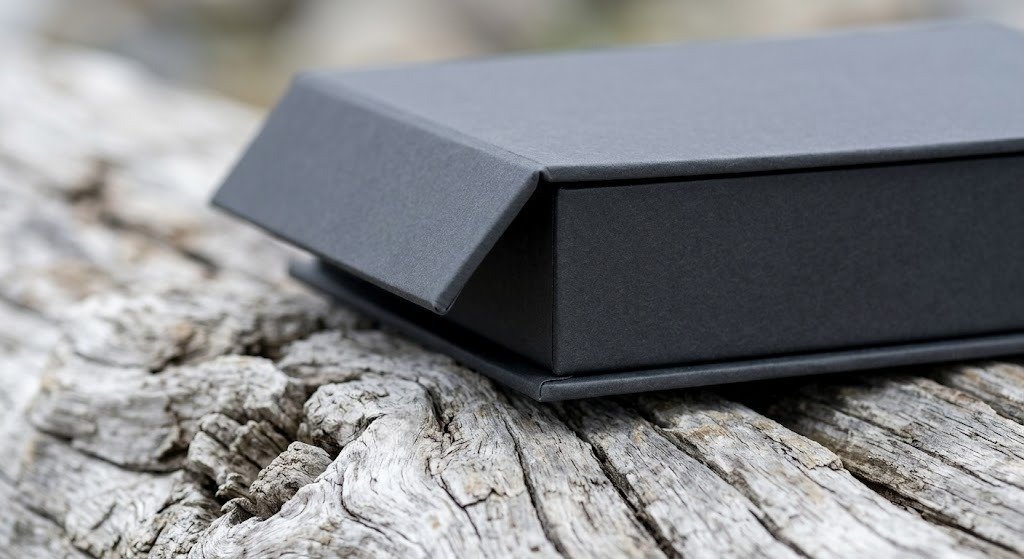
When discussing tactile packaging, we often overlook the sense that is inextricably linked to touch: Hearing. Just as brands invest heavily in Sonic Branding to shape consumer perception, the sound a box makes when it is handled, opened, and closed sends immediate, subconscious signals to the brain about its structural integrity and material quality.
If a $1,000 piece of jewelry is encased in a box that makes a high-pitched, hollow scraping sound when opened, the perceived value plummets instantly. Luxury sounds deliberate, muted, and solid.
1. The Magnetic Snap
One of the most effective structural designs for high-end cosmetics and jewelry is the Magnetic Closure Box.
The Sound of Security: Hidden beneath the paper are powerful neodymium magnets. When the consumer lets go of the lid, it doesn’t just fall; it pulls itself shut with a crisp, definitive “snap”
The Neuromarketing Cue: This sharp, precise sound mimics the closing of a heavy luxury car door or a high-end safe. It neurologically communicates precision engineering, finality, and absolute security for the precious item inside.
2. Muted Friction & Acoustic Dampening
A hollow box acts as an echo chamber, amplifying cheap, papery scratching sounds. A true luxury box absorbs sound.
The Engineering Fix: By utilizing the 1200GSM high-density board mentioned earlier, combined with a plush velvet or high-density molded pulp interior, the box physically dampens acoustic vibrations. When the lid slides off, instead of a scratch, the consumer hears a deep, muted, breathy “whoosh.” It creates an atmosphere of “Quiet Luxury” and serene exclusivity.
Conclusion & Call to Action
Luxury is not merely a logo printed on a box; it is a multi-sensory experience meticulously engineered to bypass logical resistance and trigger deep emotional valuation.
By mastering the “Tactile ROI” through significant physical weight, engineered damping effects, contrasting temperatures, strategic micro-frictions, and deliberate sound design, you completely transform how consumers perceive your brand. You are no longer just selling a skincare cream or a piece of jewelry; you are selling an artifact of immense, undeniable value.
Is your packaging actively justifying your premium price point, or is it silently cheapening your brand?
Stop guessing and start engineering. Send your product details to the structural experts at Yihong Packaging. We will craft a Custom Structural White Sample (定制结构白样) specifically designed to maximize your product’s tactile weight, damping effect, and premium feel—before you ever spend a dime on mass production.
FAQ
Does upgrading to 1200GSM or 1500GSM greyboard drastically increase the packaging cost?
Not necessarily. While thicker board costs slightly more, the main cost driver in premium rigid boxes is the manual labor for wrapping and the surface finishes. Upgrading from a standard 800GSM to a heavyweight 1200GSM typically adds only a fraction to the unit price, but it multiplies the consumer’s perceived value immensely, yielding a massive ROI.
Can the "false bottom" strategy safely support heavy items like 100ml glass perfume bottles?
Absolutely. Our engineers don’t just leave the false bottom empty. We use a hidden support structure made of reinforced E-flute corrugated board or custom die-cut rigid inserts beneath the velvet layer. This provides incredible structural support and crush resistance for heavy glass items while keeping the overall weight and cost optimized.
Does high-density molded pulp scratch delicate product surfaces like glossy acrylic or polished gold?
No. High-density wet-pressed pulp has a remarkably smooth, refined finish. However, for extremely delicate or easily scratched surfaces, we can apply a thin layer of eco-friendly flocking (velvet-like fibers) directly onto the molded pulp. This provides the ultimate anti-scratch protection while maintaining the sustainable structure.
Will the "damping effect" (slow-motion reveal) be ruined by humidity during international shipping?
It can be, if not engineered properly. Paper naturally absorbs moisture and expands, which can make a tight-fitting telescope box get stuck. At Yihong Packaging, we calculate humidity tolerances based on your target market’s climate and utilize moisture-resistant coatings and desiccants during shipping to ensure the vacuum seal performs perfectly upon arrival.
What is the tooling cost for custom zinc-alloy metal plaques on the box lid?
Creating a custom 3D metal mold typically requires a one-time tooling fee ranging from $100 to $300, depending on the complexity of your logo. Once the mold is created, the unit price per plaque is surprisingly affordable (often under $0.50), especially for bulk orders over 2,000 units, making it a highly cost-effective luxury upgrade.
Are magnetic closure boxes safe to ship directly in the mail without an outer box?
We strongly advise against this. Magnetic rigid boxes are designed for premium retail presentation and the unboxing ritual, not to withstand the brutal impacts of postal sorting machines. They should always be placed inside a custom-fitted corrugated mailer box (overboxing) to protect the luxury exterior from dirt, rain, and crushing during transit.