I. Introduction: The Subscription Box Paradox
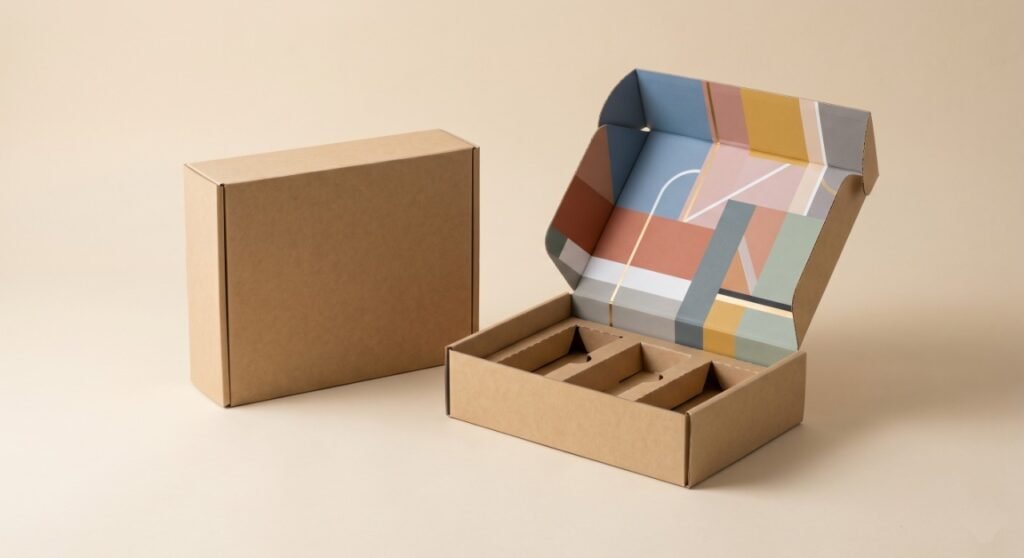
As highlighted by Forbes on the booming subscription economy, the subscription box and mystery blind-box business models are built on a single, fragile metric: Customer Retention.To keep subscribers paying month after month, brands must deliver an exhilarating, Instagram-worthy unboxing experience every single time a package arrives at the doorstep.
Subscription-box procurement brief
Recurring programs need a packaging specification that stays stable across changing product mixes. Define the maximum loaded weight, item count, dimensional-weight limit, monthly insert layout and acceptable empty space before comparing board grades or finishes.
YiHongBox can combine custom mailer boxes, modular inserts and printed sleeves from MOQ 1,000 with structural samples and DDP delivery. For shipping programs, use the ISTA testing framework to discuss drops, vibration and compression with your logistics team before approving mass production.
However, this creates a brutal logistical paradox. High-frequency monthly shipping means your brand is at the absolute mercy of international freight rates and last-mile delivery fees. When marketing teams design overly elaborate, oversized packaging to maximize the “wow” factor, they inadvertently trigger massive Dimensional Weight (DIM Weight) penalties. Suddenly, your profit margins are entirely eaten alive by shipping costs.
Is it possible to break the curse of “pretty packaging equals expensive shipping”? Yes. The secret does not lie in graphic design, but in structural engineering. In this guide, we will reveal how to engineer the ultimate D2C subscription box—maximizing the premium unboxing reveal while ruthlessly slashing your fulfillment and shipping costs.
II. The Structural Champion: Why E-Flute Mailer Boxes Rule E-commerce
When it comes to shipping products directly to consumers through unpredictable postal networks, a standard folding carton is too weak, and a luxury rigid box is too heavy and expensive to ship. Enter the undisputed champion of the D2C supply chain: The Custom Corrugated Mailer Box.
1. The Magic of the E-Flute
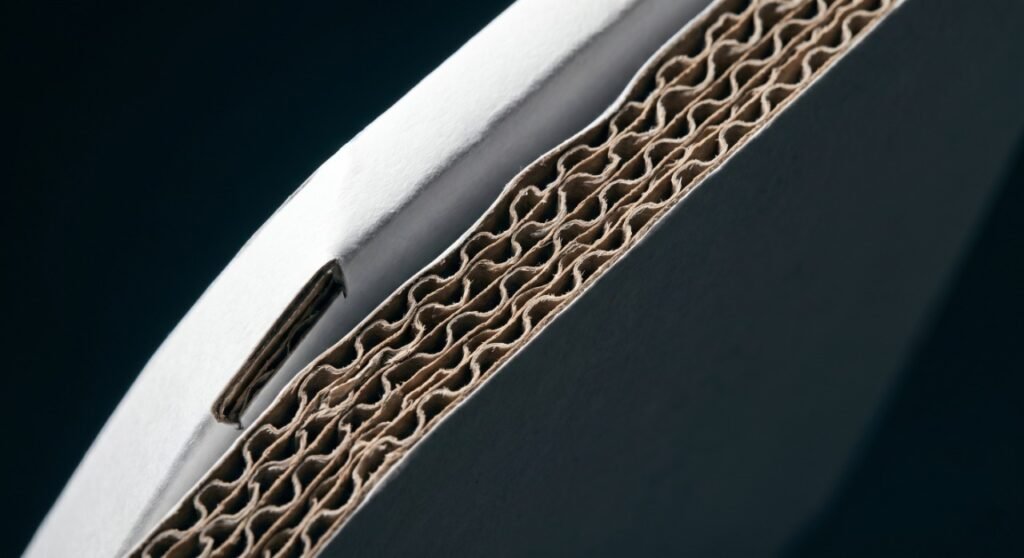
Not all cardboard is created equal. Traditional shipping cartons use thick A or C-flutes, which are strong but visually unappealing and difficult to print high-resolution graphics on.
The Sweet Spot: We construct premium subscription boxes using E-flute corrugated board. At approximately 1.5mm (1/16 inch) thick, E-flute offers the perfect hybrid solution. Its tightly woven corrugated core provides immense structural crush resistance, while its smooth, flat exterior paper allows for flawless, photo-quality lithographic printing.
2. The Tape-Free "Overboxing" Eliminator
One of the largest hidden costs in e-commerce is “overboxing”—the practice of putting a beautiful retail box inside a secondary, ugly brown shipping carton to protect it during transit.
Structural Brilliance: A well-engineered mailer box eliminates this need entirely. Its ingenious roll-end front-tuck (REFT) design features double-thick structural sidewalls. These walls act as built-in crumple zones, absorbing impact.
Fulfillment Efficiency: Furthermore, features like dust flaps and locking tabs secure the box tightly. It serves as both the retail presentation and the shipping container in one unified piece, eliminating the need for packing tape and slashing your warehouse material costs.
III. The DIM Weight Masterclass: Right-Sizing Your Box
In the world of e-commerce logistics, you are rarely billed for how heavy your product is; you are billed for how much space it occupies on a truck or airplane. This pricing model, enforced by major carriers like FedEx, UPS, and DHL, is known as Dimensional Weight (DIM Weight).
When brands use generic, off-the-shelf “stock boxes” for their subscription services, they usually end up with boxes that are slightly too big. This creates empty void space, requiring them to stuff the box with bubble wrap or crinkle paper.
The 1-Inch Rule and Compounding Savings
The Trap of Empty Space : Shipping empty air is the fastest way to destroy a subscription business. If your box is unnecessarily large by just one inch on each side, the DIM weight calculation can instantly push your package into the next pricing tier, increasing your shipping cost by 1 to 2 per box.
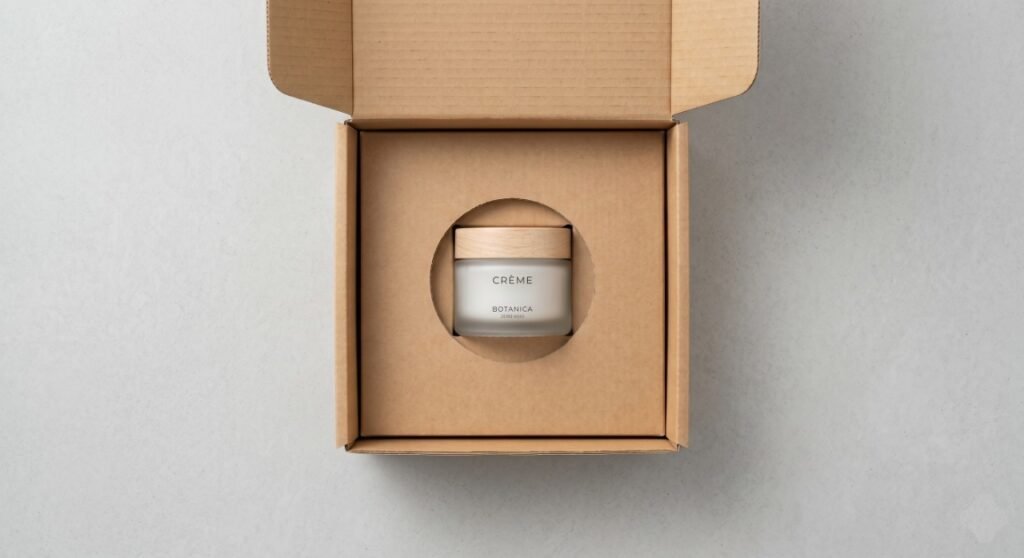
The Right-Sizing Strategy : Our structural engineers practice rigorous “Right-Sizing.” By custom-engineering the exact dimensions of your mailer box to hug your products perfectly, we eliminate the void space.
The Real-World Math : Imagine a subscription box brand shipping 10,000 units a month. By engineering a custom box that shaves just 1 inch off the height, you avoid the DIM weight penalty, saving $1.50 per shipment. That equates to $15,000 saved per month, or $180,000 added directly to your bottom line every year. Custom engineering doesn’t cost you money; it makes you money.
IV. Inside Printing: The Secret Weapon for Unboxing ROI
If we are shrinking the box to save on shipping, how do we maintain the luxurious, exciting unboxing experience that subscription customers demand? The answer is the best-kept secret in D2C packaging: Inside Printing.
The "Business on the Outside, Party on the Inside" Strategy
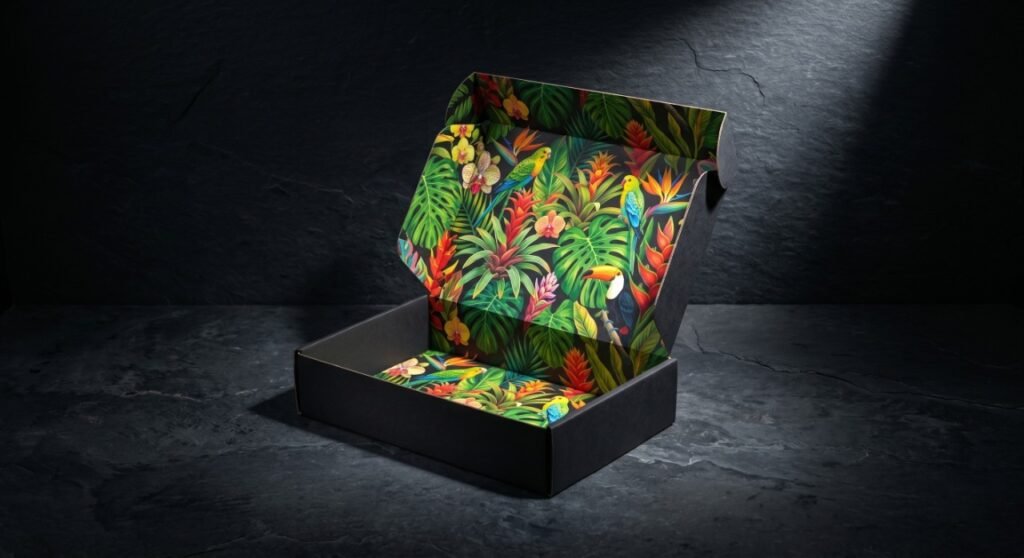
1. Anti-Theft Exterior : High-value subscription boxes (like luxury cosmetics or designer tech accessories) are prime targets for “porch pirates” (package thieves). By keeping the exterior of the corrugated mailer box deliberately minimalist—perhaps just a plain kraft brown or matte black with a small, single-color logo—you avoid attracting unwanted attention during transit. It also keeps your external printing costs incredibly low.
2. The Dopamine Reveal : The moment the customer slices the tape and flips open the lid, they are hit with a vibrant, full-color (CMYK) explosion of brand artwork, custom illustrations, or personalized welcome messages utilizing our premium printing options directly on the inside of the box. According to Shopify’s research on e-commerce unboxing experiences, this stark contrast between the dull exterior and the stunning interior triggers a powerful emotional response and dopamine release.
3. Eliminating Extra Marketing Collateral : Instead of paying to print separate expensive thank-you cards, product instruction manuals, or promotional flyers to stuff inside the box, you can print all this critical information directly onto the interior lid. This is another brilliantly effective VAVE tactic that lowers your material costs, speeds up the packing process, and ensures the customer actually reads your message.
V. Modular Inserts: One Box, Infinite Monthly Combinations
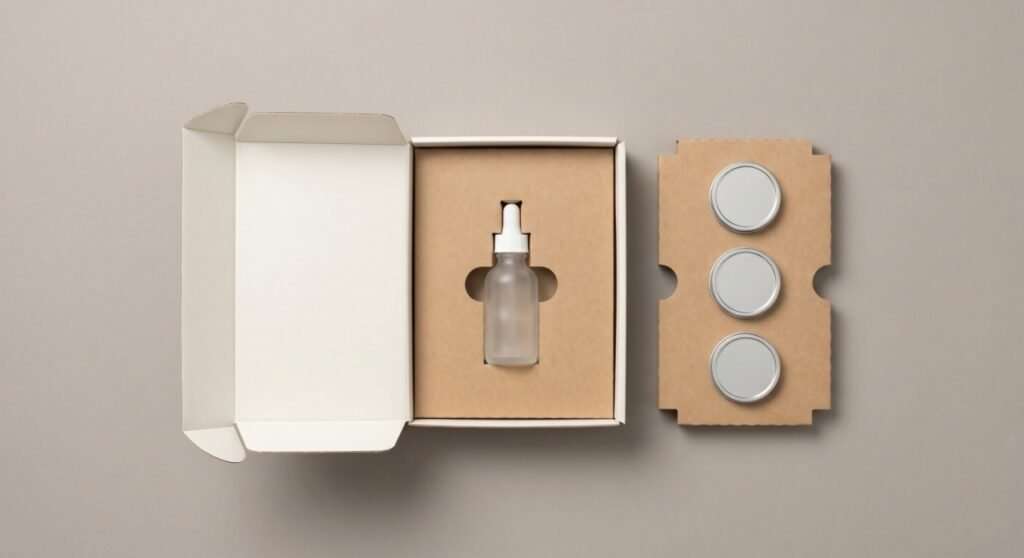
The biggest headache for any subscription box manager is the ever-changing monthly inventory. Month 1 might feature a tall bottle of body wash; Month 2 might contain three small, fragile jars of face cream.
The "New Box Every Month" Trap
The Problem: Many amateur brands try to solve this by designing and manufacturing a brand-new box size every single month to fit the new items. This destroys your ability to leverage high-volume MOQ (Minimum Order Quantity) discounts and creates an absolute nightmare for warehouse inventory management.
The Engineering Solution: Standardized Shell + Modular Inserts
Step 1: The Universal Shell : Our structural engineers help you determine one “universal” mailer box dimension that fits 90% of your future product combinations while staying within the cheapest DIM weight shipping tier. You can then order this standard outer shell in massive bulk (e.g., 50,000 units) to lock in the lowest possible manufacturing unit price.
Step 2: The Custom Insert : Then, on a month-to-month basis, we only manufacture a new, highly inexpensive die-cut cardboard insert. This precise internal structure acts like a bespoke puzzle piece, safely cradling that month’s unique items inside the standard outer box.
The ROI: You get the financial benefits of massive bulk manufacturing, while maintaining the ultimate flexibility to ship any product combination your marketing team dreams up.
VI. The Assembly Line: Slashing Fulfillment Labor Costs
When your brand scales to shipping 10,000 or 50,000 boxes a month, seconds matter. As widely discussed in Supply Chain Dive regarding warehouse efficiency, if your box is complicated to fold, your 3PL (Third-Party Logistics) provider will charge you exorbitant hourly rates for fulfillment labor, and your shipments will face severe delays.
1. The "Fast-Fold" Dieline
The Solution: Our engineers optimize the cutting die (dieline) so the corrugated mailer practically folds itself. A well-designed roll-end front-tuck (REFT) box with pre-creased score lines can be popped into its 3D shape by a warehouse worker in under 5 seconds. This drastically increases your packing throughput and slashes 3PL labor fees.
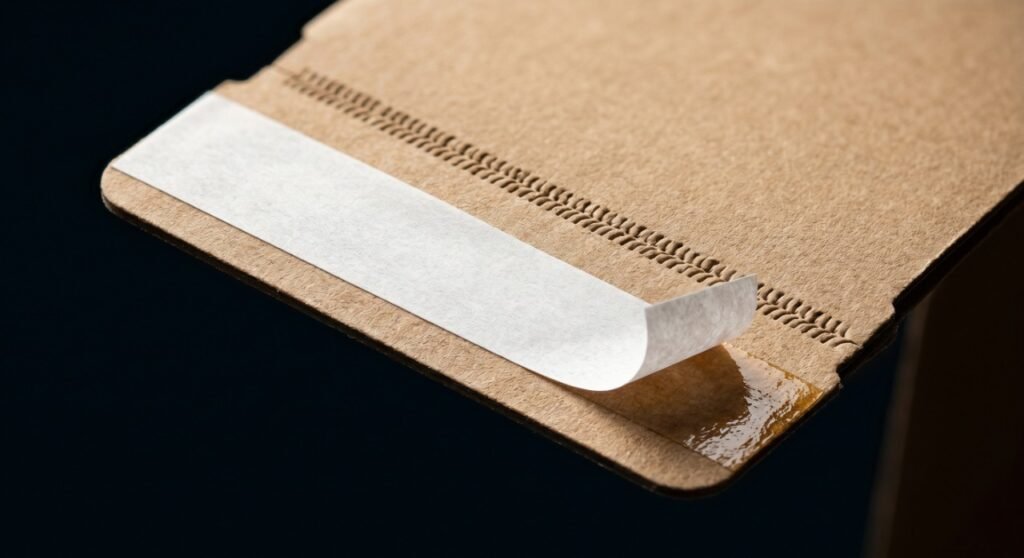
2. Peel & Seal / Tear Strips
Say goodbye to the messy, slow, and ugly process of warehouse workers manually applying clear packing tape.
For the Warehouse : Peel & Seal. By having the factory pre-apply a double-sided adhesive strip to the closing flap of the box, workers simply peel off the paper backing and press down to seal the box instantly. This cuts sealing time in half.
For the Consumer: The Tear Strip. For the end-user, a built-in tear strip (often called a zipper box) provides a frustration-free, highly satisfying “zip” opening experience—no scissors required. Crucially, this tear strip also acts as a built-in tamper-evident security feature, ensuring the customer knows their box hasn’t been opened during transit.
VII. The Eco-Guilt Factor: Sustainable Solutions for Monthly Deliveries
There is a psychological phenomenon unique to the subscription business model known as “Eco-Guilt.” While customers love receiving their monthly treats, watching a mountain of empty cardboard boxes and plastic bubble wrap pile up in their living rooms often triggers environmental anxiety. For many eco-conscious millennials and Gen Z consumers, who according to Deloitte’s Global Gen Z and Millennial Survey heavily prioritize sustainability, this guilt is a primary reason for canceling a subscription.
To protect your retention rate, your sustainable packaging solutions must actively alleviate this guilt.
1. The Plastic-Free Promise
The Strategy: Eliminate unrecyclable EVA foam, styrofoam peanuts, and plastic bubble wrap entirely. Replace them with 100% recyclable, precision die-cut cardboard inserts or custom-molded pulp trays.
The PR Win: You can boldly print “100% Plastic-Free Packaging” on the exterior of the box, instantly transforming a potential negative into a powerful marketing asset.
2. Soy-Based Inks and Kraft Board
he Material Shift: Utilize natural, unbleached Kraft corrugated board combined with water-based or soy-based inks. Unlike petroleum-based inks, soy inks do not leave behind toxic micro-plastics during the recycling process, offering a truly sustainable alternative.
The Consumer Experience: By printing a small, elegant message on the bottom of the box—“This box is printed with soy ink and is 100% recyclable. Please flatten and recycle me.”—you give the consumer permission to enjoy the unboxing without the eco-guilt.
VIII. Bridging Offline to Online: Smart Elements for Community Retention
The physical box is the only marketing channel that boasts a 100% open rate. Every single subscriber will look inside that box. Yet, many brands fail to use this critical touchpoint to drive digital engagement.
The Dynamic QR Code Strategy
With QR codes becoming essential for omnichannel marketing, printing a prominent Dynamic QR Code on the inside lid bridges the gap between the physical product and your digital community.
Month-to-Month Flexibility : Because the QR code is “dynamic,” you do not need to reprint the box every month. You simply update the URL destination on your backend dashboard.
Engagement Tactics : When the subscriber scans the code, it can lead them to:
A digital “catalog” explaining the secret items in this month’s blind box.
A voting poll to choose the theme for next month’s box (fostering deep community involvement).
An exclusive invite link to your brand’s VIP Discord server or WeChat group.
IX. The Durability Test: Surviving the "Last Mile"
A crushed box completely destroys the premium illusion, leading to immediate refund requests and subscription cancellations. The international postal network is brutal; your box will be thrown, dropped, and stacked under heavy cargo.
ECT (Edge Crush Test) Matters
Before finalizing your bulk order, you must verify the physical strength of the corrugated board.
The Standard: We strongly recommend an ECT-32 rating (Edge Crush Test), standardized by the Technical Association of the Pulp and Paper Industry (TAPPI), for standard D2C subscription boxes. This means the board can withstand 32 pounds of vertical pressure per square inch before buckling. This ensures that even if your box is at the bottom of a delivery truck’s pile, it arrives on the porch looking flawless.
Physical Prototyping : Never skip the physical prototype phase. We conduct rigorous drop tests and vibration simulations on our structural white samples to guarantee your “surprise” survives the last mile intact.
X. Conclusion & Call to Action (CTA)
Designing the perfect subscription box is not an art project; it is an exercise in structural engineering and economic strategy.
Is your current packaging eating into your monthly profit margins?
By utilizing E-flute mailers, right-sizing your dimensions to defeat the DIM weight penalty, leveraging inside printing, and standardizing your outer shell with modular inserts, you can achieve the impossible: delivering an ultra-premium unboxing experience while aggressively slashing your fulfillment and shipping costs.
Let us engineer a more profitable solution. Send the dimensions of your subscription items to the structural experts at Yihong Packaging. We will provide a Free Packaging Audit and a custom 3D dieline optimized specifically to lower your dimensional weight and increase your packing speed.
FAQ
Does printing on the inside (Inside Printing) double the cost of the box?
No. While it does increase the cost compared to a plain box, it does not double it. Because we print the flat sheet of paperboard before it is laminated to the corrugated core, adding inside printing typically only increases the unit cost by 15% to 30%, depending on the ink coverage. The incredible boost in unboxing ROI makes this small investment highly worthwhile.
How long does it take to produce a batch of 10,000 subscription boxes?
Once you approve the final physical sample and digital artwork, mass production for a batch of 10,000 corrugated mailer boxes typically takes 10 to 15 business days. Please factor in additional time for ocean freight (usually 25-35 days) if shipping internationally to your 3PL fulfillment center.
Are custom die-cut cardboard inserts expensive to make?
The unit price of the insert itself is incredibly cheap (often just pennies per unit). However, there is a one-time tooling fee to create the custom wooden cutting die (usually between $50 and $150). Once the die is paid for, you can order thousands of inserts extremely cost-effectively.
Should I use E-flute or B-flute for my subscription box?
For 90% of D2C subscription boxes, E-flute (approx. 1.5mm thick) is the perfect choice. It holds up to 3–4 kg perfectly and provides a smooth surface for high-end printing. However, if you are shipping very heavy items (like full-sized glass liquor bottles or heavy fitness gear), you should upgrade to B-flute (approx. 3mm thick) for extra structural crush resistance.
How do I protect my beautifully printed box from rain and dirt during delivery?
If your box ships directly through the postal network without an outer bag, we recommend applying an aqueous coating (AQ) or an eco-friendly Matte/Gloss Varnish. This provides a thin, invisible layer of protection against light moisture and scuff marks while remaining 100% recyclable. (We advise against heavy plastic lamination if sustainability is your brand’s core value).
Where should I place the ugly shipping label so it doesn’t ruin the unboxing experience?
This is a crucial D2C design detail! We recommend designating a specific blank, unprinted rectangular space on the bottom panel of the box. During fulfillment, instruct your 3PL to place the shipping label precisely there. This leaves the top and sides of your box completely pristine for the customer’s initial visual encounter.