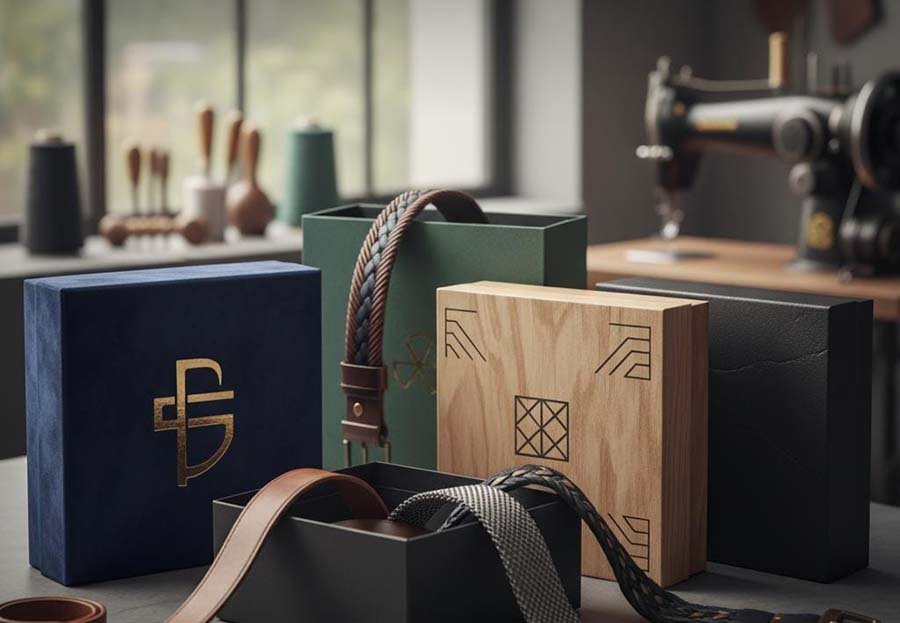
If a belt is the anchor of an outfit, then the packaging is the prelude to the “unboxing ceremony.” In 2026, a mediocre box will only bury high-quality leather craftsmanship. A true custom belt box should allow the customer to feel the history and ingenuity behind the brand the moment they touch the paper.
Yihong Box understands that a packaging box is not just a protective tool; it is an extension of the brand’s value.
These aren’t just containers. They’re part of the first physical handshake your customer has with your product. A well-designed belt box can:
- Protect the belt during shipping and storage
- Elevate perceived value
- Serve as a brand touchpoint (logo, colors, embossing)
- Help with presentation and unboxing experience
In short: it’s packaging plus branding plus protection.
Let’s dive into how to make your belt boxes stand out — and why custom is the path forward.
The Belt Box Market: Trends & Numbers
Understanding the landscape helps you see opportunity.
- For belt brands, select the box structure around belt and buckle dimensions, sales channel, presentation needs and shipping route.
- Premium belt boxes can use magnetic closures, matte finishes and embossing to create a distinctive presentation.
- Some belt boxes use recycled or recyclable materials; verify the exact board, coating and local disposal route before making an environmental claim.
- For wider packaging context, Eurostat reports 79.7 million tonnes of packaging waste generated in the EU in 2023. This is an EU-wide figure, not a belt-box market estimate.
So, custom belt boxes are not just an aesthetic choice — they’re a strategic one in a market that increasingly values brand stories, premium experiences, and sustainability.
What Makes a Great Custom Belt Box
Let’s break down the features, specs, and design elements you should consider.
| Feature | Why It Matters | Practical Tip |
|---|---|---|
| Material & thickness | Determines durability, tactile feel, and protection | Use rigid cardboard / chipboard (e.g. 1.5–2 mm) for premium feel |
| Type of closure / opening | Convenience, elegance, unboxing drama | Magnetic flap, drawer-style slide, tuck-top, or hinge lids |
| Inner insert / base | Keeps the belt neatly in place | Use foam, molded trays, elastic straps, or stitched slots |
| Printing & finishing | Branding, aesthetics, texture | Matte, gloss, embossing, foil stamping, spot UV |
| Custom size & shape | Avoid wasted space; ensure snug fit | Tailor dimensions to your belt’s length, width, and buckle |
| Sustainability / eco options | Environment appeals to mindful consumers | Use recycled paper, FSC-certified stock, compostable materials |
One design innovation lately: color-pop “double bag” style boxes that combine box + handle, offering visual impact and function.
The Power of Texture: A Dialogue Between Leather and Paper
Tactile Specialty Paper: Paper that mimics leather texture or fabric feel can resonate with the material of the belt itself.
Solid Grammage: Utilizing high-density cardboard gives the packaging a “sense of weight,” representing the brand’s stability and reliability.
Customization: Your Brand’s Signature
Why go custom instead of off-the-shelf? Because customization lets your brand voice shine.
- Logo & branding placement: Your color palette, brand symbol, slogan — all can become part of the unboxing moment.
- Unique structure / shape: Perhaps your belt is ultra-wide; you might want a curved box, or a telescoping slide.
- Limited editions: For special launches or seasonal collections, you can make limited custom runs that feel exclusive.
- Smart packaging tech: Though still niche, embedding NFC chips or QR codes (for authentication, storytelling) can elevate perception.
How to Design & Order Your Custom Belt Boxes
Here’s a step-by-step guide to turn ideas into reality:
- Measure your belt & hardware
Measure full length (rolled up or flat), width, buckle height. Leave clearance space. - Select box style & structure
Drawer style? Flip-top? Hinge? Drawer slides are elegant, tuck-top is cost effective. - Choose material & inner fixtures
Choose board thickness, lining (e.g. paper, velvet), inserts to hold the belt. - Design artwork / branding
Work with a designer to create dielines, logo placement, finishes (foil, emboss, etc.). - Request a proof or sample
Always request a mockup or sample box to verify fit, print quality, and structure. - Order quantity
YiHongBox production orders start at 1,000 boxes per design. Paid physical samples are available before bulk production; send your belt and buckle dimensions for a quote. - Check logistics, shipping, assembly
Some boxes ship flat and need folding; plan assembly time. Also check shipping costs because box dimensions affect freight.
A box-sizing study simulated single-item ecommerce shipments. Changing the existing box sizes reduced shipment volume by 4.4%; adding four size variants increased the reduction to 10.3%. These are study results, not a guaranteed saving for belt boxes.
Balancing Cost vs Wow Factor
Yes, custom belt boxes cost more than generic ones. But consider that the packaging is also part of your marketing spend.
Key cost factors:
- Material & board thickness
- Printing complexity (full color, special inks, foiling)
- Inserts & padding
- Structural complexity (e.g. magnets, hinges)
- Quantity (higher runs lower cost)
- Shipping & dimensional weight
You should calculate cost per box including shipping and compare with your margin. Often, you’ll find that the premium perceived value offsets a bit more cost.
To stretch your budget, you can:
- Use a simpler box structure but better finishing
- Use digital printing for smaller runs
- Reserve premium options (e.g. foil) for special editions
- Negotiate for bulk discounts
Sustainability: A Must for Modern Packaging
In today’s world, eco-friendly packaging isn’t a “nice to have” — for many customers, it’s expected.
- Many belt box providers now offer compostable, recyclable, or FSC-certified options.
- The global packaging landscape is pushing toward reducing waste. In the EU alone, packaging waste totals tens of millions of tons annually.
- If an FSC mark is required, confirm certified material, chain-of-custody status and trademark approval before printing; see the FSC trademark guidance.
By choosing sustainable materials and efficient box designs (i.e., minimal empty space), you do your part — and gain marketing leverage (e.g., “eco-conscious packaging”).
Illustrative Belt Box Design Scenario (Not a Customer Result)
(Note: fictionalized composite inspired by real practices)
“Leather Luxe Co.” sells premium hand-stitched belts. Their old packaging was a simple polybag with a sticker — fine, but forgettable.
They switched to a custom rigid drawer-style belt box:
- Sturdy 2 mm board
- Soft touch black matte finish
- Foil-stamped logo on lid
- Foam insert with cutout to hold belt flat
- Magnetic closure flap
For a real pilot, a belt brand could compare the proposed box with its current pack while holding product, offer and channel as consistent as possible. Useful measures include:
- Damage and return rates for belts and buckles.
- Per-order packaging, packing-labor and freight costs.
- Average order value and repeat purchases, measured over enough orders to compare fairly.
- Customer feedback on presentation and ease of opening.
This example illustrates a box specification and a way to evaluate it; it does not represent measured customer sales results. Confirm the commercial effect with your own sample, costs and order data.
Tips & Creative Ideas to Make Your Belt Boxes Pop
- Window cutouts
Let customers see the buckle or belt surface without opening. - Texture & tactile finishes
Soft-touch coatings, linen textures, embossing — allow customers to “feel premium.” - Color contrast interiors
A dark box with a bright interior adds drama when opened. - Storytelling panels
Use inner flaps to tell your brand story, craftsmanship notes, or care instructions. - Modular / giftable packaging
Design boxes that open flat or can be reused as belt organizers or storage. - Limited edition packaging
Seasonal special boxes with unique prints or finishes. - Bundle options
If you sell sets (belt + wallet), design a box that fits both elegantly.
Structural Beauty: Drawer Style vs. Top-and-Bottom
Drawer Boxes: The silky sliding sensation symbolizes the joy of discovery, perfect for modern minimalist styles.
Classic Top-and-Bottom: This structure has a natural sense of stability and, paired with silk lining, is the standard configuration for luxury formal belts.
Conclusion: Belt Boxes Are More Than Just Boxes
Custom belt boxes and belt boxes may sound niche or minor — but they carry outsized influence in brand perception, unboxing delight, and physical protection. In a market where presentation matters, your packaging is part of the product.
By combining smart design, material selection, branding, and sustainable thinking, your belt boxes can:
- Reinforce your brand story
- Encourage customer sharing (unboxing)
- Boost perceived value
- Protect your product
- Help reduce waste
FAQs (Frequently Asked Questions)
Do I really need custom belt boxes, or will plain ones do?
Plain boxes cut cost, but they don’t reinforce your brand. If your belt is a commodity, plain might work. But if you’re building a brand or targeting fashion/connoisseur customers, custom belt boxes pay off.
What’s the minimum order I must place?
For YiHongBox custom belt boxes, the production MOQ is 1,000 units per design. Paid physical samples are available before a bulk order; share the belt dimensions, box style and destination for a project-specific quote.
Can I get eco / sustainable custom belt boxes?
Absolutely. Many providers offer recycled, compostable, or FSC-certified stocks and encourage sustainable designs.
How do I ensure the belt doesn’t move inside the box?
Use inserts (foams, molded trays or straps), or design the interior so the belt fits snugly. Some brands use elastic bands or custom cutouts.
Would embedding tech like NFC ruin the aesthetics?
Not necessarily. In premium segments, subtle NFC tags or QR codes can unlock authenticity checks or digital storytelling — a differentiator, not a drawback.