Buyer guide · Folding cartons · Artwork approval
A folding carton dieline is the flat production map that tells a converter where the box will be cut, creased, folded and glued. Before you approve artwork, confirm the box structure and product fit; before you approve production, confirm the printed physical sample. That order keeps a beautiful PDF from becoming the wrong box.
If you are sourcing custom folding carton boxes for a launch or a repeat order, this checklist gives your designer, packaging supplier and purchasing team one shared sign-off route. It is written for brand and procurement teams, not as a substitute for a converter-issued production dieline.
What does a folding carton dieline control?
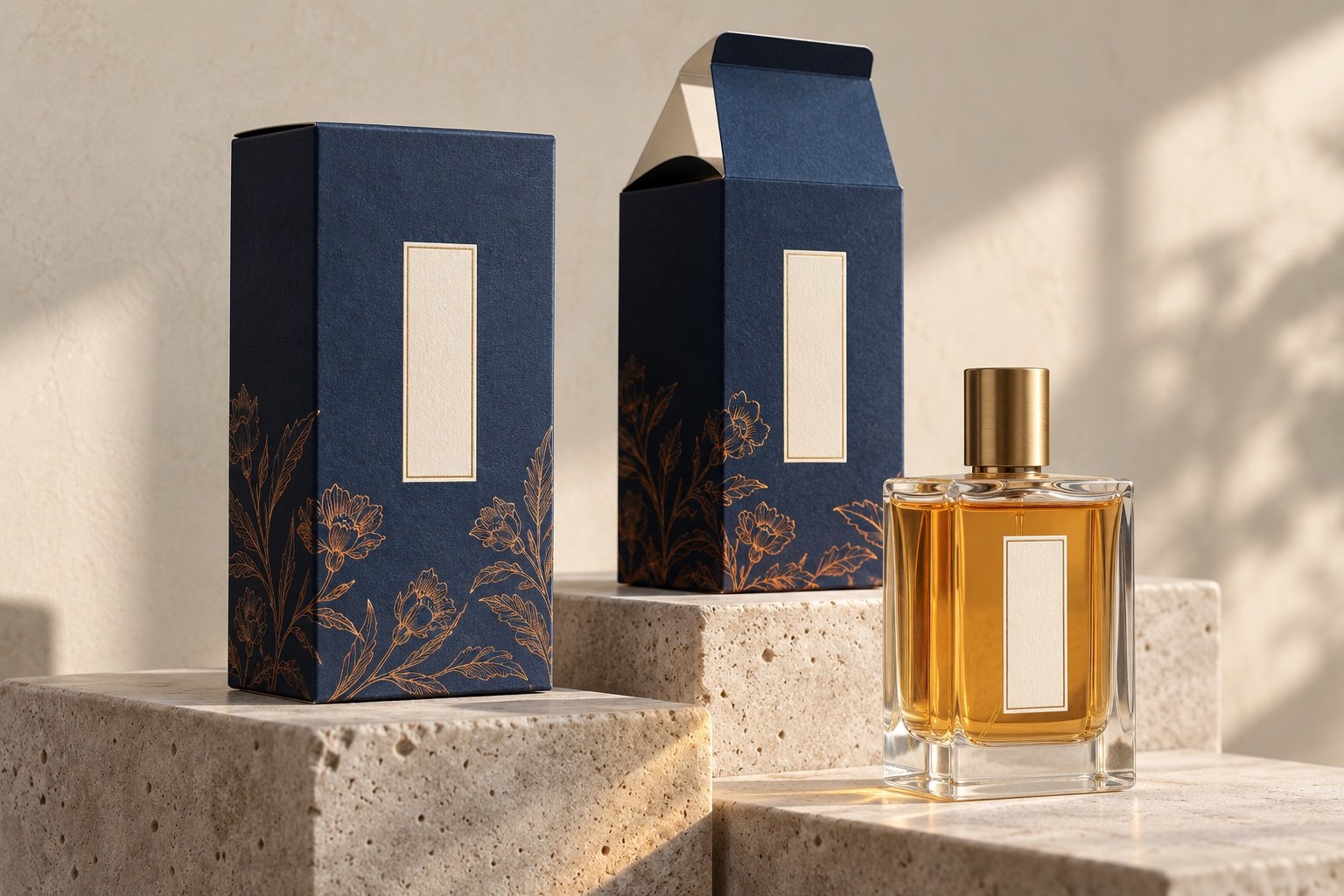
The dieline is the approved layout for the carton blank. Its panels, flaps, cut lines, crease lines, glue area and optional window or insert features determine how a flat printed sheet becomes an assembled box. Artwork belongs on that exact structure, in the correct orientation and revision. A generic template may be useful for early design exploration, but it should not be treated as your supplier’s manufacturing file.
Do not confuse a dieline with a visual mockup. A mockup helps stakeholders judge the look. A dieline establishes the geometry and production marks. For a more basic explanation of the process behind the edges and folds, see our guide to die cutting in packaging.
The five approval gates
Process diagram, not a claim that every project has the same lead time or specifications.
Before opening the artwork file, settle the box specification
A designer cannot safely position graphics if the box dimensions, opening direction or board have not been settled. Start with the actual packed product, including its insert, wrap, leaflet and any protective elements. Give the supplier the intended product orientation and ask them to confirm whether dimensions refer to internal usable space or external carton measurements. Board thickness and fold allowances can affect the fit.
Choose the closure around the packing workflow. A straight-tuck carton, reverse-tuck carton or crash-lock bottom does not present the same panel order or assembly behavior. If retail display is important, decide which face must lead on shelf and which way the opening should face. If the product is fragile or heavy, confirm whether the folding carton is primary presentation packaging or needs an additional rigid box or protective shipper. Our broader folding box guide explains common formats and uses.
One question that prevents many revisions
“Which file revision is the approved structural master?” Put the revision number and date in the approval email. If the supplier later changes the board, window, insert or closure, ask for a new dieline and recheck the artwork against it.
The 10-point folding carton dieline approval checklist
Review these in sequence with the designer and converter. A “yes” for a screen proof is not necessarily a “yes” for the finished carton.
- 1. Product fit and usable dimensionsProvide an actual product or accurate dimensions, including all inner packaging. Ask for a mock assembly and confirm that the item can be inserted and removed without crushing, rattling or catching a flap.
- 2. Correct construction and opening directionCheck tuck style, bottom closure, display face, hanging or window features, and assembly sequence. Rotate the printed mockup in your hands; the “front” on a flat file may not become the front you expect.
- 3. One controlled dieline revisionConfirm file name, version, scale and box specifications. Do not mix artwork from an earlier dieline with a newer structure. If multiple sizes share one design, approve each size separately.
- 4. Production lines and zonesIdentify cut, crease, perforation, window and glue areas using the converter’s own legend or layers. Keep essential art and copy clear of glue zones, cut edges and fold transitions unless the converter approves that placement.
- 5. Bleed and safe areaExtend background graphics beyond the trim where the printer specifies, and keep important copy inside the agreed safe area. Adobe defines bleed as artwork extending past the trim and advises checking the required amount with the printer. There is no responsible universal bleed figure for every carton.
- 6. Panel orientation and continuityRead every panel after folding a paper mockup. Check upside-down side copy, interrupted patterns, spine graphics and artwork that crosses a crease or seam. Mark the front, back, side and top on the approval PDF.
- 7. Color, substrate and finishesDocument the board and print finish in the quote, not only on the artwork. Metallic ink, foil, embossing, lamination and uncoated stock can change the appearance of colors; request an agreed proof or physical sample for critical colors.
- 8. Barcode, QR code and required textCheck final SKU, language, legal copy and code placement. The GS1 barcode quality checklist calls out quiet zones, contrast, size, height, placement and data accuracy. Have the final printed code scanned on the chosen substrate; the brand remains responsible for jurisdiction-specific labeling requirements.
- 9. File handoff and print proofSupply the editable source and a print-ready PDF according to the supplier’s file specification. Ask the converter to confirm fonts, linked imagery, line layers, color mode and any special-finish separations before plate or tooling approval.
- 10. Physical sample and written sign-offCompare the sample with the approved artwork and packed item. Record the accepted version, known tolerances, date and approver. Release bulk production only after changes are closed or clearly listed as accepted deviations.
What can a PDF proof tell you, and what needs a physical sample?
A PDF proof is efficient for checking text, placement, panel orientation and the right revision. It cannot fully prove tactile board feel, assembly effort, product fit or the exact appearance of a printed finish. A physical sample is the point where the file meets the real product. It may be digitally printed or made by another agreed method, so ask the supplier which aspects of final bulk production it represents and which it does not.
| Check | PDF / digital proof | Physical sample |
|---|---|---|
| Copy, version and graphic placement | Primary review method | Confirm against approved file |
| Fold sequence and closure | Can be reviewed on a folding mockup | Test the actual assembled carton |
| Usable fit with product and insert | Only a preliminary estimate | Pack and unpack the real item |
| Color, finish and board feel | Screen preview is limited | Evaluate the agreed sample method |
| Printed barcode readability | Check artwork data and quiet zones | Scan a printed example |
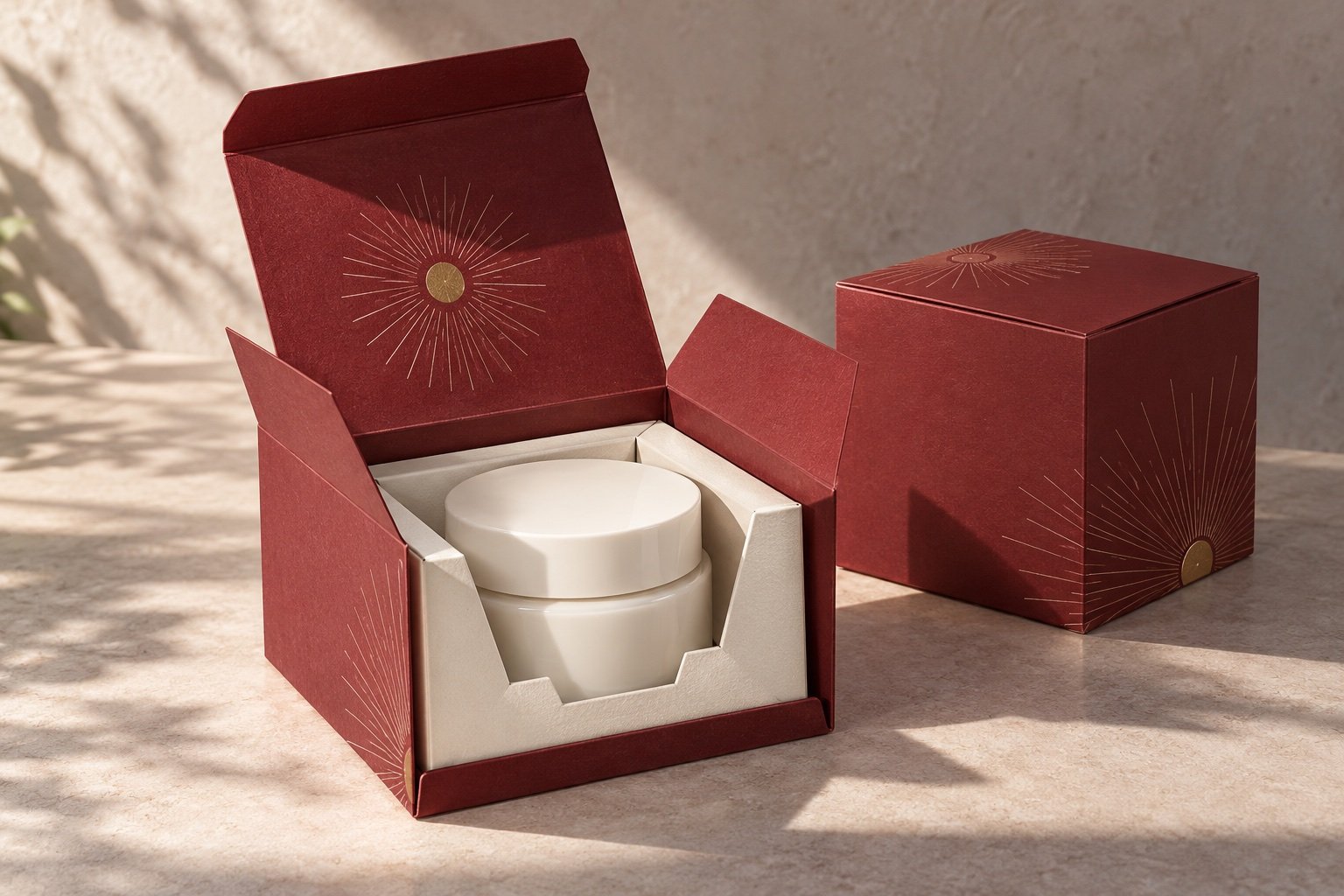
For a window or multi-part pack, request a sample with the actual insert and product. Photograph the approved sample from all sides and keep the physical reference until the bulk order is received. If an artwork change happens after approval, do not assume the previous sample still validates the new revision.
What should a buyer send to get a useful folding carton quote?
A clear RFQ lets the supplier price the right structure instead of guessing from a mood board. Include:
- Product and pack: dimensions, weight, photos, packing orientation, insert or sleeve needs.
- Carton: desired internal size, closure style, board preference and whether a display window is required.
- Artwork: logo and design files, number of colors or special finishes, and the status of the dieline.
- Order: quantity by size/design, destination country, desired delivery window and whether DDP is required.
- Approval: whether you need a physical sample, who signs off the artwork, and any required retailer specifications.
YiHongBox supports custom folding carton projects with a standard minimum order quantity of 1,000 units per design/size, free design support, and charged physical samples. Sampling is typically about 7 days, and bulk production is typically about one month after approval; exact timing depends on the approved specification and order schedule. DDP quotations are available for buyers in the United States, Canada and Australia. Confirm the destination, shipment scope and final timeline in your quotation rather than treating these as automatic guarantees.
Buyers comparing several carton formats may also browse the custom packaging product range. If your project is specifically for food, our custom bakery box procurement guide covers additional format questions; product-contact suitability still needs to be confirmed for the actual use case.
Common approval mistakes and a practical fix
| Mistake | Why it matters | Practical fix |
|---|---|---|
| Using the outside dimension as usable space | The product or insert may not fit once the board is folded. | Specify packed-product dimensions and request a physical fit test. |
| Designing on a generic online template | Flaps, seams and board allowances may differ from the chosen converter’s tooling. | Move final art onto the supplier-approved dieline. |
| Approving color only on a monitor | Stock and finish change appearance. | Approve the agreed printed sample and record the sample method. |
| Approving a PDF but not the revision | Late changes can overwrite the sign-off trail. | Put file version, date and approver in the approval message. |
Folding carton dieline FAQs
Can I use a generic dieline template for production?
Use it to explore a concept, but request the dieline for your chosen structure, size, board and supplier before releasing print artwork. The production file should match the converter’s approved construction.
Who should create the folding carton dieline?
The packaging converter should supply or approve the production structure. Your designer can place artwork onto that controlled file, while the buyer confirms product fit, mandatory copy and the final approved revision.
Is 3 mm bleed always enough?
No. Bleed requirements depend on the printer and job. Adobe advises confirming the required bleed with the printer; ask your supplier for the exact value and safe-area guidance for this carton.
What is the difference between a dieline and a digital proof?
The dieline defines the carton geometry and production marks. A digital proof shows how artwork is positioned on that geometry. A physical sample lets you evaluate the folded box and the product fit.
Do I need a new sample for every artwork change?
Not always, but changes affecting structure, fit, finishes, critical color, barcode or required text may need a renewed approval. Ask the supplier what the previous sample still validates and document the decision.
What should I send if I do not have a dieline yet?
Send the actual product dimensions, packing method, target box style, quantity, artwork assets and destination. YiHongBox can help develop the box design before a charged physical sample is made.
Ready for a production-specific dieline?
Get the structure right before you approve the artwork.
Share your product dimensions, desired carton style, quantity and destination. We can discuss a custom folding carton design, a physical sample and a DDP quote for the US, Canada or Australia.
Request a quoteAsk on WhatsApp
Prefer email? sales@dgyh-box.com