Walk into Sephora, Best Buy, or just doomscroll through TikTok—everything’s wrapped in that wild holographic packaging.In an era dominated by screens, how do you give your product a “filter-grade” visual impact in the real world? Holographic boxes are the answer. They are no longer simple containers but a fluid visual feast. In 2026, if your brand wants to break through mediocrity and establish an instant emotional connection with consumers through light refraction, holographic technology will be your most powerful visual asset.
But beyond their dazzling looks, what exactly are holographic boxes? Why are brands across industries shifting toward this packaging style? And most importantly, should you consider using them for your own products?
This guide will answer those questions and more, breaking down everything you need to know about holographic packaging — from design, customization, and durability to its impact on branding and consumer psychology.
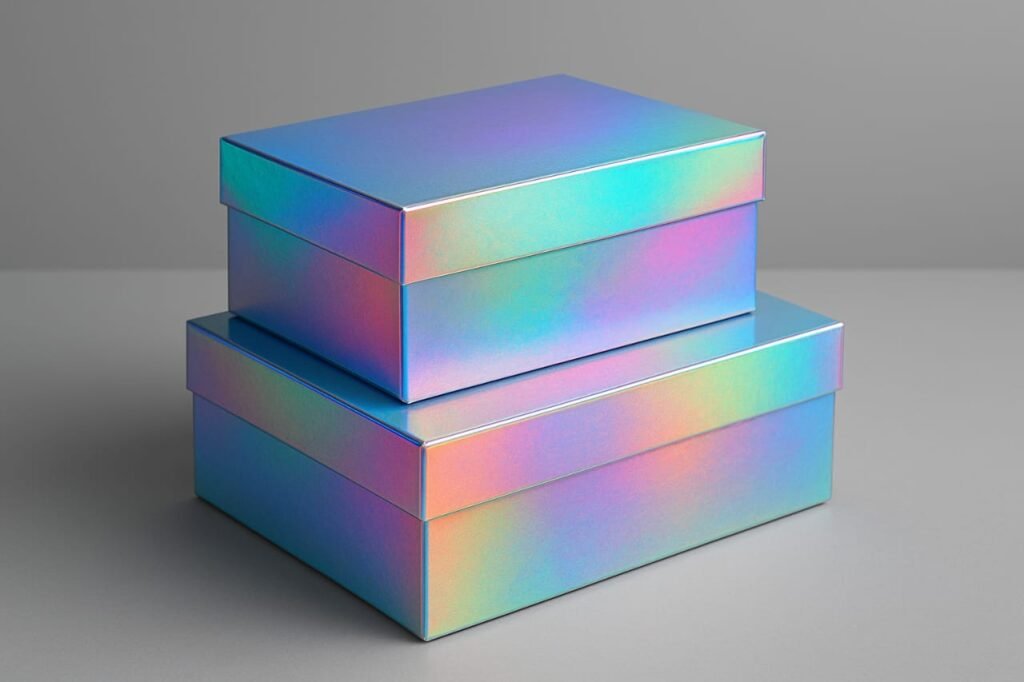
A holographic box isn’t your average cardboard cube. The way it bounces light around? Total eye-candy—like someone trapped a rainbow and pressed it onto a box. This isn’t just some glittery gimmick, either. There’s science behind it: teeny-tiny patterns etched in the surface that split up light and fling it in all sorts of directions. The result? Something that pops right off the shelf, like it’s begging you to pick it up. With every brand fighting tooth and nail for attention these days, having packaging that sparkles as much as your product? That’s not just smart—it’s survival.
Most of the time, holographic boxes start off as plain old cardstock, some thick paperboard, or corrugated cardboard. Then they put on a layer of holographic foil and suddenly it’s like packaging from the future. The result? Tough enough to survive shipping, but flashy enough to grab your attention from across the room.
Brands get to play around, too. Some go all in and wrap the whole box in that rainbow shimmer. Others like to keep it chill, just adding a hint of holo on the logo or maybe along the edges. Honestly, it’s all about what vibe they’re going for. Want to blind people with sparkle? Go full coverage. Prefer subtle flex? Just highlight the good bits. At the end of the day, it’s all about how much show-off energy the brand wants to bring to the table.
Why Are Holographic Boxes So Popular?
Brands aren’t investing in holographic packaging just because it looks cool — though that’s certainly part of it. Let’s explore the main reasons behind their popularity.
1.Optical Aesthetics & "Scroll-Stopping" Marketing Power
Under suitable lighting, a holographic finish can create angle-dependent color shifts that distinguish a package from a flat printed surface. Its effect depends on artwork, lighting and viewing distance.
Iridescent Dynamics: Unlike static colors, holographic materials create a shifting rainbow spectrum as the observer’s viewing angle changes. The visual effect can support shelf visibility, but buyers should test readability and appearance on a physical sample rather than assume a fixed sales uplift.
Emotional Resonance & Futurism: The inherent “tech” and “dreamy” feel of holographic effects endows a brand with a pioneering, high-end DNA, perfect for brands looking to break tradition and establish a youthful image.
2. Enhances Brand Image
A custom holographic box feels modern, luxurious, and premium. This instantly raises the perceived value of the product inside. For industries like cosmetics, perfumes, jewelry, and tech accessories, the packaging isn’t just protection — it’s part of the brand identity.
3. Built-In Anti-Counterfeiting
Holographic effects are difficult and costly to replicate, which is why they’re often used as
security features. Adding custom holographic patterns, microtext, or tamper-evident seals can help brands protect their products from counterfeiters — a growing issue in beauty and tech markets.
4. The "Unboxing Traffic Code" in the 2026 Social Media Era
Today’s consumers are not just buyers; they are content creators. Holographic boxes are natural “traffic accelerators.”
Built-in Filter Effect: Holographic materials perform exceptionally well under mobile camera lenses, presenting stunning dynamic effects without additional editing. This greatly stimulates consumers’ desire to spontaneously share unboxing videos on TikTok or Instagram.
Lowering Customer Acquisition Costs: A highly recognizable holographic package can make your brand go viral on social media, obtaining high-quality exposure at a low cost through UGC (User Generated Content).
Types of Holographic Boxes
Not all holographic packaging looks the same. Depending on the product and brand identity, you’ll find different styles:
- Full Holographic Boxes– entire box surface covered in prismatic foil
- Partial Holographic Boxes– only certain areas (like logos, edges, or text) feature the holographic effect
- Custom Holographic Boxes– tailored designs with embossing, debossing, or spot UV for unique branding
- Holographic Box Mockups– digital prototypes that allow brands to test designs before committing to large print runs
Comparing Holographic Boxes vs. Regular Packaging
| Feature | Regular Packaging | Holographic Boxes |
|---|---|---|
| Visual Appeal | Flat, standard finish | Shimmering, dynamic rainbow reflection |
| Brand Perception | Average, functional | Premium, luxury, exclusive |
| Security Features | Low (easy to replicate) | High (anti-counterfeit elements possible) |
| Unboxing Experience | Simple, predictable | Shareable, memorable, exciting |
| Consumer Attention | Moderate | Very high, stands out instantly |
Industries That Use Holographic Boxes
The versatility of holographic packaging makes it suitable for a wide range of industries:
- Beauty & Cosmetics– lipsticks, perfumes, skincare kits
- Jewelry & Accessories– watches, bracelets, necklaces
- Electronics– earbuds, phone cases, small gadgets
- Food & Beverages– premium chocolates, gourmet snacks
- Subscription Boxes & Gifts– monthly curated sets, holiday packaging
In each of these industries, holographic boxes add value by merging protection with
presentation.
The Role of Customization
One of the best features of holographic packaging is its customizability. A custom holographic box can be designed to perfectly match a brand’s identity. Popular customization options include:
- Embossing/Debossing– raises or presses down designs for texture
- Spot UV Coating– adds glossy contrast to certain elements
- Window Cutouts– displays the product inside while keeping the holographic appeal
- Magnetic Closures– adds elegance and functionality
Cost vs. Value of Holographic Packaging
A lot of businesses wonder if holographic boxes are really worth the extra cash. They do cost more than regular boxes. This is because they use special foils and printing methods. But, the extra money you spend often pays off.
Evaluate holographic packaging against the full landed cost and the outcome you want to test, not a universal ROI percentage. Full-surface film and localized holographic accents can differ in material use, unit price and print setup. Compare physical proofs and like-for-like quotes at the same box size, board specification, quantity and delivery terms; then measure the results of your own retail or campaign test. Request a side-by-side holographic box quotation with your artwork and target market.
When you consider the dazzling shelf appeal of holographic finishes, the investment becomes even more powerful. Research confirms that visual appearance is one of the strongest factors influencing purchase decisions—especially in crowded retail environments where shoppers’ attention spans are short. Simply put, holographic packaging not only elevates brand perception but also delivers measurable business results.
Breaking Myths: The Eco-Revolution of Holographic Packaging
Holographic effects can be produced with different films, foils and transfer processes. Their environmental profile depends on the actual substrate, coating, adhesive and final construction.
- Compare finish options: Ask for material specifications and a physical proof of the proposed full-surface or localized effect before approving production.
- Substantiate recovery claims: Do not assume a holographic box is entirely recyclable or biodegradable. Check the complete package and the destination market’s collection options; the U.S. FTC Green Guides explain how recyclability and degradability claims should be qualified and supported.
How to Design a Holographic Box (Step by Step)
Creating a holographic package involves careful planning. Here’s a simplified process:
- Identify the Product– match box type (rigid, mailer, sleeve) with your product’s needs
- Choose Holographic Style– full surface, partial, or accents only
- Create a Holographic Box Mockup– digital previews ensure you can test different designs affordably
- Select Materials– cardstock, corrugated, or rigid board depending on durability
- Add Branding Elements– logos, embossing, custom finishes
- Finalize with a Supplier– work with a packaging partner specializing in holographic finishes
Application Scenarios to Test
- Beauty and cosmetics: Test a holographic accent on perfume or skincare cartons under the store lighting used by the brand; compare legibility and buyer response with a standard printed proof.
- Tech accessories: Check how the finish photographs for online listings and whether scuffs or transit handling affect the approved sample.
- Gift and subscription kits: Consider a holographic sleeve or accent rather than full coverage, then measure any change in response with the brand’s own campaign data.
Final Thoughts
So, what are holographic boxes? They are more than merely shiny packaging; they are a mix of style, security and strategizing. With prismatic foils & custom finishes, these boxes take your average product and make it a premium unboxing experience.
Whether you’re just getting off the ground as a start-up or have been around a while but are in need of a brand overhaul, custom holographic boxes can take your packaging to the next level.And with sustainable options now on the market, it no longer has to come at the expense of the environment.
Basically, holographic boxes are more than just packaging. They act as a marketing tool, help build your brand, and create a customer experience all at once.