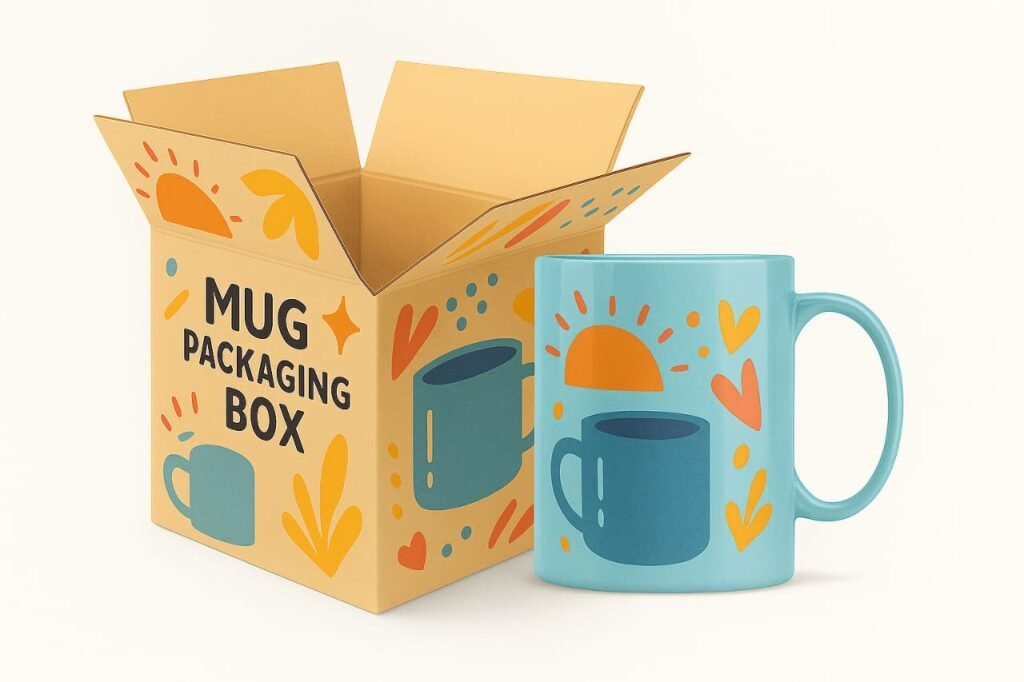
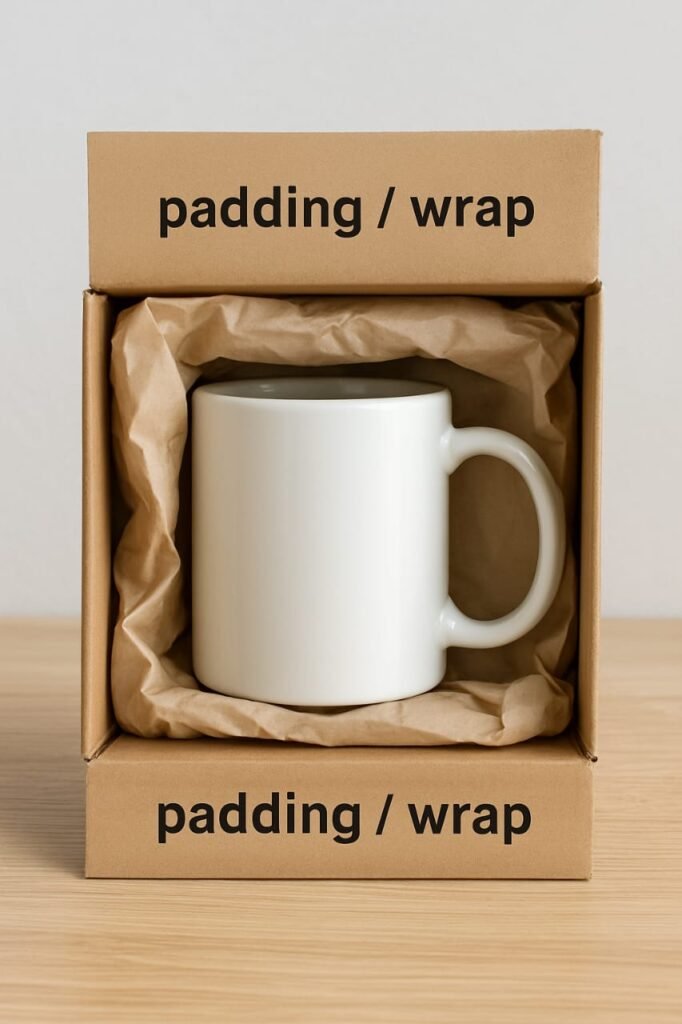
What size box should you use to ship a mug? Start with the mug’s full height, widest point and handle projection, then allow for an insert and protective outer carton. The right size depends on the actual packed assembly, not the mug’s nominal ounce capacity alone. For brands ordering at scale, compare custom mug box options and share your mug dimensions, quantity and destination for a quote.
In this post I’ll walk you through:
Before diving into dimensions: why fuss so much? Because shipping damage is real and expensive.
So, getting your mug packaging boxes right isn’t just about “not breaking things” — it’s about protecting your brand, reducing returns, and delivering satisfaction.
Start simple. Before picking a box size:
These three are essential. Once you have them, you can add padding and clearance.
The dimensions below are illustrative starting points, not validated specifications. Mug handles, lids, inserts and board thickness vary; measure the actual packed item and approve a physical sample before ordering. The two-mug example also requires a divider and separate evaluation of the outer carton.
| Mug Type / Profile | Approx Mug Size (HxD) | Recommended Box Size (L × W × H) | Notes / Why This Works |
|---|---|---|---|
| Standard 11-12 oz ceramic mug | ~4.0 in H × 3.3 in D | 5 × 5 × 5 in (≈13 × 13 × 13 cm) | Allows 0.5-1 in padding on all sides |
| Taller 15-16 oz mugs | ~4.8 in H × 4.0 in D | 5.5 × 5.5 × 6 in | Taller box gives extra room for taller mug + wrap |
| Wide mug or “soup mug” style | ~4.0 in H × 4.5 in D | 6 × 6 × 5 in | More diameter → more width & depth padding required |
| Travel mug / with lid & handle | ~6.0 in H × 3.5 in D (incl lid) | 7 × 5 × 7 in | Height is key; lid + handle can complicate fit |
| Gift set (2 mugs side by side) | 2 × standard mugs | 8 × 6 × 6 in or larger | Need divider insert so mugs don’t touch inside |
Sizing check: Do not apply one fixed padding allowance to every mug. Allow enough clearance for the chosen insert or cushioning, especially around the handle and rim, then test the packed sample for movement and impact risk. The box dimensions in the table are examples only.
If you want a visual:
That margin makes a difference.
Here are some box sizes that are commonly used for mugs, and how they map to the guidelines above. These are off-the-shelf sizes you can already buy, or order from packaging suppliers.
| Box Dimension (inches) | Typical Use / Which Mug Size It Fits Best |
|---|---|
| 5×5×5 | Standard 11-12 oz mug with good bubble wrap |
| 5.5×5.5×6 | Taller mugs, or mugs with handles that extend |
| 6×6×5 | Wider mugs or mugs with broad handles |
| 7×5×7 | Travel mugs or mugs with lids plus handle |
| 8×6×6 or larger | Gift sets, dual mug bundles, or mugs packed in gift boxes |
You can use regular corrugated boxes, or you can go custom. What’s the difference?
| Feature | Off-the-Shelf Mug Shipping Boxes | Custom Mug Boxes |
|---|---|---|
| Fit / Size | Fixed sizes; may have some empty space | Tailored to your exact mug + padding |
| Branding / Aesthetics | Usually plain, stock design | Can print logos, colors, taglines, etc. |
| Cost per unit | Lower for small runs | Higher setup cost; lower per unit at scale |
| Protection / Insert Options | Basic cushioning; risk of movement inside | Can design foam or pulp inserts; snug fit |
| Lead Time | Usually immediate or short | Takes design time; minimums may apply |
If you’re shipping mugs often, or shipping premium mugs (handmade, expensive, collectible), custom mug packaging boxes can make your product stand out—both in safety and in user experience.
Even the right‐sized box won’t help if you skimp on padding. Here are things to consider:
Choosing the box size isn’t just about safety—it also affects cost.
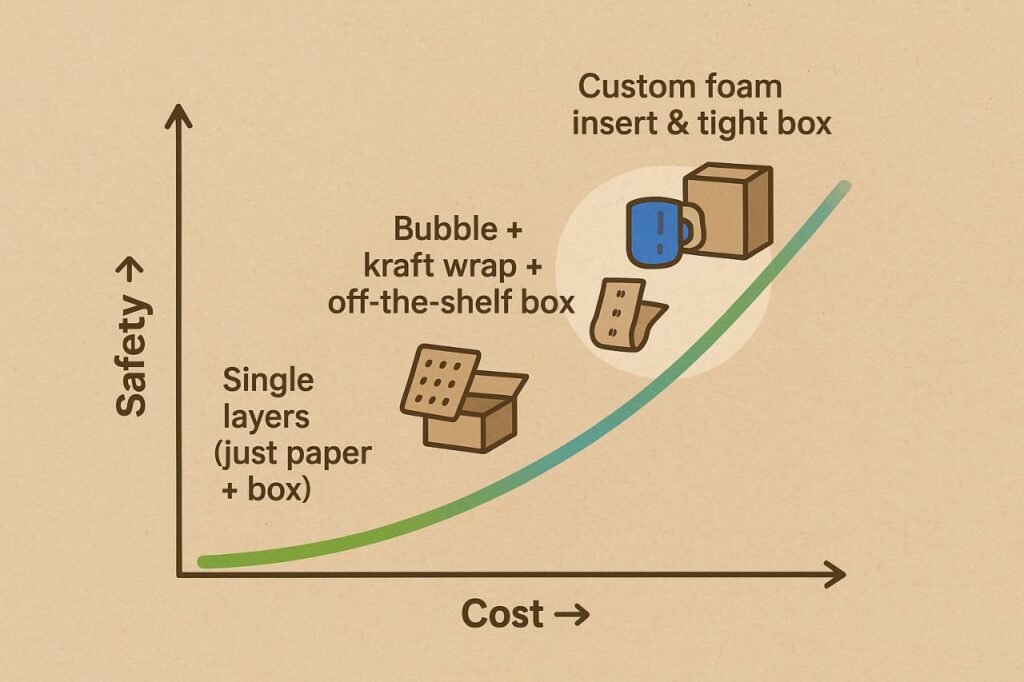
Here’s a simple chart that helps you think about how safe vs costly different packaging choices can be. Higher on the “Safety” axis means better protection; higher on the “Cost” axis means more expense (materials + shipping).
You want to aim somewhere in the upper-middle: good protection without going overboard in cost.
Here’s a practical case from a shipping tutorial:
Someone shipping a 12-oz mug said they use a 4×4×4 inch gift box, wrap the mug in tissue paper and bubble wrap, then place that into a 6×6×6 shipping box (especially for international shipping). This combination gave enough padding to prevent damage, and the final package passed rough handling tests.
They found that the “cheap” saving by choosing too small or too flat a box almost always cost more later in replacements or customer complaints.
Here’s a quick decision guide:
Here’s a sample plan for someone starting a small mug business:
Choosing the right mug packaging boxes, custom mug boxes, or using standard mug shipping boxes isn’t just about getting a mug from A to B. It’s about protecting something fragile (often meaningful), delivering value, building trust, and managing cost wisely.
The correct box size—one that allows for adequate padding, snug fit, and protection—makes the difference between “arrived in perfect shape, so happy!” and “broken handle, refund, bad review.” Start with good measurements, pick good materials, test, and gradually refine. Your mugs (and your customers) will thank you.
Shelby is a Senior Packaging Consultant at YiHongBox, specializing in creative packaging strategies and sustainable solutions. With years of experience in design innovation and market trends, she helps brands craft impactful, eco-friendly packaging that resonates with customers and elevates brand identity. Shelby shares practical insights for business owners, designers, and marketers looking to turn packaging into a competitive advantage.


A practical CMYK vs Pantone guide for packaging buyers: choose a print route, understand how board and finish change color, approve physical proofs, and prepare a supplier-ready RFQ.

A practical buying guide to chocolate bar packaging: compare sleeves, folding cartons and gift boxes, specify a separate food-contact wrap, and prepare a stronger RFQ.