When a customer receives an online-purchased shirt, the visual and tactile game begins the moment the tape is peeled away. In 2026, custom shirt packaging is the most direct ambassador for a brand in the physical world. If your packaging is still stuck in cheap plastic bags or mediocre corrugated cardboard, you are miss
Shirt-box buyer specification
Start with the folded shirt length, width and collar height, then allow for tissue, inserts, care cards and easy removal. Retail buyers should also confirm SKU count, shelf orientation, anti-scuff finish, closure style and whether the same structure must survive parcel delivery.
YiHongBox supplies custom apparel boxes, premium rigid gift boxes and printed packaging sleeves from MOQ 1,000, with samples and DDP delivery. The FTC Care Labeling Rule is a useful US-market reference when planning information visible on a package or hang tag.
ing the best opportunity to convert an ordinary consumer into a loyal brand advocate.
Imagine you’re a customer who just clicked “Order” on your favorite tee. A few days later, a plain brown bag arrives — the shirt is loosely stuffed inside, crumpled, with a piece of tape over it. Disappointing, right?
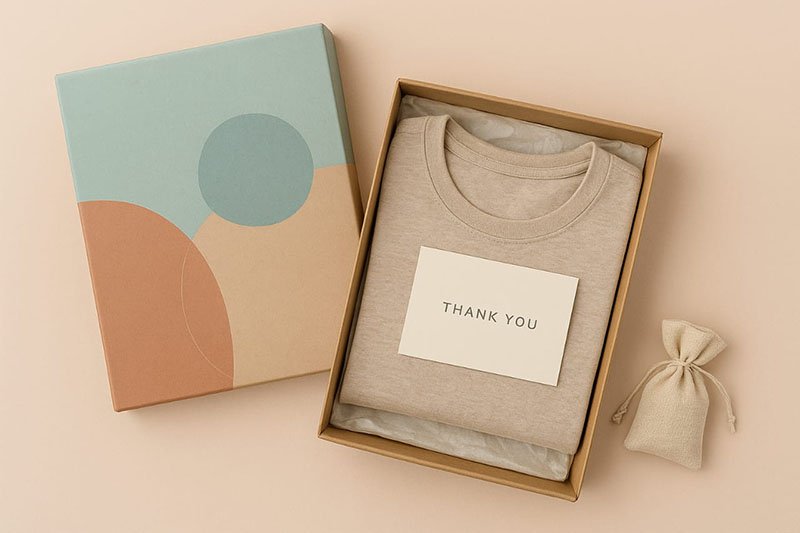
Now imagine instead: a neat custom shirt box, with your logo printed, a thank-you card, crisp tissue wrap, maybe a fragrance sachet. You open it and wow — it feels premium, delightful, Instagrammable. That’s the power of custom t-shirt packaging in action.
In today’s ultra-competitive apparel market, packaging isn’t just a necessity — it’s a branding tool. Below, we’ll dive into why investing in custom shirt packaging and custom shirt boxes can transform your brand, boost loyalty, reduce returns, and let your brand shine.
Yihong Box is dedicated to ensuring every shirt remains crisp and exquisite after international transit, just as if it were in a boutique display, through engineering aesthetics.
The Psychology & Data Behind Packaging That Sells
Before we jump into how to design great boxes, let’s look at what research says about packaging’s influence on consumer behavior. It goes deeper than aesthetics.
Packaging influences purchase decisions
- In one survey, 72% of U.S. consumerssaid product packaging design influenced their purchase decisions.
- In academic review, packaging (color, material, design) correlates significantly with consumer behavior.
- A more specific study found that coloris among the strongest packaging cues — followed by imagery.
So yes — packaging does matter. It shapes perception, triggers emotions, and nudges decisions.
Creativity and differentiation boost impact
A study on creative packaging design showed that more imaginative, distinctive packaging led to stronger brand attitudes and purchasing intentions.
In short: a plain box blends in. A thoughtfully designed t-shirt box stands out.
The Big Benefits of Custom Shirt Packaging & Boxes
Let’s break down the advantages of going custom over generic or standard packaging.
| Benefit | What It Brings | Real-world Insight |
|---|---|---|
| Brand Identity and Recognition | Your box becomes a brand ambassador every time it’s shared or seen | A paper noted that custom packaging gives you “a place to show off … your branding” |
| Product Protection and Fewer Returns | Custom boxes can be sized and structured to protect garments in transit | An apparel brand reduced their return rate by ~15% after switching to size-specific custom packaging |
| Enhanced Experience (Unboxing Moment) | Encourages delight, social sharing, and emotional connection | Luxury packaging is often used precisely to elevate the “first impression” moment |
| Eco and Material Efficiency | Custom boxes avoid over-packaging and waste | Many premium boxes use recycled corrugated materials and minimize filler waste |
| Marketing and Upselling Opportunity | Use inserts, QR codes, messaging within the box | A brand switched to branded tissue and saw repeat sales jump 30% |
When you treat your custom shirt box or custom t-shirt packaging as part of your brand touchpoint — not just a wrapper — it becomes a silent salesperson.
How to Design Custom Shirt Packaging That Works (And Wows)
Designing a t- shirt box is more art than science. But here are key principles and steps to get it right.
1. Understand your brand and customer
- What emotions do you want to evoke (fun, premium, eco, quirky)?
- What unboxing styles appeal to your audience (minimalist, colorful, surprise layers)?
2. Choose the right box style & structure
Some options include:
- Mailer boxes(fold-flat, often used for ecommerce)
- Rigid boxes / telescoping lids(premium presentation)
- Corrugated shipping boxes with inner structure (for protection)
- Slide boxes / drawer boxes
You may combine: e.g. an outer shipping box + an inner branded shirt box.
3. Size it precisely for the garment
Don’t over-size. Leave minimal void space. Use tissue, wrapping, or protective inserts to stabilize and make it feel snug.
4. Select materials & finishes
Think: strength, printability, aesthetics, sustainability.
- Corrugated or SBS board
- Matte, gloss, or soft-touch lamination
- Spot UV, embossing, foil stamping
- Eco-friendly inks, recycled content
5. Work on visual & sensory elements
- Logo placement (centered, repeated, subtle)
- Color scheme aligned with brand
- Minimal vs bold graphics
- Interiors matter too — inner lid printing, thank-you notes, patterns
- Hidden details: patterns, textures, “secret” reveals
6. Insert functional & surprise elements
- Inserts or separators
- Branded tissue wrap
- Stickers, cards, coupons
- QR codes or storytelling tags
- Scented sachets or fragrance strips
7. Prototype, test, & iterate
Order prototypes to check fit, structural strength, print color fidelity, and unboxing feel. Test with a small customer subset.
Common Mistakes to Avoid (Your Box Shouldn’t Be “Oops”)
- Overly loose fit — leads to damage or a cheap feel
- Cheap materials — box crushes or tears
- Confusing opening — don’t frustrate customers (“wrap rage” is real)
- Loud branding inside out — inconsistency
- Ignoring sustainability trends
2026 Sustainable Materials: Symbiosis of Luxury and Eco-consciousness
For modern consumers, environmental attributes have become a core metric when evaluating a fashion brand. We offer green solutions without sacrificing a high-end feel.
Fabric-Recycled Specialty Paper: Yihong Box introduces eco-friendly paper made from recycled textile waste fibers. This material inherently possesses a fabric-like tactile texture, creating a perfect visual resonance with the shirt’s product attributes.
Soy-based Inks & Plastic-free Finishes: Utilizing eco-friendly soy-based inks for full-color printing and replacing traditional plastic films with aqueous waterproof coatings ensures the packaging is 100% recyclable while maintaining ultimate color saturation.
A Sample Roadmap: From Concept to Launch
Here’s a simple 6-step roadmap for deploying custom shirt packaging / custom shirt boxes / custom t shirt packaging:
- Define brand goals & budget— premium vs cost-efficient
- Sketch concepts & packaging architecture
- Select materials & finishes, request samples
- Print prototypes & test shipping durability
- Finalize design, order production run
- Integrate into fulfillment / shipping and monitor feedback
How Much Does It Cost?
The cost depends heavily on:
- Quantity (unit cost drops as volume rises)
- Materials & finish (plain kraft, coated, special treatments)
- Structural complexity
- Printing zones (all sides, interior, spot printing)
- Inserts or customization
In many cases, the added cost per box may be small compared to the perceived value lift you get.
Real-Life Case Studies & Insights
Here are some brand/industry examples to inspire you:
- Apparel brand: switched to size-specific custom t-shirt packaging, reduced return rate by ~15%.
- Luxury brands: use multi-layer boxes, magnetic closures, high-end finishes to convey exclusivity.
- Beauty & cosmetics: 73% of decisions made at point-of-sale — packaging plays a huge role.
These stories underscore that custom packaging is not about vanity — it drives measurable outcomes.
The Future of Custom Shirt Packaging
Looking ahead, technology and sustainability will shape the next evolution of apparel packaging. Expect to see smart packaging — QR codes linking to styling guides, digital loyalty points, or augmented reality try-ons. Reusable magnetic boxes or collapsible rigid mailers are also on the rise, helping brands cut carbon emissions while delivering luxury. The intersection of digital experience and physical design is redefining what “premium” means in the shirt packaging world.
Digital Unboxing: Transforming Packaging into a Marketing Springboard
In the age of social media, packaging is the best tool for a brand to gain organic viral traffic.
Share-Inducing Interior Printing: We suggest printing brand slogans or visually striking patterns on the inside lid. When customers lift the cover, this sudden burst of beauty immediately stimulates them to take photos and share on Instagram or TikTok.
Smart Interaction Gateway: By subtly embedding hidden QR codes, guide customers to the 2026 trend of “Virtual Fitting Rooms” or “Shirt Care Videos,” transforming a one-time purchase into a deep digital brand connection.
Final Thoughts: Your Packaging Speaks Before You Do
When your customer receives a plain envelope, that’s the first impression — and sometimes the last impression. But with custom shirt packaging, custom shirt boxes, or a tailored t-shirt box, you’re weaving brand magic into that first encounter.
Think of packaging as your handshake, your welcome mat, and your silent brand ambassador all in one. It’s a small investment with big returns — in loyalty, social proof, perceived value, and reduced returns.
FAQ
Will custom packaging delay fulfillment?
If you plan ahead, not really. Prototyping may take time, but once design is finalized, printing is efficient.
What inner protection do you suggest to prevent high-end silk shirts from snagging?
We recommend using extra-fine tissue paper or silk-satin linings inside the box. Additionally, the interiors of our boxes undergo a special “smooth varnish” treatment to ensure zero-friction contact for the fabric.
Which box style best reduces shipping costs for cross-border e-commerce?
We recommend using Collapsible Rigid Boxes. This structure possesses the exact luxury feel of a top-tier rigid box once assembled, but it can be stored flat during air freight, saving you up to 70% in logistics space.
What is the typical MOQ for custom shirt packaging?
To ensure the most competitive cost-performance ratio, an MOQ of 1,000 units is recommended. Physical pre-production samples can be quoted separately.