Custom gift boxes with logo are no longer a final decorative step in a corporate holiday program. For procurement teams, they are a working part of the product: the box must hold several items, present the brand consistently, survive the chosen distribution route, arrive before the campaign date, and remain commercially sensible at the required order quantity.
This guide is written for packaging buyers, brand managers, sourcing teams, promotional-product distributors and corporate gifting agencies purchasing for the United States, Canada or Australia. It explains how to select the box structure, logo process, insert and delivery term; how to work with a 1,000-unit minimum order; and how to plan sampling, production and DDP delivery without confusing a box unit price with the final landed cost.
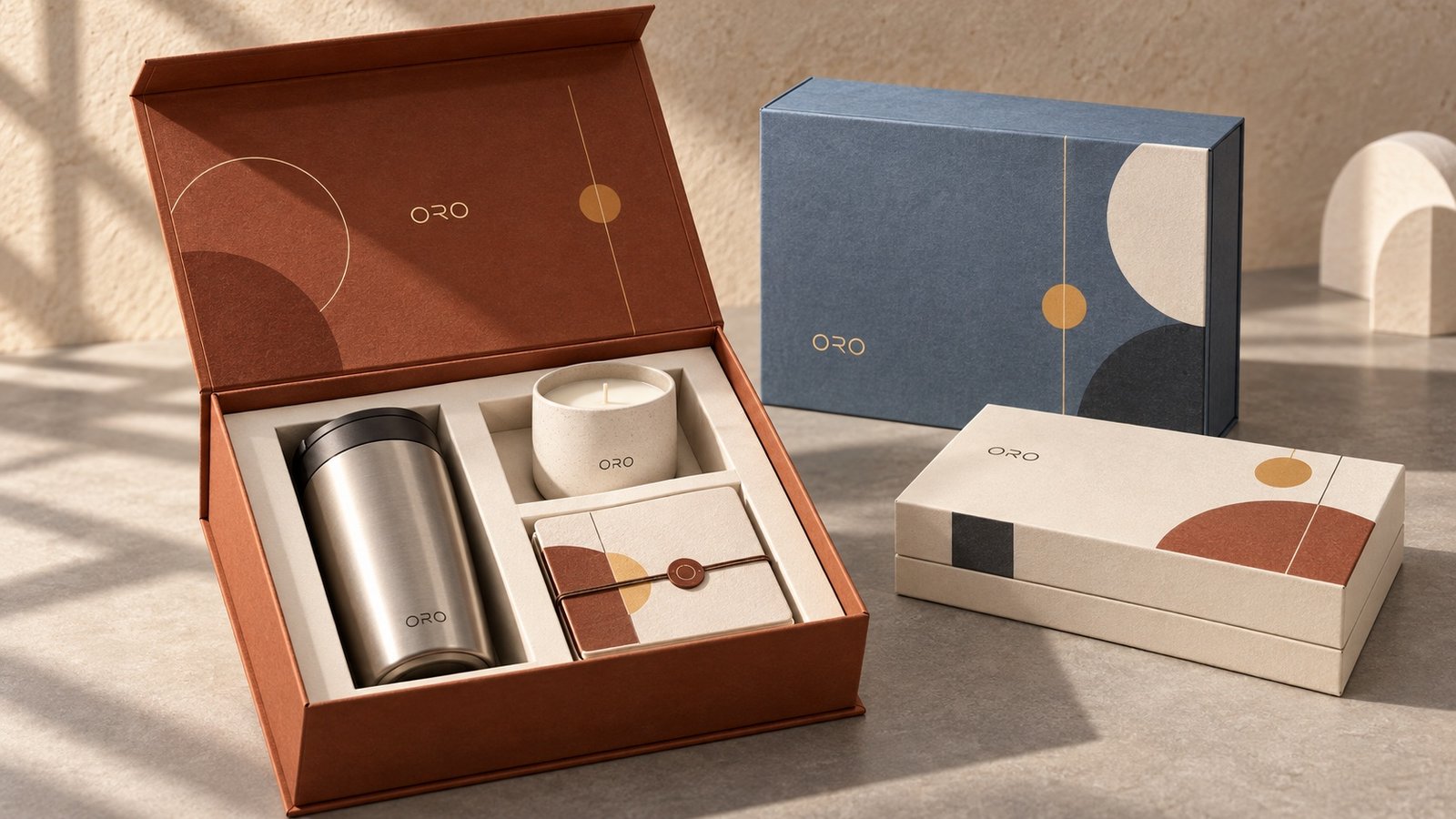
YiHongBox procurement baseline
- MOQ: 1,000 units for a custom production order.
- Design support: free structural and artwork support for qualified projects.
- Physical sample: charged; typically about seven days after the specification is confirmed.
- Mass production: typically about 30 days after final sample and artwork approval.
- Delivery: DDP support is available for the US, Canada, Australia and other markets.
Why “Custom Gift Boxes With Logo” Is a Strong Buyer-Intent Topic in 2026
Google Trends does not report monthly search volume. Its Explore data are normalized, and its “rising” percentages compare growth with the previous period. Google explains that a “Breakout” query has grown by more than 5,000%, so it should not be presented as a keyword-volume forecast. Used carefully, however, Trends can reveal how buyers are refining their search language. See Google’s own explanation of top and rising related searches.
In our past-90-day review on September 17, 2026, the US related-query panel for “custom gift boxes” placed custom gift boxes with logo at the top of the related terms. The same research surfaced “custom printed gift boxes,” “Christmas gift boxes,” and “corporate chocolate gift boxes.” Canada showed rising interest in “customized gift boxes,” while Australia showed rising interest in “custom printed packaging”; “branded gift boxes” and “corporate chocolate gift boxes” appeared as breakout related queries in the Australian comparison.
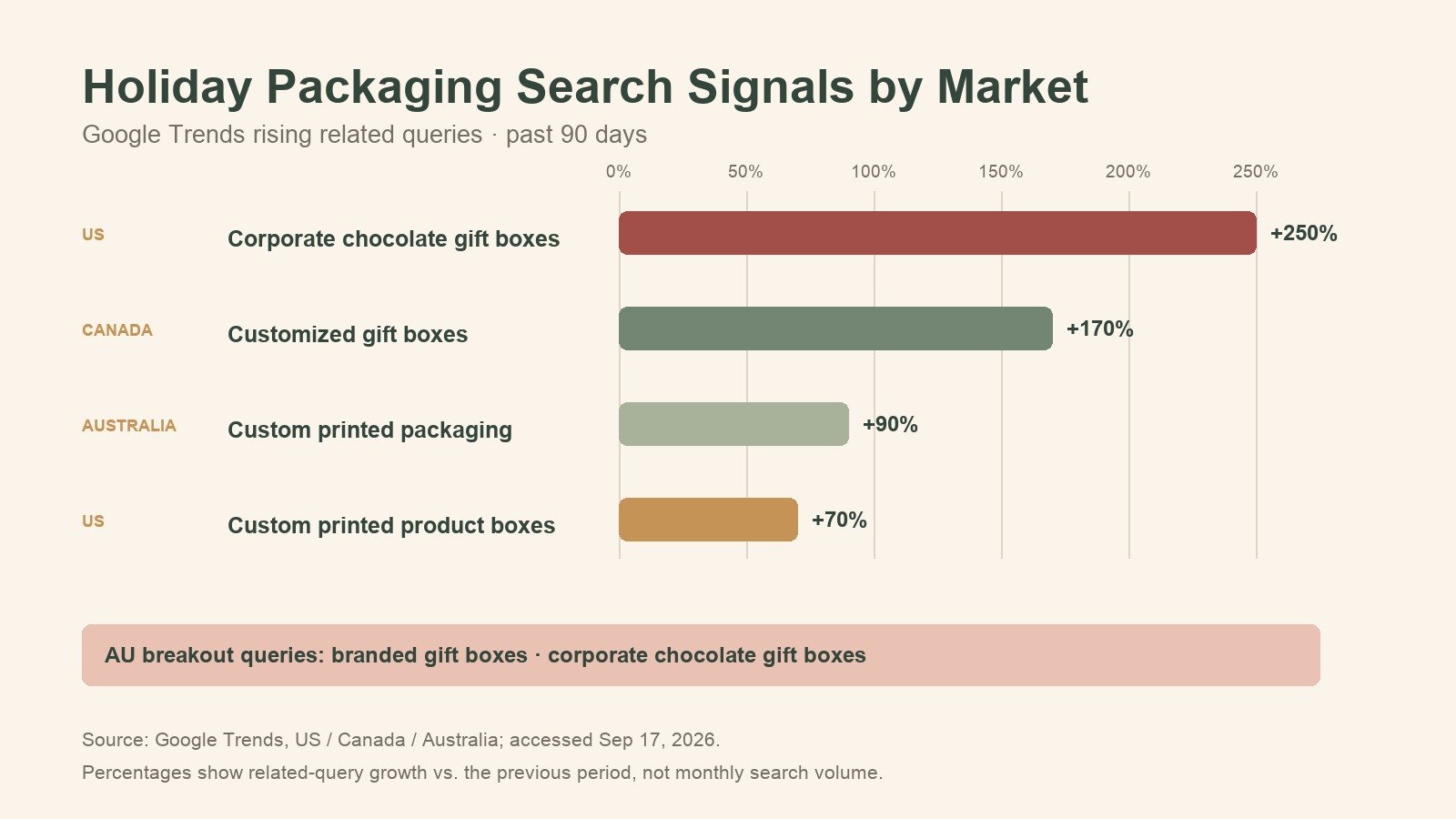
These signals do not prove the size of the market. They do show that searchers are moving beyond a generic “gift box” query toward a more actionable specification: a branded box, printed for a product category, often linked to a corporate or seasonal program. Buyers can review the underlying comparisons for the United States, Canada and Australia.
Corporate Gift Packaging Is a System, Not an Empty Box
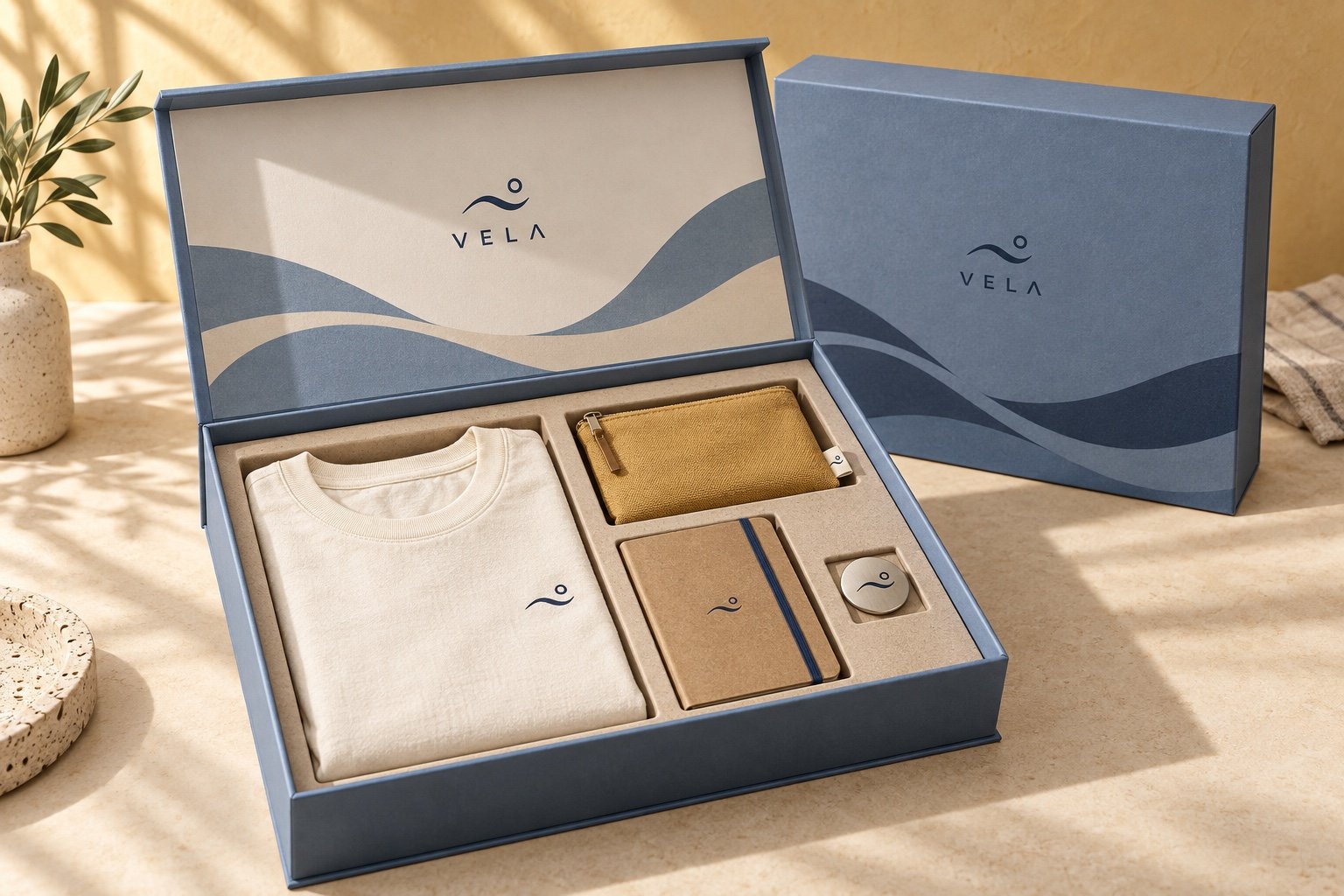
Consumer gift packaging may be selected after the product is finalized. A corporate gift program is usually more complex. The buyer may need to combine a notebook, drinkware, confectionery, skincare, apparel or a card in one presentation. Different objects have different heights, weights, fragility and contact requirements. The insert has to organize them, the logo has to reproduce consistently, and the pack must be efficient for assembly.
Before requesting a quotation, define the program in operational terms:
- Who receives the gift: employees, VIP clients, event attendees, distributors or media contacts?
- Will the box be handed over in person, placed inside a shipping carton, or used as the parcel container?
- Are the products identical for all recipients, or will there be regional or role-based versions?
- Does the fulfillment partner insert a card, label or local product after import?
- What is the required delivery date at the final warehouse or named destination?
- Which types of damage count as failure: product breakage, scuffed print, crushed corners, loose products or an unacceptable unboxing presentation?
If you are still deciding what a corporate presentation box should contain, start with our custom corporate gift box options. For broader design considerations, see our guide to custom gift boxes wholesale.
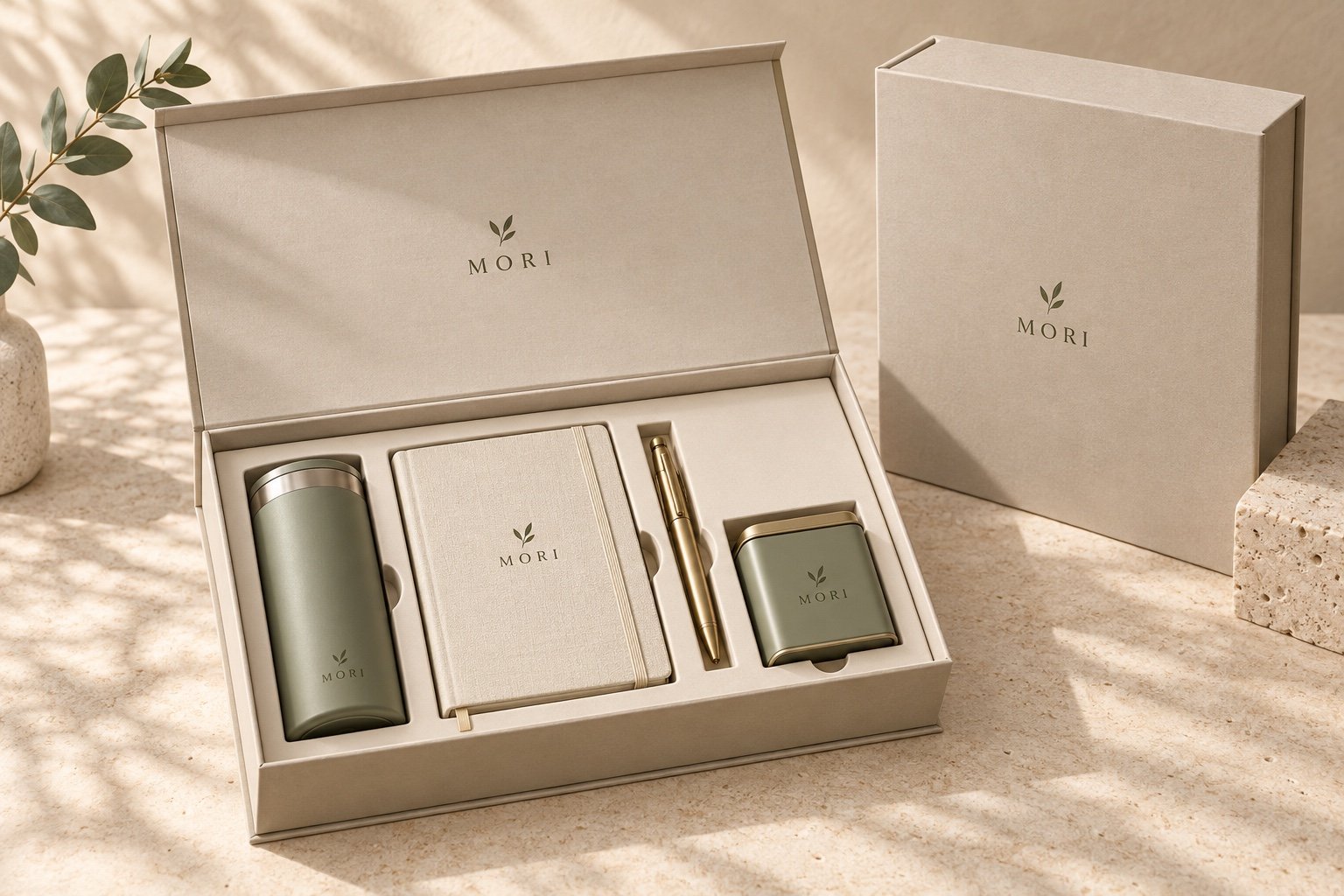
Choose the Box Structure Around the Program
The most visually impressive structure is not automatically the best purchasing decision. Compare presentation, assembly time, storage volume, product weight, distribution method and budget together.
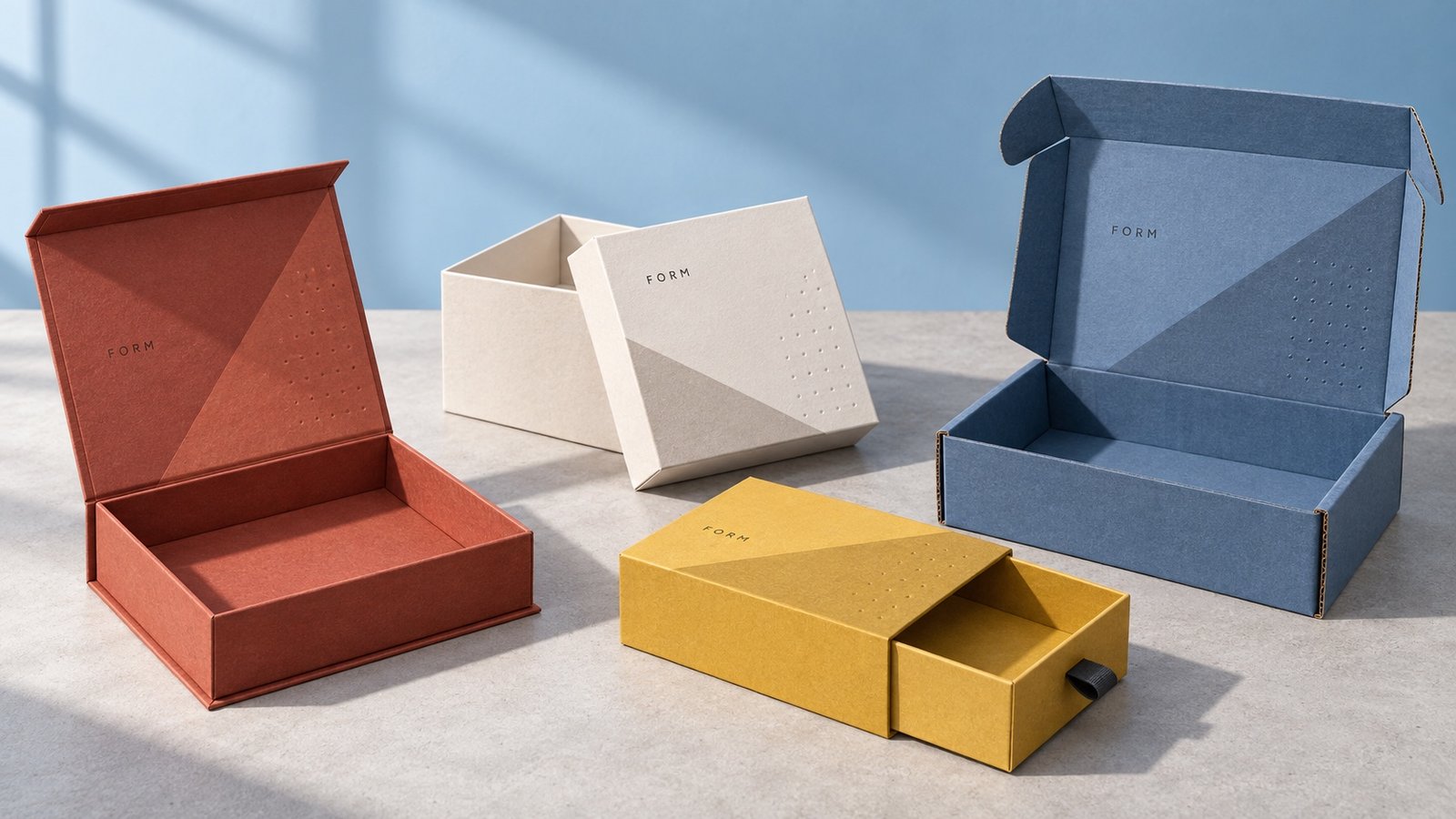
| Structure | Best fit | Procurement advantage | Watch point |
|---|---|---|---|
| Standard magnetic rigid box | Premium VIP gifts, beauty, accessories, executive kits | Strong presentation and controlled opening sequence | Ships assembled and uses more storage cube |
| Collapsible magnetic rigid box | Larger programs, distributor stock, limited warehouse space | Premium appearance with a fold-flat format | Assembly method and corner adhesion must be approved |
| Two-piece rigid box | Apparel, confectionery, candles and simple gift sets | Classic form with broad printable surfaces | Lid fit and lift resistance require physical approval |
| Drawer box | Chocolate, accessories, cards and small product collections | Distinctive reveal and useful sleeve branding area | Drawer friction and ribbon or pull-tab durability |
| Corrugated mailer box | E-commerce gifts, subscriptions and less formal programs | Delivered flat, efficient to store, protective corrugated structure | Confirm whether it can ship alone or needs an overbox |
For a detailed comparison of storage and presentation, read collapsible magnetic boxes versus standard rigid boxes. You can also compare collapsible rigid boxes, custom magnetic rigid boxes and custom mailer boxes before finalizing the RFQ.
Logo Methods: Select by Artwork, Surface and Handling
A buyer asking for “gold logo” may receive quotations for very different processes. The correct logo method depends on the artwork, paper, print coverage, target color, crease location and expected handling. Supply vector artwork whenever possible and state whether a particular color is brand-critical.
| Logo method | Visual result | Good application | Approval question |
|---|---|---|---|
| Offset or digital printing | Solid color, gradients and detailed graphics | Full-brand systems and photographic artwork | What Pantone, proof or signed sample controls color? |
| Hot foil stamping | Metallic or pigmented film | Small premium logos and borders | Will the foil bridge a grain, seam or crease? |
| Embossing or debossing | Tactile raised or recessed mark | Minimal logos on specialty paper | Is the line weight suitable for the chosen paper? |
| Spot UV | Gloss contrast on a matte surface | Tonal branding and pattern highlights | How will registration and scuff resistance be checked? |
| Printed sleeve or belly band | Changeable campaign layer | Seasonal personalization over a standard box | Does the band fit without sliding or crushing corners? |
Do not approve foil, embossing or dark solid colors from a monitor alone. A charged physical sample lets the team see paper grain, foil coverage, relief depth, edge wrapping and color under real light. If the production sample uses a different printing process from mass production, record exactly what it proves and what it does not.
Insert Design: Build Around the Actual Products
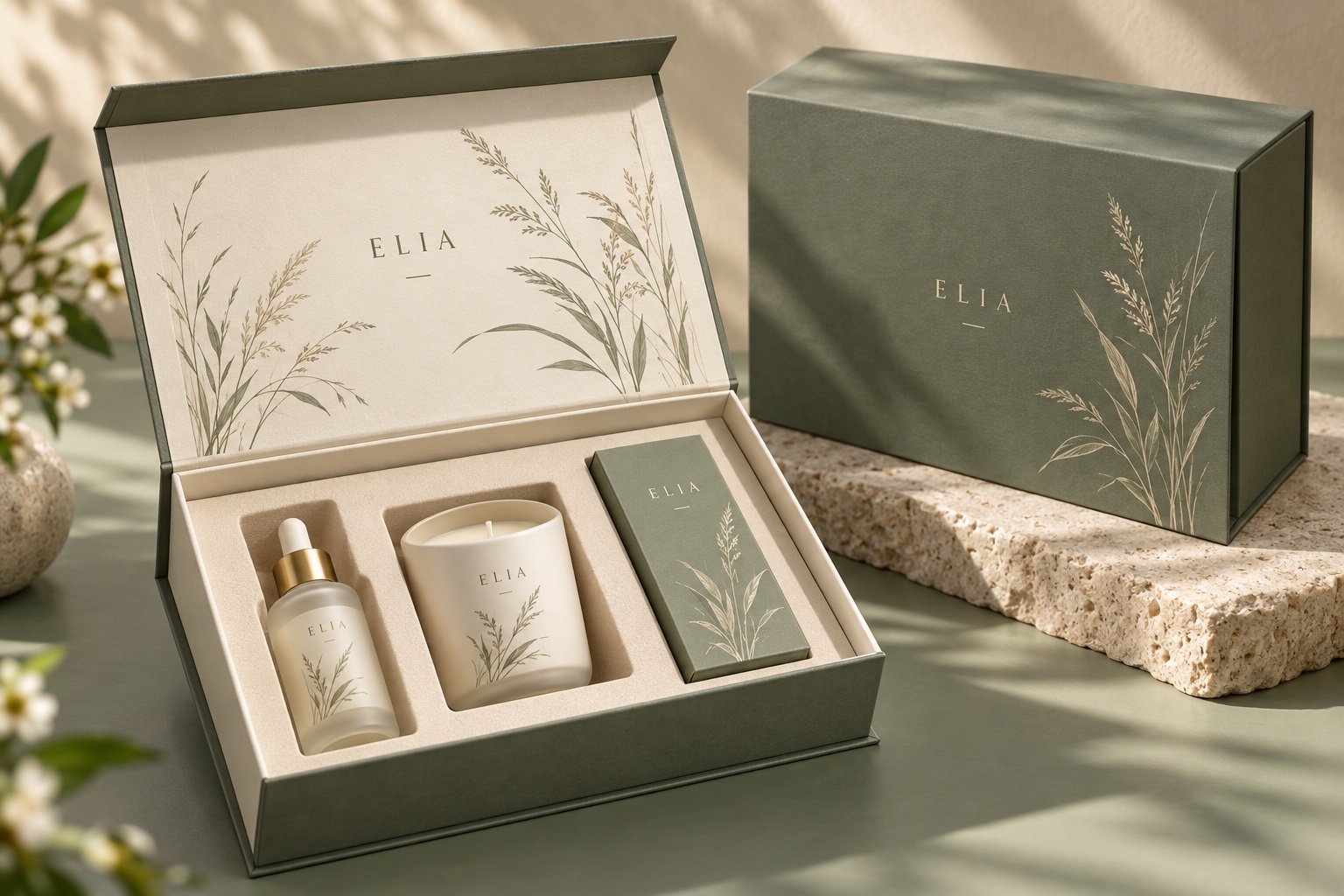
The insert should be developed before the outer box dimensions are frozen. A change in bottle height, candle diameter or folded apparel thickness can change the cavity, box height, master carton and DDP freight cube. Send actual products or dimensionally accurate samples whenever possible.
Paperboard inserts
Folded paperboard inserts are suitable for many light products and can provide clean printed surfaces. They are efficient for bottles, tubes, cards and small accessories when the retention geometry is engineered correctly. Ask for finger notches, assembly instructions and anti-rotation features where needed.
Molded pulp inserts
Molded pulp can suit beauty, candle, homeware and sustainability-led programs. It provides a tactile paper-based appearance, but buyers should agree the color, surface texture, tooling tolerance, dust expectation and product-release experience. A cavity that grips too tightly can damage labels or slow fulfillment.
Corrugated inserts
Corrugated inserts are useful where cushioning and paper-based construction are priorities. They work well for ecommerce gift sets and heavier objects, although visible edges and folds should match the intended brand presentation.
Foam inserts
EVA or other foam inserts can hold high-value or fragile items precisely. They may support a refined presentation, but they change material-separation and environmental messaging. Specify density, color, odor, surface treatment and adhesive requirements instead of purchasing “black foam” as an undefined item.
Our overview of box insert materials and custom box inserts can help the team shortlist the construction before sampling.
Chocolate and Food Gifts Need a Separate Contact-Material Review
A decorative outer gift box should not automatically be treated as direct food-contact packaging. For corporate chocolate programs, an effective approach is to place each item in its own suitable primary wrapper, tray or cup and use the rigid box for secondary presentation. That separation helps control grease, odor, migration and hygiene risks.
The US Food and Drug Administration explains that food-contact substances include packaging components, adhesives and colorants that may contact food. Where a material is intended for food contact, the buyer should confirm that its intended use is suitable and authorized. Review the FDA’s food packaging and food-contact information and obtain the documents appropriate to the destination, food type and contact condition.
Do not rely on a general statement such as “food grade” without identifying the actual component, intended contact, supporting declaration and responsible supplier. The packaging RFQ should say whether the decorative box contacts food directly, whether products are individually wrapped and whether the insert must resist oil or odor.
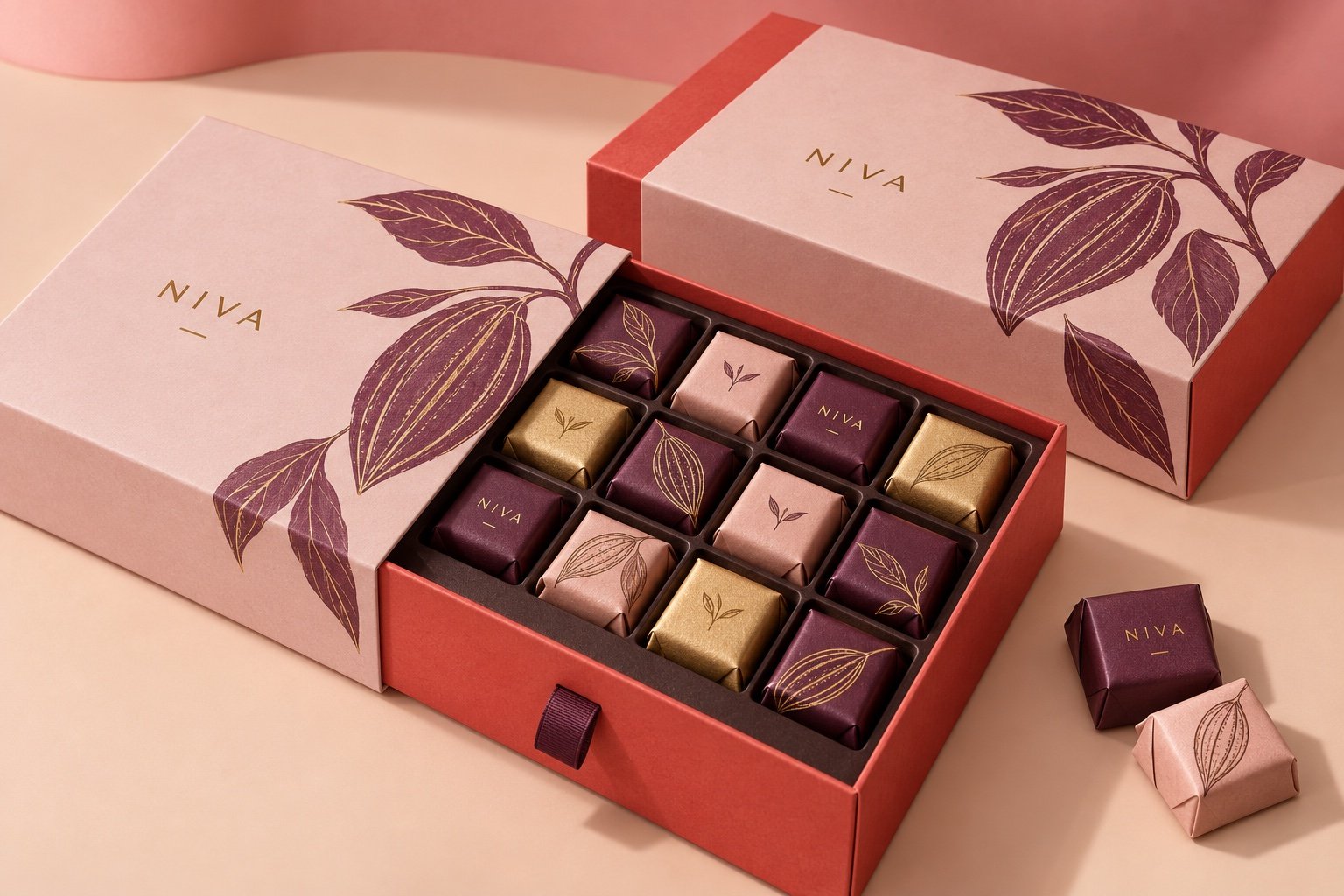
See more structural ideas in our custom chocolate packaging collection.
MOQ 1,000: Plan Versions Before You Quote
YiHongBox’s standard custom-production MOQ starts at 1,000 units. A common sourcing mistake is to assume that 1,000 units can automatically be divided across several sizes, colors, languages or logo versions. Each version can require separate printing plates, foil dies, tooling, setup, material and packing identification. Feasibility must be confirmed before the purchase order.
Use these questions when planning versions:
- Is the outer box identical for all recipients?
- Can one neutral box use changeable sleeves, cards or labels for regional versions?
- Does each SKU require a different insert, or can one insert safely accept several products?
- Are US, Canadian and Australian compliance statements placed on the products rather than the reusable gift box?
- Can personalization be added locally after the main production run?
For example, a buyer may use one 1,000-unit box design and create recipient variation with locally inserted cards. That is not always the answer, but it can reduce the number of custom production setups. Any such scenario is a design option, not a promise that multiple printed versions share one MOQ.
Calculate Landed Cost Per Gift Set, Not Only Box Price
A low box unit price can become an expensive program after tooling, insert, packing, freight, duties, taxes and delivery are added. Conversely, a slightly more expensive collapsible structure may reduce storage or shipment volume. Compare quotations on the same specification and delivery term.
The basic formula is:
The following is a deliberately illustrative model, not a YiHongBox quotation and not a market benchmark. Its purpose is to show how buyers should compare cost components.
| Illustrative component for 1,000 sets | Example total (USD) | Example per set |
|---|---|---|
| Printed rigid box and insert | $3,200 | $3.20 |
| Sample and tooling allocated to the order | $300 | $0.30 |
| Export packing and labeling | $180 | $0.18 |
| Illustrative DDP freight, clearance, import charges and final delivery | $1,420 | $1.42 |
| Illustrative landed total | $5,100 | $5.10 |
Actual cost can differ materially with size, structure, paper, insert, finishes, packed master-carton volume, destination postcode, classification, tax treatment, peak-season capacity and freight conditions. Ask the supplier to state the named DDP destination, quotation validity, exclusions and the assumptions used. For a wider cost review, read our B2B packaging cost-optimization guide.
Sampling and Approval: What Seven Days Should Prove
A physical sample typically takes about seven days after the structural details and artwork are confirmed. The clock should not start while product dimensions, insert material or artwork are still changing. Treat the sample as a controlled approval tool, not simply a sales model.
Use a written approval checklist:
- Dimensions: internal size, external size, lid alignment and agreed tolerances.
- Fit: product insertion, retention, finger access, removal and movement.
- Structure: hinge, magnet, drawer friction, fold sequence and packing speed.
- Appearance: paper, color, print registration, foil, embossing, seams and corners.
- Handling: scuffing, label adhesion, closure security and surface marks.
- Packing: accessories, cards, protective bags, dividers and order of insertion.
- Distribution: whether a separate shipping carton or overbox is required.
Photographs are useful records, but they do not replace the signed physical reference and approved specification. If the buyer changes the product, insert, print coverage, board, closure or route after approval, evaluate whether a new sample or test is necessary.
2026 Holiday Sourcing Timeline: Plan Backward
Mass production is typically about 30 days after final sample and artwork approval. That does not mean the complete project—from first email to delivered goods—takes 30 days. The buyer’s internal decisions, revisions, peak-season capacity and DDP transit must be added separately.
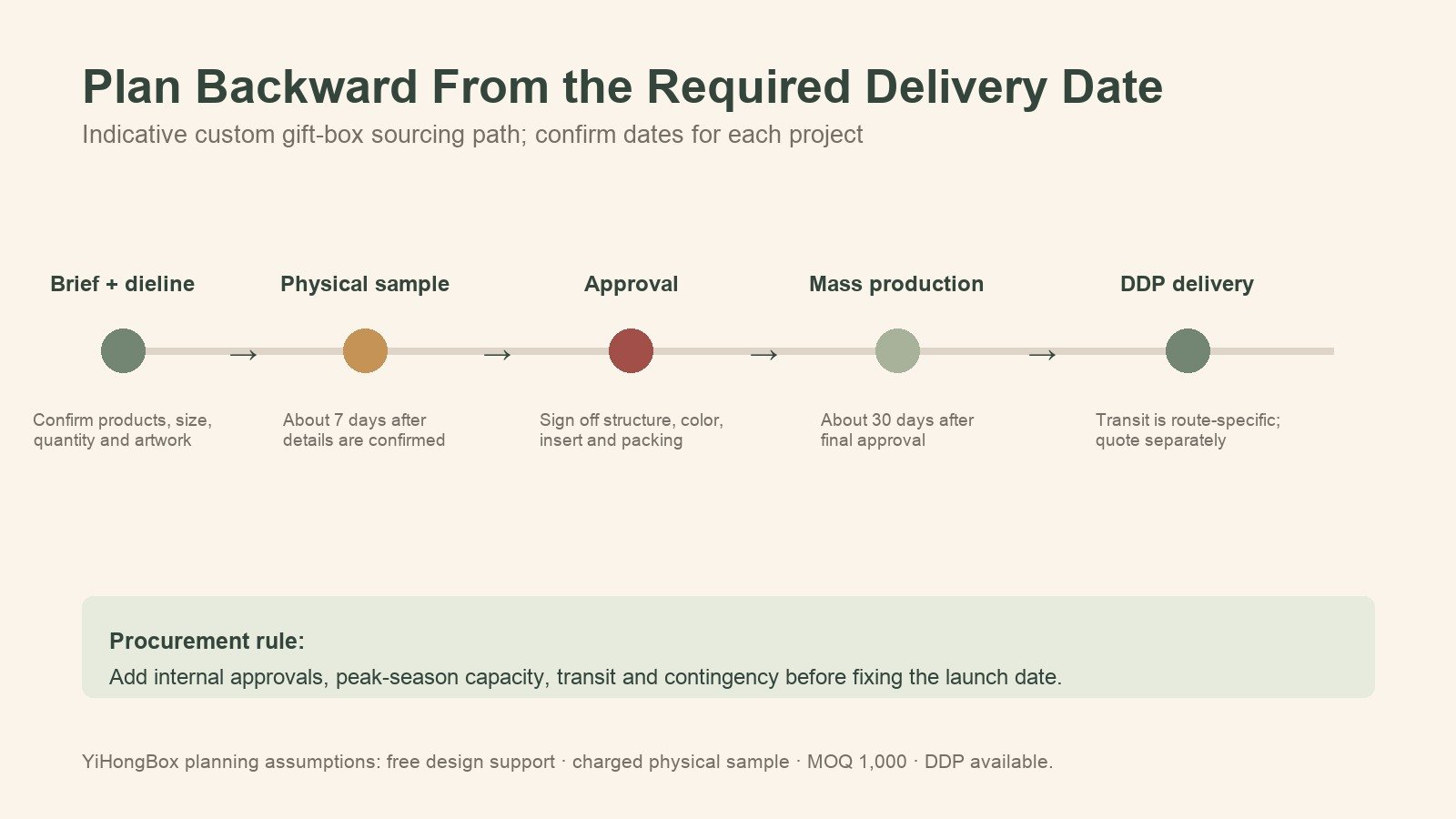
A practical plan contains four date types:
- Required delivery date: the date the boxes must be at the named warehouse, not the campaign launch date.
- Latest dispatch date: based on the quoted DDP route plus contingency.
- Production approval date: the latest date for signed artwork and sample approval before the production slot.
- Sample start date: the date by which all dimensions, products and artwork must be stable.
If a holiday program cannot tolerate delay, do not consume every day of contingency with artwork revisions. Freeze the structural brief first, decide which color or finish differences truly matter, and book the production plan after sample approval.
DDP to the US, Canada and Australia: Define the Named Place
Under Incoterms® 2020, DDP places extensive responsibility on the seller. The International Chamber of Commerce explains that the seller delivers the goods cleared for import at the named destination, ready for unloading, and bears the costs and risks of bringing them there. Review the ICC’s official DDP explanatory note.
“DDP USA” is not a complete shipping instruction. A quotation should identify the exact named place—ideally the full delivery postcode—plus the shipment details used for the calculation. Ask whether the price includes customs clearance, applicable duty or tax, destination surcharges, appointment or residential fees, and final delivery. Also define who unloads and what happens if the destination rejects a delivery appointment.
United States
Provide the delivery postcode, product description, intended use, material composition and any information needed for classification. Packaging alone may have different treatment from a gift set that already contains food, cosmetics, electronics or other regulated products. If YiHongBox supplies the empty boxes and the buyer fills them locally, state that clearly.
Canada
Canada’s official guide to importing commercial goods emphasizes gathering product information, determining tariff classification and value for duty, and calculating applicable duties and taxes. Confirm the importer arrangement, destination and CARM-related responsibilities for the specific transaction rather than relying on a generic DDP label.
Australia
The Australian Border Force explains that imported goods may require declarations and that duties, taxes and charges depend on value and classification. Review its current how-to-import guidance. The buyer should also identify whether the completed gift set contains items subject to biosecurity, labeling or other product requirements.
DDP simplifies the buyer’s cost view, but it does not remove the need for correct information. The shipment description, destination, product contents and commercial documents must match the actual transaction.
Sustainability Claims: Use Specific, Supportable Language
Statements such as “eco-friendly packaging” are too broad for a serious procurement specification. Describe the attribute that can be verified: paper type, certified material option, recycled-content percentage, reduced material compared with a defined previous design, plastic-free insert, or a structure designed for material separation.
The US Federal Trade Commission advises marketers not to make broad, unqualified environmental benefit claims and explains how recyclable, recycled-content and source-reduction statements may need qualification. Review the FTC Green Guides summary before using environmental claims in US marketing.
If FSC®-certified material or an FSC label is required, specify that before the quote and artwork approval. Certification and trademark use are controlled processes; a green color or tree icon is not a substitute. Confirm the exact material and labeling route with the supplier and consult the FSC trademark guidance.
Corporate Gift Box RFQ Checklist
A complete RFQ reduces revisions and makes quotations easier to compare. Send:
- product photographs, dimensions, weight and quantity for every item;
- target internal or external box size, if already known;
- preferred structure and one acceptable alternative;
- order quantity, with each required color, logo or regional version listed separately;
- vector logo, artwork and brand-color references;
- paper, print, foil, embossing, coating and insert preferences;
- whether any component contacts food, cosmetics or another regulated product;
- required delivery date and complete destination postcode;
- whether the box ships alone, in an overbox or on a pallet;
- sample approval, testing and cosmetic acceptance requirements;
- master-carton labels, bundle quantities and fulfillment instructions; and
- requested trade term, including the named DDP destination.
Request a Custom Gift Box Proposal
Send your product dimensions, quantity, logo, target delivery date and destination. YiHongBox can recommend a structure, insert, finish and DDP delivery plan for a custom order from 1,000 units.
Frequently Asked Questions
What is the MOQ for custom gift boxes with logo?
YiHongBox’s standard MOQ starts at 1,000 units for a custom production order. The exact specification—size, structure, paper, print, finish and insert—affects feasibility and price. Do not assume the MOQ can be divided across several sizes, colors or logo versions unless that arrangement is confirmed in writing.
Can you design the gift box for us?
Yes. YiHongBox provides free design support for qualified custom packaging projects. Share the product dimensions, photographs, quantity, logo, destination and reference images. The team can recommend a structure, dieline, material, insert and finish for review.
Is the physical sample free?
No. Physical custom samples are charged. The sample lets buyers evaluate structure, dimensions, product fit, material, print and finish before mass production. Sample charges and delivery should be included as separate items in the development plan.
How long does sampling take?
A custom physical sample typically takes about seven days after dimensions, structure, material and artwork are confirmed. Revision time and sample delivery are additional, so holiday programs should include contingency.
How long does mass production take?
Mass production typically takes about 30 days after the final sample and artwork are approved. Complex finishes, unusual materials, large quantities and peak-season capacity can affect the schedule. Confirm the production plan for each purchase order.
Do you provide DDP delivery?
Yes. YiHongBox supports DDP delivery to the United States, Canada, Australia and other markets. A valid quotation requires the destination postcode, order quantity, box specification, shipment volume and other relevant import information. Transit time is quoted separately from the production schedule.
Which gift box structure is best for corporate gifting?
Magnetic rigid boxes suit premium presentation; collapsible magnetic boxes combine presentation with reduced storage volume; two-piece boxes provide a classic format; drawer boxes create a distinctive reveal; and corrugated mailers suit ecommerce and practical gifting. The best choice depends on the products, presentation level, route, packing method and budget.
Can one insert hold several different products?
Yes, when the cavity layout is engineered around the actual dimensions, weights and handling needs. Paperboard, molded pulp, corrugated and foam inserts each perform differently. Send actual products or accurate product samples before final approval.
Can the box be personalized for individual recipients?
Recipient-level personalization may be added through cards, labels, sleeves or local fulfillment, depending on the program. Fully variable printing or multiple logo versions may change setup, MOQ and price. List every required variation in the RFQ.
Can chocolate be placed directly in the gift box?
Do not assume a decorative outer box is suitable for direct food contact. Chocolates are commonly individually wrapped or placed in suitable primary cups or trays, with the rigid box used for secondary presentation. Confirm food-contact requirements for the intended market and use.
What files are needed for logo printing?
Vector artwork such as AI, EPS or editable PDF is preferred for foil, embossing, debossing and precise printing. Supply brand-color references and minimum-size rules. Raster artwork may not provide clean edges at production scale.
How do we compare supplier quotations fairly?
Use one controlled specification and compare the complete scope: box, insert, print, finish, tooling, sample, export packing, master cartons, delivery term, named destination, lead time and acceptance criteria. Compare landed cost per usable set, not only the lowest factory unit price.
Final Buying Recommendation
Start with the recipients, products, destination and delivery date. Then select the insert and box structure, approve the logo process on the real material, and calculate landed cost using the complete DDP scope. At 1,000 units, decisions about versions, storage, assembly and freight can matter as much as the decorative finish.
A strong corporate holiday box should feel considered when it opens, but it also has to work before and after that moment: it must be producible, packable, deliverable and clear enough for procurement teams to approve. That is the difference between an attractive mockup and a packaging program ready for mass production.